



Senior lawyer
Lawyer practicing international migration. Specializes in issues of migration law - paperwork on the territory of Ukraine and the countries of the European Union (Romania, Hungary, Spain, Czech Republic).

Lifting the ban on entry into Schengen
For many Ukrainians, the European Union has become a place to work, study, run a business, or seek temporary protection. However, sometimes an unforeseen and stressful situation arises at the border: a border guard denies entry, informing you that your data has been entered into an information database, and you are prohibited from crossing the border.
The lifting of a Schengen entry ban is a specialized legal procedure aimed at removing a person’s data from the Schengen Information System (SIS) or the national registers of EU member states, which legally restores the right to free movement within European countries.
This process is quite complex and requires a deep understanding of European Union migration law. If you have received a decision on deportation from the EU, it is important to understand: this is not forever.
A competent lawyer will help you understand the situation and initiate the cancellation of the entry ban so you can freely travel, work, or see your relatives again.
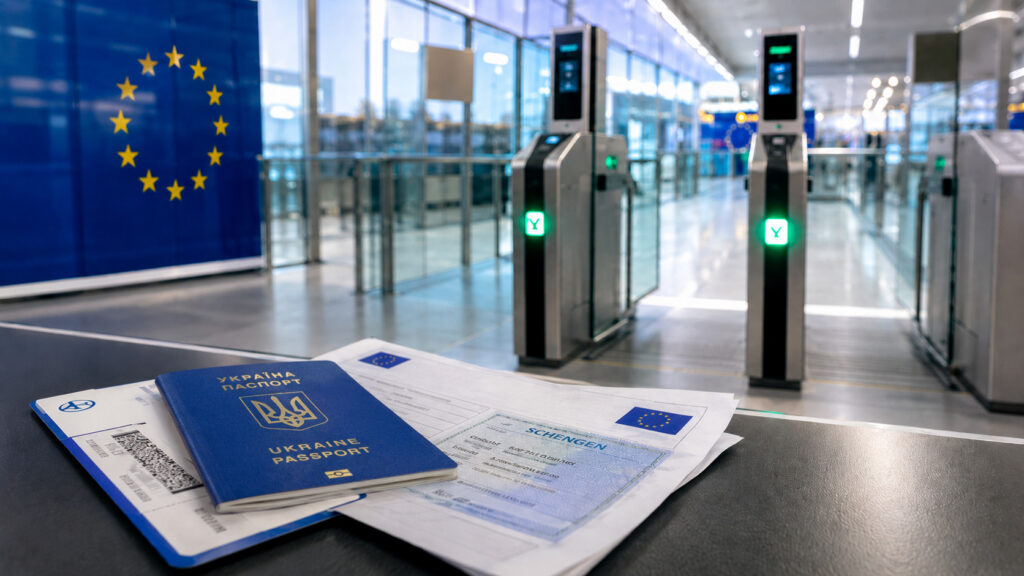
Who is subject to the ban: myths and legal reality
It is common to find a myth on the internet that a ban can be imposed “just like that” or due to a system error, and that it applies to almost every second traveler. In reality, this is not the case at all.
Not everyone is included in the Schengen Information System. Data is entered only for those individuals who have specific problems with European legislation, have committed administrative or criminal offenses in the Schengen area, or pose a threat to national security.
If you are a law-abiding citizen of Ukraine, leave the EU territory on time, and comply with visa or visa-free rules, nothing threatens you.
Information is entered into the SIS database only based on an official decision by the competent authorities (border service, police, court, or migration service) of the country where the violation was recorded.
What can lead to an entry ban to the Schengen Area?
The reasons for entering your data into the “blacklist” can vary, but all are related to violating the rules of stay for foreigners.
The most common grounds for Ukrainians being denied border crossing and subsequent deportation include:
- Exceeding the permitted period of stay: violation of the “90/180” rule (staying more than 90 days within a 180-day period without a corresponding visa or residence permit). This is the most frequent reason.
- Illegal employment: working without a proper work permit or in violation of the terms of a work visa (for example, working in Germany with a Polish work visa).
- Use of forged documents: providing fake invitations, certificates of employment, insurance policies, or passport documents.
- Unpaid fines: ignoring administrative fines for violating traffic rules (PDR), unpaid public transport fares, or other minor offenses within the territory of the Schengen Agreement countries.
- Criminal offenses: committing crimes in the EU territory or being suspected of involvement in international crime.
- Threat to national security: if the authorities of an EU member state believe that your stay poses a threat to public order or the internal security of the state.
Procedure and stages: how to lift an entry ban to Europe
The process of canceling restrictions requires a clear sequence of actions and strict adherence to the bureaucratic procedures of the country that initiated the entry of your data into the database.
Lifting deportation from EU countries usually goes through several key stages:
- Problem identification and SIS system request. The first stage requires accurately finding out which country, for how long, and for what reason imposed the restriction. For this purpose, a migration lawyer prepares and sends an official written request to the national SIS bureau or the relevant ministry of internal affairs of the country that initiated the ban.
- Legal analysis of the migration case. After receiving an official response (an extract from the database), the lawyer thoroughly analyzes the case materials. The grounds for deportation, the severity of the offense, and the presence of mitigating circumstances (e.g., having close relatives in the EU, the need for urgent treatment, etc.) are examined.
- Collection of evidence and preparation of a petition. A package of documents is formed that proves the reasons for the ban have been eliminated (fines paid, documents legalized), or that the person has compelling reasons for returning. An reasoned appeal or petition for the removal of the record from the database is drafted.
- Submission of documents and waiting for a decision. The package of documents is sent to the authorized body. Depending on the country and the complexity of the case, the review may last from one to several months.
- Official data removal. In case of a positive decision, your data is deleted from the Schengen Information System, and you receive official written confirmation that the path to Europe is open again.
Legal practice: deadlines, chances, and realities of lifting a ban
Many Ukrainians are interested in the real chances of lifting a Schengen entry ban. Legal practice shows a very interesting trend: most often the ban is lifted completely (meaning the entry is completely removed from the register). There are significantly fewer cases where the duration of the ban is merely reduced.
European authorities either agree with the lawyer’s arguments and cancel the restriction, or they refuse completely, leaving the initial term.
An important practical nuance that everyone should know: in practice, it is advisable to initiate the procedure for lifting the ban when at least half of the punishment period has passed.
If you were deported for 3 years, the chances of success increase significantly if you file a petition 1.5 years after the decision was made. If you try to appeal the ban one month after a serious violation, the probability of refusal will be extremely high.
Of course, there are exceptions (if the decision was made by mistake), but the “half-term” rule works in most migration disputes.
How can a migration lawyer help?
It is almost impossible to solve the deportation problem independently, as the EU bureaucratic apparatus requires communication in national languages, knowledge of local laws, and correct drafting of legal documents.
By seeking professional help, you receive the following:
- Correct processing of requests to European state bodies without errors, which saves your time.
- Comprehensive check in the SIS system to rule out “surprises” at the border in the future.
- Formulation of a competent defense strategy, selection of correct arguments for European officials.
- Representation of your interests by power of attorney — you do not need to travel anywhere or look for European lawyers on the spot.
Stages of service provision and estimated deadlines
Below is a table reflecting the main stages of work to lift bans and deportations, which will help you better understand the cooperation process.
| Service Name / Process Stage | Estimated Completion Time | Expected Result for the Client |
| Official request to SIS and EU country registers | from 30 to 60 business days | Extract from the database, establishing the reason, initiator, and term of restrictions |
| Case analysis and appeal preparation | from 5 to 14 business days | Formulated legal strategy, collected package of documents for appeal |
| Appeal procedure and annulment of the entry ban | from 2 to 6 months (depends on the country) | Official decision on data removal, full lifting of the entry ban |
| Support in paying fines in the EU | from 3 to 7 business days | Debt repayment, elimination of grounds for maintaining deportation |

If you have become a hostage to circumstances, received a deportation stamp, or were denied border crossing, you should not wait for the end of the punishment period passively.
European legislation provides legal mechanisms for the protection of human rights and the review of decisions. If you are looking for how to lift the entry ban to Europe quickly and with the guarantee of the correct legal approach, it’s time to act.
Ordering the services of a migration law attorney — is an investment in your free future. Do not risk your time and money; entrust the resolution of migration problems to professionals. Contact our team for an initial consultation right now.
Find out what the price for migration lawyer assistance is in your specific case, and we will develop an individual action plan for lifting deportation from EU countries so you can legally cross borders without unnecessary stress and problems!
Calculate the cost of services
1 question
Have you received documents regarding the establishment of a ban on entry into the Schengen area?
2 question
Were any fines imposed on you when the ban was established?
3 question
Have you attempted to cross the border after being banned from entry?
4 question
Do you need help from a lawyer on migration law?
Is it possible to lift the entry ban if it was imposed for illegal work?
Yes, it is possible. Although illegal employment is a serious violation, a migration lawyer can gather evidence of changed circumstances and file a petition to lift the ban.
The chances are especially high if at least half of the deportation period has passed and you do not have unpaid fines or other offenses in that country.
How long does the complete annulment of an entry in the SIS system take?
The deadlines depend on the specific country that entered the record (e.g., Poland, Germany, or Czechia).
On average, the first stage (request to SIS to clarify the reasons) takes 1-2 months, and the direct consideration of the appeal to lift the ban can last from 2 to 6 months. Therefore, we advise starting the procedure in advance.
If I changed my last name or passport in Ukraine, will I be able to travel to Europe?
No, changing your last name, first name, or obtaining a new biometric passport does not annul the entry ban. The modern SIS system and national registers of European countries identify individuals not only by pseudonyms but also by biometric data (fingerprints).
An attempt to cross the border with new documents while an active ban is in place is considered fraud, which will lead to the opening of a criminal case and the maximum term of deportation. The only way out is the legal cancellation of the ban through a legal procedure.





You may also need:
Get EU citizenship
Read more
Urgent production of a foreign passport
Read more
B1/B2 visa to the USA
Read more
Schengen travel visa
Read more
Tourist visa to England
Read more
Canceling an entry in the SIS system
Read more
Transit Schengen visa
Read more
Golden visa to Europe
Read more
Europe work visa
Read more
Extension of foreign passport of Ukraine
Read morecall back
during the day

 Telegram
 Viber
Viber
 WhatsApp

 Facebook
 Instagram