



Head of International Corporate Law and Fintech Practice
Expert in fintech, crypto, and international corporate law with over 20 years of experience. Specializes in crypto licensing (VASP/CASP), iGaming business support, and international structuring, asset protection, and OSINT analytics for risk assessment and due diligence.

Tax consultation in Europe
The taxation system in Europe is a complex mechanism that depends on the country, residency status, type of business and other factors.
For Ukrainians planning to do business, work as freelancers or relocate companies to EU countries, understanding tax rules is critically important.
The law firm “Prikhodko & Partners” offers professional advice on taxation in Europe, helping clients optimize costs and comply with local legislation.
In this article, we will consider key aspects of taxation in popular European jurisdictions as of 2025, current tax rates and our services.
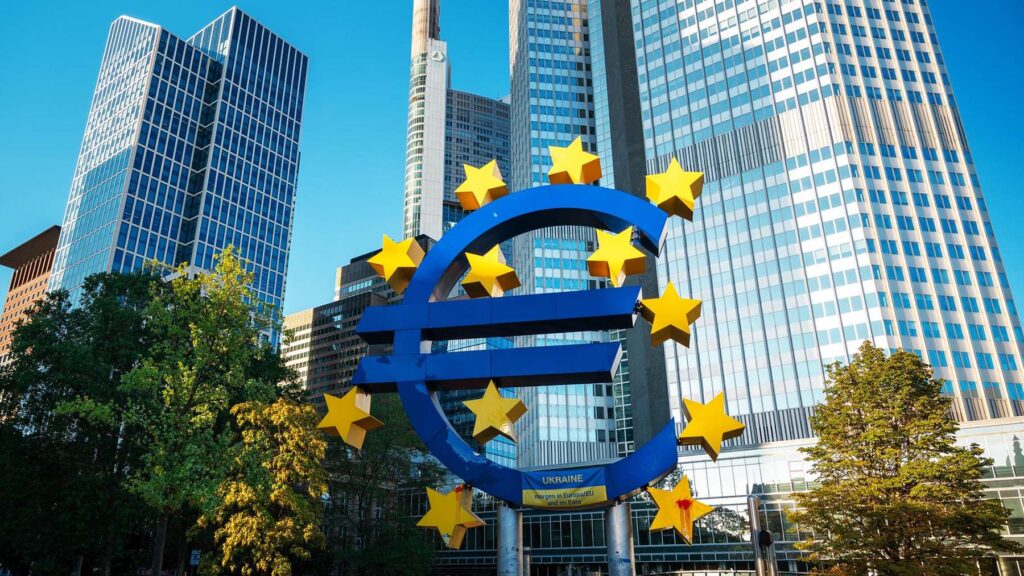
Why is it important to understand taxation in Europe?
The European Union consists of 27 countries, each with its own tax system. While some principles are harmonized (such as VAT or the fight against tax evasion), tax rates, benefits, and residency requirements vary significantly.
For Ukrainians starting a business or working in Europe, tax planning mistakes can lead to fines, which in some countries can reach 50% of the amount of unpaid tax, or even criminal liability.
Main challenges:
- Determining tax resident status (usually a person is considered a resident if they are in the country for more than 183 days per year).
- Understanding corporate taxes, which range from 9% (Hungary) to 25% (France).
- Compliance with VAT rules, the rates of which range from 17% (Luxembourg) to 27% (Hungary).
- Taking into account the global minimum corporate tax (15%) for companies with annual revenues over €750 million, introduced by the Pillar Two Directive.
Our lawyers help to understand these issues by providing individual consultations for IT entrepreneurs, freelancers, investors, and large companies.
Overview of taxation systems in popular countries
- Cyprus – a tax haven for business
Cyprus remains one of the most attractive jurisdictions for international companies due to its low corporate tax rate of 12.5%. In 2025, Cyprus adapted to Pillar Two requirements by introducing an additional tax for large corporations, but for small and medium-sized businesses the rates remained unchanged.
VAT is 19%, but there are exemptions for certain sectors (e.g. IT services). Dividend tax for non-residents is 0%, making Cyprus ideal for holding structures.
- Advantages: ease of company registration, low taxes, access to double taxation agreements.
- Services of “Prikhodko & Partners”: Company registration, opening bank accounts, tax optimization consultations, obtaining residency, and more.
- Estonia – digital economy and zero income tax
Estonia is known for its unique tax system, where corporate tax (20%) is paid only when profits are distributed. If profits are reinvested, no tax is charged.
This is especially beneficial for IT companies and startups. VAT is 22%, and personal income tax for residents is progressive, from 20% to 22% depending on income.
From January 1, 2025, Estonia is increasing the standard VAT rate from 22% to 24%. This decision was made by the government to increase budget revenues.
- Advantages: Digital services for business (e-Residency), transparent tax system.
- Services: Company registration, e-Residency support, consultations for IT freelancers and other types of businesses, obtaining residency, and more.
- Austria – stability and high standards
Austria offers a stable economy and a developed tax system. Corporate tax in 2025 is 24% (reduced from 25% in 2024), VAT is 20%.
Personal income tax is progressive: from 0% for income up to 11,693 euros to 50% for income over 1 million euros. Austria is attractive for medium-sized businesses, especially in the technology and manufacturing sectors.
- Advantages: High level of legal protection, access to EU markets.
- Services: Legal support and business registration, consultations in all areas of law.
- Spain is a market for Ukrainians
Taxation for Ukrainians in Spain depends on resident status. Residents pay personal income tax on a progressive scale (19–47%), while non-residents pay 24% of income earned in Spain.
Corporate tax is 25%, but a reduced rate of 15% may apply to new companies in the first year. VAT is 21%, with preferential rates of 10% and 4% for certain goods.
- Advantages: Access to a large market, benefits for startups.
- Services: Registration of individual entrepreneurs and companies, consultations and obtaining residency, support of purchase and sale agreements.
- Czech Republic is profitable for freelancers
The Czech Republic is popular among Ukrainian IT freelancers due to its simplified system for self-employed individuals. In 2025, the personal income tax is 15% for income up to 1.8 million CZK (approximately 72,000 euros) and 23% for higher amounts.
Corporate tax is 19%, VAT is 21%. Freelancers can choose a simplified system with a flat tax (approximately 6,000 CZK per month).
- Advantages: Low business costs, quick registration of an individual entrepreneur.
- Services: Registration of individual entrepreneurs and companies, consultations and obtaining residency, support of purchase and sale agreements.
- Malta – an attraction for investors
In Malta, corporate tax is formally 35%, but thanks to a tax refund system, the effective rate for foreign investors can be reduced to 5%.
VAT is 18%, and personal income tax for residents ranges from 0% to 35%. Malta is suitable for financial and technology companies.
- Advantages: Flexible tax system, support for startups.
- Services: Company registration, international taxation consulting.
New regulations for 2025
In 2025, EU countries continue to implement the Pillar Two Directive, which sets a minimum corporate tax rate of 15% for companies with revenues of more than €750 million.
This affects large corporations, but small and medium-sized businesses remain outside these requirements. In addition, control over tax evasion through digital platforms is being strengthened, which is important for IT freelancers.
How can we help?
The law firm “Prikhodko & Partners” has many years of experience in supporting businesses in Europe.
Our services include:
- Tax consulting. Analysis of your situation, selection of the optimal jurisdiction, tax planning.
- Business registration. Opening of an individual entrepreneur, LLC in EU countries.
- Legal support. Obtaining licenses, opening bank accounts, concluding agreements.
- Business relocation. Assistance with moving companies and teams to Europe, including visa issues and residency.
Example: A Ukrainian IT entrepreneur plans to open a company in Estonia.
We help register an LLC, obtain e-Resident status, open a bank account, and set up accounting to take advantage of zero tax on reinvested profits. The cost of our services depends on the complexity of the task, but the consultation costs from 300 euros.

Conclusion
Taxation in Europe is a multifaceted system that requires careful planning.
The choice of jurisdiction depends on your goals: Cyprus and Malta are suitable for international companies, Estonia for IT businesses, the Czech Republic for freelancers, and Austria and Spain for stable medium-sized businesses.
The law firm “Prikhodko & Partners” is ready to help you at every stage – from tax risk analysis to full support of your business in Europe.
Contact us for a consultation and we will find the optimal solution for your success in Europe.
Calculate the cost of services
1 question
Do you need tax advice for your business?
2 question
Are you in Ukraine?
3 question
Do you need advice urgently?





You may also need:
BANK REGISTRATION IN CYPRUS
Read more

OPENING A BANK ACCOUNT FOR A GAMBLING BUSINESS
Read more
Company Registration in Austria
Read more
OPENING A BANK ACCOUNT IN AUSTRIA
Read more
REGISTRATION OF A BUSINESS (FIRM) IN POLAND
Read more
Opening a crypto-friendly account
Read more
OPENING A BANK ACCOUNT IN ESTONIA
Read more

Opening an account in a foreign bank
Read more
Opening a bank account in the United Kingdom
Read more

Brand name registration
Read more
REGISTRATION OF A BUSINESS IN THE UK
Read more
REGISTRATION OF A BUSINESS (FIRM) IN THE CZECH REPUBLIC
Read morecall back
during the day

 Telegram
 Viber
Viber
 WhatsApp

 Facebook
 Instagram