


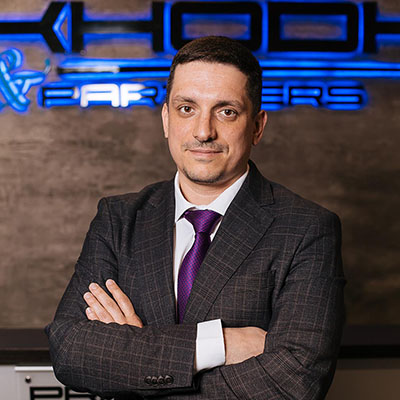
Head of International Corporate Law and Fintech Practice
Expert in fintech, crypto, and international corporate law with over 20 years of experience. Specializes in crypto licensing (VASP/CASP), iGaming business support, and international structuring, asset protection, and OSINT analytics for risk assessment and due diligence.

International investment funds
The main types of investment funds and their characteristics
These types of investment funds differ in requirements for the minimum contribution, term of creation and initial costs, which allows investors to choose the best option according to their financial capabilities and strategic goals.
Each fund has its own advantages, and the choice depends on what resources and time the investor is willing to spend to implement his investment plans.

| Fund type | Minimum entry amount | How long to create | Initial costs |
| Reserve Fund (Luxembourg) | 1,250,000 euros | 2-3 months | from 35,000 euros |
| Specialized fund (Luxembourg) | 1,000,000 euros | 3-4 months | from 40,000 euros |
| Variable Capital (Singapore) | 1 Singapore dollar | 1-2 months | from 25,000 euros |
| Partnership (Cayman Islands) | Not installed | 2-3 weeks | from 15,000 euros |
Explanation for the investor:
- Luxembourg is a European country that specializes in financial services. Funds from this country have a high reputation and reliable protection of investors
- Singapore is a leading financial center in Asia, offering modern and flexible solutions
- The Cayman Islands is a place to create simple and quick structures, often used by experienced investors
How the fund management works
Management levels in the organization are divided into strategic, investment and daily. At the strategic level, the board of directors manages, which makes important decisions, determines the direction of the organization’s development, and controls the overall work.
The chairman of the board, as well as independent experts, are responsible for these issues. The investment level includes the investment committee, which is engaged in determining directions for investments, monitoring risks and managing the investment portfolio.
Investment managers and risk experts are responsible for this area. The day-to-day activities of the organization are carried out at the operational level, where the operations department is responsible for performing day-to-day tasks, maintaining documentation and preparing reports.
The Operations Director and the Policy Officer oversee this process.
| Management level | Who is in charge | What are they doing? | Who is responsible? |
| Strategic | Board of Directors | • Make important decisions • Determine the direction of development • Monitor work |
• Chairman of the board • Independent experts |
| Investment | Investment Committee | • Decide where to invest money • Risks are monitored • Manage the portfolio |
• Investment managers • Risk experts |
| Daily | Operations department | • Daily work • Documentation • Reports |
• Operations Director • Responsible for the rules |
It is important to understand:
- Each level of management has its own tasks and responsibilities
- The system is built to ensure the reliability and transparency of the fund’s work
- Independent experts help you make informed decisions
- All operations are controlled at different levels
Country comparison and costs
Comparison of countries for creating a fund
When comparing different jurisdictions for the creation of investment funds, Luxembourg, Singapore and the Cayman Islands differ significantly in several key respects.
State control in Luxembourg is very strict, resulting in high regulation, while in Singapore it is moderate and in the Cayman Islands, control is minimal.
Luxembourg has the best reputation among these options, Singapore also has a good reputation, and the Cayman Islands has an average reputation. The cost of setting up a fund in Luxembourg is expensive, in Singapore it is average, while in the Cayman Islands the cost is relatively low.
Regarding the creation time, it takes 2-4 months in Luxembourg, 1-2 months in Singapore, and only 2-3 weeks in the Cayman Islands. In terms of taxation, Luxembourg has rates from 0 to 5%, in Singapore – from 0 to 17%, and in the Cayman Islands there are no taxes.
| What are we comparing? | Luxembourg | Singapore | Cayman Islands |
| State control | Very strict | Moderate | Minimum |
| Reputation | The best | good | Normal |
| Creation cost | Dear | Average price | Inexpensively |
| Time to create | 2-4 months | 1-2 months | 2-3 weeks |
| Taxes | 0-5% | 0-17% | 0% |
What this means for you:
- Luxembourg is the best place to work with European investors
- Singapore is a good choice for work in Asia
- The Cayman Islands are suitable if you want to create a fund quickly and inexpensively
How the fund’s annual expenses are formed
The costs of managing an investment fund include several main categories, each of which reflects certain aspects of the fund’s activity. Management costs cover the fee for managing the fund and are a certain percentage of the amount under management.
Custody of assets includes the costs of keeping them safe in a bank, which is also a necessary part of the process. Expense administration is related to record keeping, calculations, and other administrative functions that support the operational activities of the fund.
An audit, or annual review, is necessary to ensure transparency and compliance with standards. Legal support provides legal support and advice on legal aspects of the fund’s activities.
In addition to the basic costs, there are also additional costs for various services that may arise depending on the needs of the fund. These costs together form the overall structure of fund management costs.
| Type of expenses | Percentage of the amount under management | An example of the amount per year | Explanation |
| Management | 0.35% | 175,000 euros | Fund management fee |
| Storage | 0.25% | 125,000 euros | Saving assets in the bank |
| Administration | 0.20% | 100,000 euros | Keeping documentation and calculations |
| Audit | 0.10% | 50,000 euros | Annual inspection |
| Lawyers | 0.05% | 25,000 euros | Legal support |
| Other expenses | 0.05% | 25,000 euros | Additional services |
How to read this table:
- The percentages are indicated on the total amount of money in the management of the fund
- The example is calculated for a fund with 50 million euros
- Costs may vary depending on the size of the fund and the complexity of transactions
- A larger fund size usually means a lower percentage of expenses
How to create a fund step by step
The plan for creating an investment fund consists of several stages, each of which has its own specific task and deadlines. The first stage, preparation, takes one to two weeks and includes analyzing opportunities, choosing a country to register the fund and planning the next steps.
The result of this stage is a ready work plan that defines the main areas of activity. The next stage, the organization, lasts three to four weeks and consists in the preparation of the necessary documents, the selection of partners and the agreement on the terms of cooperation.
At this stage, the ready structure of the fund is formed. This is followed by the registration phase, which takes four to six weeks. This is the period when documents are submitted, permits are obtained, bank accounts are opened, and the fund becomes officially registered and ready for work.
The last stage, the start-up, takes two to three weeks and includes setting up operational processes, making the first investments and launching reporting. After that, the fund starts working in full.
Fund creation plan
| Stage | How much time | What are we doing? | Result |
| Preparation | 1-2 weeks | • Analysis of opportunities • Country selection • Planning |
Work plan |
| Organization | 3-4 weeks | • Preparation of documents • Selection of partners • Agreement of conditions |
Ready structure |
| Registration | 4-6 weeks | • Submission of documents
• Obtaining permits • Opening of accounts |
Working fund |
| Start of work | 2-3 weeks | • Job settings
• First investments • Start of reporting |
Full-time work |
Important points:
- Each stage requires careful preparation
- Terms may vary depending on the country and type of fund
- It is better to take your time and do everything right the first time
- It is important to have experienced consultants at every stage
The main risks and how to avoid them
The main risks that can arise in the management of an investment fund include several key aspects, each of which has a different level of probability and severity. Violation of the rules is one of the most likely risks and can have very serious consequences for the fund.
To minimize this risk, it is important to ensure ongoing review, professional management and regular audits. Another risk is errors in work, which have an average probability, but can also have serious consequences.
To reduce this risk, it is necessary to implement clear procedures, double control and automation of processes. Market risks are quite frequent, but their impact on the fund can be moderate.
To protect against these risks, it is important to spread investments, use risk insurance and limit investment amounts in certain assets. Loss of reputation is a rare but serious risk, so to minimize it, it is necessary to carry out thorough customer due diligence, ensure openness of the fund and maintain good communication with all stakeholders.
| Type of risk | How likely | How serious | How to protect yourself |
| Violation | Often | Very seriously | • Constant checking
• Professional management • Regular audit |
| Errors in work | Average probability | Seriously | • Clear procedures
• Dual control • Automation |
| Market risks | Often | Moderately | • Distribution of investments • Risk insurance • Limitation of sums |
| Loss of reputation | Rarely | Seriously | • Customer verification • Openness • Good communication |
How to use this information:
- It is important to understand all possible risks in advance
- There should be a protection plan for each risk
- Regularly check how the protection system works
- It is better to spend more on protection than to lose due to problems
Practical examples and recommendations
Examples of successful funds
Examples of successful investment funds show diversity in structures, countries of registration, sizes and returns. A technology fund in the form of a reserve fund, registered in Luxembourg with a size of 15 million euros, is created within three months and provides an annual return of 25%.
The real estate fund, with the status of a specialized fund and also registered in Luxembourg, has a size of 100 million euros, is created within four months and generates a yield of 12% per year.
The venture fund, which is a partnership in the Cayman Islands, has a size of 50 million euros, the creation time is two months, and the annual return of this fund is 35%.
All these funds have a different level of tax burden, where taxes for a real estate fund and a technology fund are 5%, and for a venture fund there are no taxes.
| What are we comparing? | Technological fund | Real estate fund | Venture fund |
| Structure type | Reserve fund | Specialized fund | Partnership |
| Country | Luxembourg | Luxembourg | Cayman Islands |
| Fund size | 15 million euros | 100 million euros | 50 million euros |
| Creation time | 3 months | 4 months | 2 months |
| Profitability per year | 25% | 12% | 35% |
| Taxes | 5% | 5% | 0% |
What can be taken into account:
- Different types of funds are suitable for different purposes
- Profitability depends on the type of investment and risks
- Creation time is different for different countries
- Taxes can significantly affect the bottom line

Tips for creating a successful fund
When creating a successful investment fund, it is important to consider several key aspects. The choice of country is a major factor and for large investors Luxembourg is the best option as it has the best reputation and offers reliable investment protection.
The structure of the fund also plays an important role, and for flexibility it is worth choosing a reserve fund, as it allows you to get started faster and reduces the number of restrictions.
Management of the fund should be professional, as the involvement of qualified specialists helps to reduce risks and increase the efficiency of the fund.
It is also important to ensure full control over compliance with the rules and compliance with legislation, which allows you to avoid legal problems and ensure the smooth operation of the fund.
| Sphere | Advice | Why is this important? |
| Country selection | Luxembourg for big investors | The best reputation and protection |
| Structure | A reserve fund for flexibility | Fast start, less restrictions |
| Management | Involvement of professionals | Reduced risk, better performance |
| Regulations | Full compliance control | Avoiding problems with the law |
Final recommendations:
- Carefully plan each step
- Engage experienced specialists
- Don’t skimp on important things
- Check the operation of the fund regularly
Calculate the cost of services
1 question
Do you need help with the preparation and support of the creation of International Investment Funds?
2 question
Do you need to explain the advantages of one or another type of investment funds?
3 question
Do you need to explain the main challenges that may arise during the creation and use of International Investment Funds?






You may also need:
OPENING A BANK ACCOUNT FOR A GAMBLING BUSINESS
Read more
Opening a bank account in the United Kingdom
Read more
REGISTRATION OF A BUSINESS (FIRM) IN THE CZECH REPUBLIC
Read more
Company Registration in Austria
Read more
OPENING A BANK ACCOUNT IN AUSTRIA
Read more
REGISTRATION OF A BUSINESS IN THE UK
Read more
REGISTRATION OF A BUSINESS (FIRM) IN POLAND
Read more
OPENING A BANK ACCOUNT IN ESTONIA
Read more

BANK REGISTRATION IN CYPRUS
Read more

Brand name registration
Read more
Company Registration in the UAE
Read more
Opening a crypto-friendly account
Read morecall back
during the day

 Telegram
 Viber
Viber
 WhatsApp

 Facebook
 Instagram