



Head of criminal law practice
Expert in criminal and international law. He also specializes in crimes in the field of military activity and in the financial sector.

DISOBEDIENCE, WILLFULLY LEAVING A MILITARY UNIT OR PLACE OF SERVICE
In today’s war conditions, a very large number of servicemen turn to military lawyers. The reasons may be different, but, unfortunately, the most common are criminal cases that are initiated against our military during the war, namely on the basis of alleged disobedience, voluntary abandonment of a military unit or military service.
Sometimes, indeed, the above-mentioned offenses do occur, however, based on practice, the majority of servicemen did not commit the offense, and the offender receives similar charges of committing a criminal offense only due to certain circumstances in which they had to fall, mostly not of their own free will.
DISOBEDIENCE
Let’s start with disobedience. Disobedience is characterized by intent, namely the deliberate non-fulfillment of the commander’s order.
 However, how to be a soldier when the nearest commander ordered to change the place of deployment due to an inadequate level of training, equipment of fighters, an inadequate amount of ammunition in relation to the weapons and the number of the enemy. After that, the senior commander from the one who gave the order to change or leave the positions, gives the order to return to the previously occupied positions, and at this moment information is entered in the ERDR regarding the soldiers on the basis of the offense provided for by the provisions of Art. 402 of the Criminal Code of Ukraine.
It turns out that servicemen can unfairly receive negative consequences based on the orders of the commander who tried to preserve the life and health of the soldiers.
In this case, it is necessary to refer to the fact that no order was deliberately violated, that the order of the immediate commander was carried out, and the subsequent order to return to the position can be carried out after the appropriate level of appropriate training, equipment and weapons in accordance with the forces and type of the enemy’s army, and also after eliminating any threat of criminal prosecution.
This category of cases is quite specific, however, if you or your loved ones from the military circle find themselves in a similar situation, it is better to immediately contact a specialist.
ARBITRARY TERMINATION OF A MILITARY UNIT OR PLACE OF SERVICE
 Under martial law, this offense will have aggravating circumstances. This offense can consist of both involuntarily leaving a place of service or a military unit, and not showing up on time without valid reasons for service in the case of dismissal from a unit, assignment or transfer, failure to show up for a business trip, vacation or medical institution.
The offense in this case is the absence of a serviceman without the permission of the relevant superior.
Reasonable reasons for not showing up for duty on time should be considered such objective factors that prevent a serviceman from arriving at the unit in a timely manner (natural disaster, detention by authorities, interruption in traffic, etc.). The question of valid reasons for non-appearance is decided in each specific case based on the circumstances of the case.
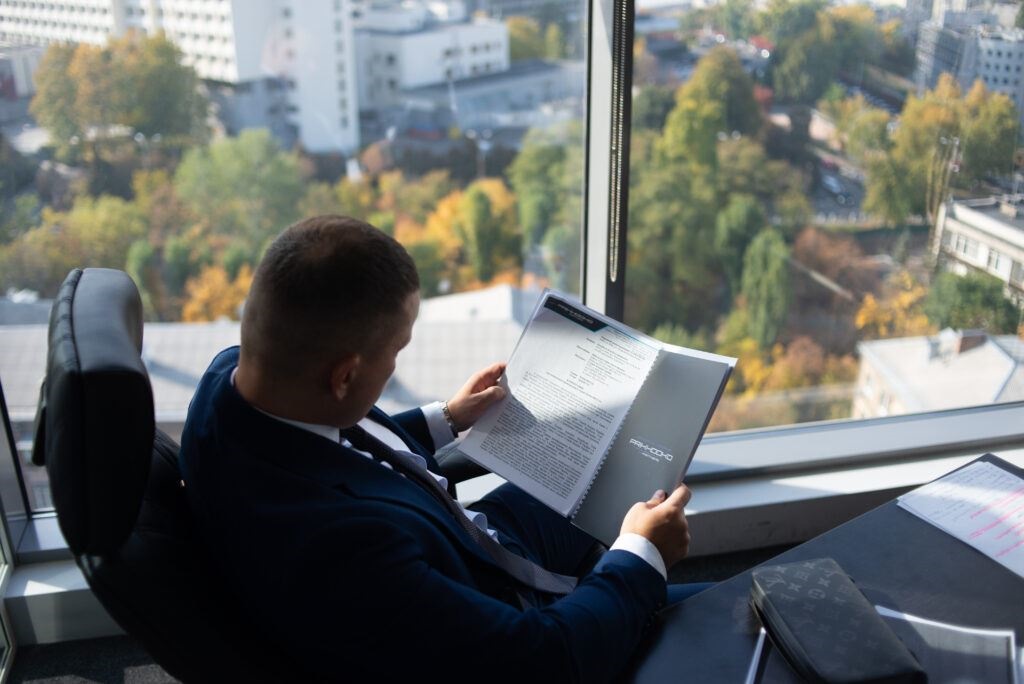
That is, criminal liability based on Art. 307 of the Criminal Code of Ukraine should occur only in the absence of permission (for example, the unit commander), in the event that the serviceman had the intention of voluntarily leaving the unit or the place of service, as well as not arriving at the place of service in a timely manner.
Calculate the cost of services
1 question
Are you in the status of a defendant in criminal proceedings?
2 question
Are you charged with unauthorized abandonment of a military unit or place of service?
3 question
Are you charged with disobedience to the military command?
4 question
Are you charged with desertion?
Can I receive a consultation online or by phone?
Yes. Consultations are available by phone, online, and at our office. Your location does not prevent you from receiving initial legal assistance.
Which documents should I prepare for the consultation?
Bring or send everything related to the case, including a summons, notice of suspicion, court orders, records, agreements, and correspondence. If you do not have any documents, simply describe the situation. The lawyer will tell you what should be requested.
How much does a lawyer’s assistance cost?
The exact fee depends on the stage, complexity, and scope of work. Current estimates are shown in the price table on this page, and we prepare an individual calculation after the initial conversation.
Does your law firm work only in Kyiv?
No. We provide services throughout Ukraine. Clients looking for a criminal lawyer in Lviv, Odesa, or Dnipro can conveniently begin online. The next steps and format of cooperation can then be arranged to meet the needs of the case.
Should I choose a consultation or full representation?
A consultation may be sufficient when the issue is limited and clear. If proceedings have been opened, a notice of suspicion has been served, or a court hearing is expected, ongoing representation by a criminal lawyer may be required. A lawyer will recommend the appropriate format after the assessment, and it can be changed as the case develops.
Can a relative contact the lawyer?
Yes. Relatives are often the first to call a lawyer, especially after a detention. The lawyer’s authority is agreed with the person concerned by the proceedings and formalised in an agreement. This should be arranged as early as possible.
You may also need:
Military criminal lawyer
Read more
Protection of interests in criminal proceedings
Read more

Legal defense in a criminal case
Read more
Appeal against decision to discontinue criminal proceedings
Read more
Petition to close criminal proceedings
Read more
International criminal lawyer
Read more
Cassation appeal in a criminal case
Read more
Appeal against the refusal to open criminal proceedings
Read more
Representation in criminal proceedings
Read more
Lawyer during interrogation
Read more
Lawyer in criminal proceedings
Read more
Escort during interrogation during martial law
Read morecall back
during the day

 Telegram
 Viber
 WhatsApp


 Facebook
 Instagram