


Head of family law practice
An attorney with extensive experience specializing in complex family disputes. As Head of Practice, he combines deep legal expertise with a personalized approach to every client. He ensures strategic protection of family interests and delivers impeccable results in the most challenging cases.

Legal support of surrogate motherhood
In the last few decades, assisted reproductive technologies have been created to help couples realize their innate desire for fatherhood. However, there are situations when bearing a child is impossible due to physiological limitations. Thus, surrogacy is the only way for some couples to fulfill their dream of becoming parents. The relevance of legal support of surrogate motherhood comes from the need to ensure legal security and protection of all participants in this process. Since surrogacy involves various legal aspects, from the conclusion of an agreement between the parties to the recognition of paternity and inheritance, proper legal support is extremely important.
What is the legal regulation of surrogate motherhood in Ukraine?
In our country, surrogate motherhood is gaining more and more popularity as a means of infertility treatment. However, the lack of its regulation in Ukrainian legislation endangers future biological parents and surrogate mothers.
This is manifested in the fact that there is no clear normative act regulating surrogate motherhood. Therefore, the fundamental laws for regulating this area are:
- Constitution of Ukraine;
- Family Code of Ukraine;
- Law of Ukraine “Fundamentals of Ukrainian legislation on healthcare”;
- Order of the Ministry of Health of Ukraine dated 09.09.2013 No. 787 “On approval of the Procedure for the use of assisted reproductive technologies in Ukraine”.
The most meaningful among the legislative norms in regulating the issue of surrogate motherhood is Article 123 of the Family Code. It defines spouses as the legal parents of a child when the embryo transfers from their own reproductive cells (gametes) into another woman’s body.
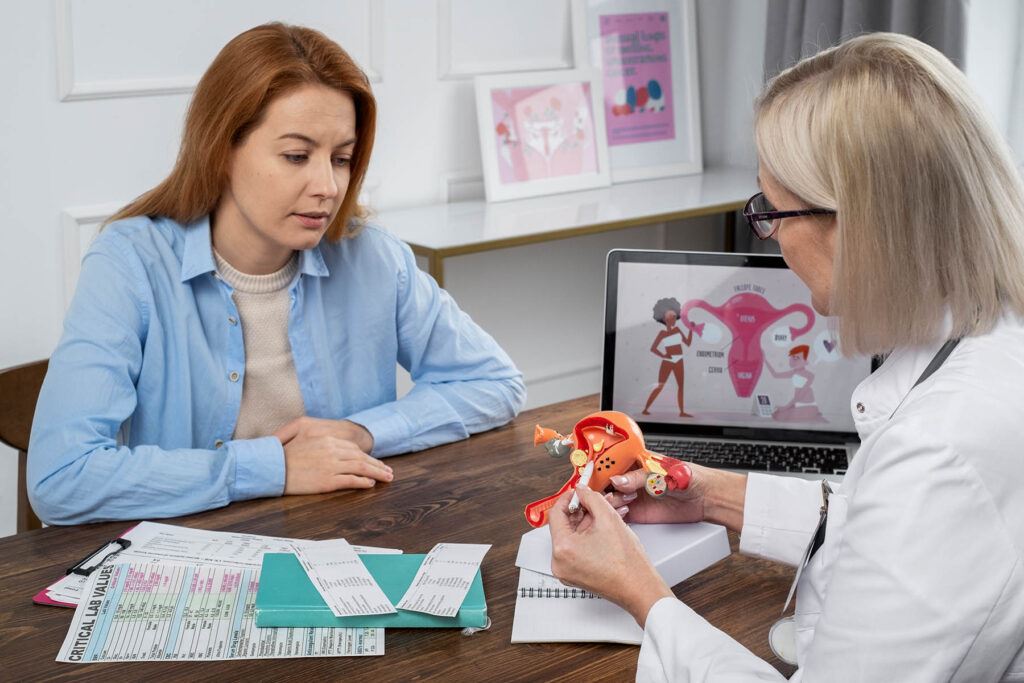
The procedure also determines that an adult capable woman can be a surrogate mother if she has her own healthy child, his voluntary written consent, and also in the absence of medical contraindications.
What are the restrictions on participation in surrogate motherhood?
The legislation of our country does not impose many restrictions on participation in surrogate motherhood programs. However, there are the following restrictions:
- The practice of gender surrogacy involves a genetic link between a woman and a fetus, which is nurtured through the use of a surrogate mother’s egg. However, it is important to note that only full gestational (full) surrogacy is allowed.
- Unmarried couples and single individuals can participate in the program as genetic parents.
- The biological mother has no medical indications indicating her inability to become pregnant on her own, bear a child and give birth to him.
- Participation in the program as a surrogate mother for a woman who does not meet the specified medical requirements (age, health status, having a child of her own).
The list of these restrictions is not exhaustive.
How does the surrogacy program work in Ukraine?
The agreement between the parties is the main document regulating surrogate motherhood in Ukraine. The rules for signing these contracts are established in accordance with the guidelines set out in the Civil Code.
The contract on surrogate motherhood provides for the obligation of a surrogate mother to bear, give birth and give the child to genetic parents (clients). In exchange, customers agree to offset a predetermined fee.
These contracts must include special conditions that may arise due to objective circumstances. These circumstances are connected, first of all, with the peculiarities of the life of the surrogate mother, as well as the embryo and the child. Examples of such circumstances include the risks associated with miscarriage, the birth of children with developmental disabilities, the birth of a child with poor health, etc.
If you need legal support for surrogate motherhood, then the law firm “Prikhodko and Partners” will be able to help you in this matter. Our firm offers a wide range of services, including the provision of a one-time consultation, as well as the preparation and execution of a tripartite agreement between the surrogate mother, genetic parents and the clinic. In addition, we offer support for registering a child after the completion of the surrogacy process, and much more. So don’t hesitate and get in touch!
Calculate the cost of services
1 question
Have you already contacted other lawyers about surrogacy?
2 question
Have you already entered into an agreement with an agency or a surrogate mother?
3 question
Are you in Kyiv or Kyiv region?
What are the conditions and requirements of the legislation of Ukraine for surrogacy?
Surrogacy in Ukraine is legal and regulated by the Family Code of Ukraine, the Law “On Health Care” and the Order of the Ministry of Health No. 787.
A woman usually between the ages of 21 and 35, who has at least one healthy child of her own and has no medical contraindications, can participate as a surrogate mother. She must undergo a set of medical and psychological examinations.
Biological parents must have medical indications for the procedure (for example, the absence of a uterus, serious diseases that make it impossible to carry a pregnancy).
The law does not oblige them to be married, but in practice, most clinics work with married couples.
What are the terms of the contract with a surrogate mother?
A surrogacy contract is made between the biological parents and the surrogate mother, often with notarization.
It should include:
- payment procedure (advance, monthly payments, final compensation),
- coverage of expenses (medical, domestic, transport),
- lifestyle requirements during pregnancy (absence of bad habits, medical regimen),
- obligation to transfer the child after birth,
- mechanisms in case of medical complications,
- force majeure,
- as well as the procedure for resolving disputes (for example, through mediation or court).
The clarity of the terms of the contract is a key factor in avoiding conflicts.
How are parents' rights to a child after birth formalized?
According to the legislation of Ukraine, parents are immediately recorded as biological parents in the birth certificate (provided that there are medical documents confirming the genetic relationship).
After giving birth, the surrogate mother signs a notarized statement that there are no claims to the child. Biological parents submit a medical certificate from the maternity hospital and, if necessary, DNA test conclusions to the registry office.
Registration of a child is quick if all documents are prepared in advance.
In cases where the surrogate mother changes her decision and does not want to sign the documents, a court decision may be required — therefore, the contract must provide for safeguards.
What tax and financial aspects should be taken into account?
The surrogate mother’s remuneration is considered to be the income of an individual and is subject to taxation at the rate of 18% personal income tax and 1.5% military tax.
Payment can be made in cash or non-cash, but for the security of the transaction, cashless payment with a clear fixation in the contract and payment documents is recommended.
If the parties are residents of different countries, it is necessary to take into account currency legislation and the rules of international bank transfers.
Some couples also provide for life and health insurance of the surrogate mother for the duration of pregnancy in the contract.
What are the features for foreign nationals?
If the biological parents are foreigners, after the birth of the child, they receive a Ukrainian birth certificate, which indicates their data.
Further, the document is subject to apostille or consular legalization (depending on the country of destination) and translation by an official translator.
In many countries, embassies require confirmation of a genetic link (DNA test), even if a certificate has already been issued in Ukraine. When traveling abroad, sometimes additional documents from the migration service or consulate are required.
Legal support in such cases helps to avoid delays and problems at the border.






You may also need:
Obtaining a MSEC certificate of disability
Read more
Registration of a child born through reproductive medicine
Read more

Legal assistance in establishing disability
Read more
REGISTRATION OF PERMISSION FOR THE CHILD TO GO ABROAD FROM ONE OF THE PARENTS
Read more
Appeal of inheritance contract
Read more
Establishment of guardianship over an elderly person
Read more
Accompaniment of a lawyer in the children’s service
Read more
Appeal against the decision of the Medical and social expert commission
Read more
A court decision on independent upbringing and maintenance of a child as a basis for obtaining a deferment
Read more
Division of foreign assets upon divorce
Read more
Making changes to the act record of the birth of a child
Read more
Establishment of guardianship over an incapacitated person
Read morecall back
during the day

 Telegram
 Viber
Viber
 WhatsApp

 Facebook
 Instagram