


Attorney
Specialist in bankruptcy of individuals and legal entities. Provides legal support in bankruptcy procedures for individuals, private limited liability companies, legal entities, as well as closing executive proceedings, concluding restructuring and settlement agreements with financial institutions

Forced collection of debt under a credit agreement
Non-payment of a loan is not only a problem for the debtor, but also a serious threat for the creditor. Late payments can lead to significant losses, because invested funds do not generate the expected income, and sometimes disappear without a trace.
Grounds for forced collection of debt under a credit agreement
There are several grounds on which a bank or other financial institution can initiate forced collection of debt under a credit agreement:
- Delinquent Payments: If the borrower fails to make payments for a certain period of time, usually 30-90 days, the lender may begin foreclosure proceedings.
- Non-fulfillment of other terms of the contract: this may include non-payment of commissions, fines, penalties, or violation of other obligations stipulated by the contract.
- Court decision. When a creditor files a lawsuit in court and obtains a judgment in his favor, the court may issue a debt enforcement order. This is resolved in a civil process according to the laws of the country.

What are the options for forced debt collection under a credit agreement?
The creditor can use one or more of the following debt collection methods:
- Court Order: This is the easiest and fastest way to collect a debt that does not require a court hearing. The judge issues an order based on the creditor’s application and documents confirming the debt.
- Lawsuit: If the amount owed is significant or the borrower disputes the debt, the creditor can file a lawsuit. The court will consider the case and issue a decision on debt collection.
- Enforcement proceedings: after receiving a court order or court decision, the creditor can apply to the enforcement service for enforcement of the debt. Executors have the right to seize the debtor’s property, account, wages, and other assets.
Why should the creditor not act independently if there is no legal experience in such cases?
- Legal nuances. Debt collection under a credit agreement is a complex process that requires knowledge of legislation, understanding of court practice and experience in working with similar cases. Going it alone without proper legal support can lead to mistakes, waste of time and money, and make your situation worse.
- Inefficiency. Without experience, you risk choosing the wrong debt collection strategy, which can lead to a delay in the case and significant financial losses.
- Risk of violation of rights. Failure to comply with legal regulations may result in the court not satisfying your requirements, and you may find yourself in a disadvantageous legal position.
- Psychological pressure. Debt collection cases are often associated with emotional stress and psychological pressure. Managing such a case on your own can be very exhausting, both from an emotional and practical point of view.
By contacting a qualified lawyer, you can be sure that your interests will be reliably protected, and the case will be resolved as quickly and efficiently as possible.
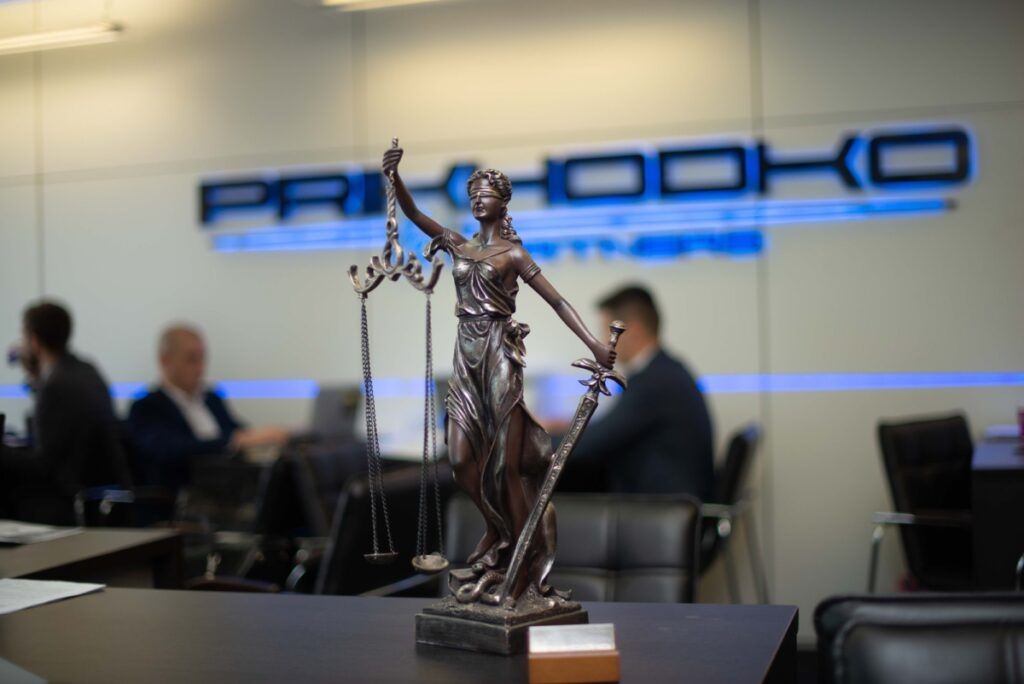
Contact the experts of our law firm “Prykhodko and Partners”
Having many years of experience in the field of debt collection, we offer our clients:
- Consultations with experienced lawyers. Our specialists will analyze your situation in detail, explain your rights and help you choose the best course of action.
- Representation in court. We will represent you at all stages of the legal process, protecting your interests and seeking a just decision.
- Support of executive proceedings. Our lawyers will help you at the stage of forced debt collection, monitoring the actions of the enforcement service and taking measures to prevent your rights from being violated.
- Development of an individual debt collection strategy. Taking into account all the circumstances of the case, we will develop an action plan that will help you return your funds as quickly and efficiently as possible.
- Application of effective methods and tools. We use modern methods and tools for debt collection, which guarantees a quick and effective result.
We will reliably protect your rights and interests at all stages of the process, from pre-trial settlement to execution of the court decision. Contact us for qualified legal assistance, and we will help you legally solve the problem with credit debt, protecting your rights and property.
If you want to order a consultation or find out the price of forced debt collection under a credit agreement – fill out the form below.
Calculate the cost of services
1 question
Are you interested in forced debt collection under a credit agreement?
2 question
Are you in Kyiv?
3 question
Do you need a service urgently?
Is it possible to go through the bankruptcy procedure if the debt is less than 180,000 UAH?
Bankruptcy can be filed regardless of the amount of debt — there are no minimum limits set by law. However, if the amount of debt is less than UAH 180,000, it is usually more advisable to agree on debt restructuring, as bankruptcy may be economically unprofitable.
If I am not in Kyiv, can I cooperate with you?
Yes, we work remotely throughout Ukraine and even with clients abroad! We have many clients from Lviv, Odessa, Dnipro, Kharkiv, Cherkasy and other settlements.
Communication is carried out in any way convenient for you.




You may also need:
Credit restructuring in a bank/microfinance organization
Read more
Obtaining a certificate of absence of bankruptcy
Read more

Lawsuit for recognition of a natural person as bankrupt
Read more
Liquidation of a company through bankruptcy proceedings
Read more
Individual bankruptcy
Read more
Debt write-off in bankruptcy
Read more
Restructuring of foreign currency loan
Read more
Bankruptcy certificate for legal entities
Read more
Protection of creditors’ rights in bankruptcy
Read more
Legal support of the bankruptcy procedure
Read more
Consultation on bankruptcy of an individual
Read more
Liquidation of the company under the bankruptcy procedure
Read morecall back
during the day

 Telegram
 Viber
Viber
 WhatsApp


 Facebook
 Instagram