Refund of Loan Interest Paid by Servicemembers
Refund of loan interest paid by servicemembers may be relevant where a person had a statutory right to non-accrual of interest, fines, and penalties, but the creditor continued to charge them and the borrower actually made the corresponding payments.
The key provision is paragraph 15 of Article 14 of the Law of Ukraine “On Social and Legal Protection of Servicemembers and Members of Their Families.”
It provides a credit benefit for certain categories of servicemembers and, in cases established by law, for their wives or husbands.
It is important to distinguish between:
- non-accrual of interest in the future;
- recalculation of an already formed debt;
- refund of interest that the borrower has already actually paid.
These are different legal issues.
Servicemember status alone does not automatically entitle a person to a refund of any interest under any loan. It is necessary to establish the category of service, the applicable benefit period, the type of credit agreement, and the specific payments made.
Who Is Entitled to the Credit Benefit
The current paragraph 15 of Article 14 of the Law provides benefits, in particular, for:
- servicemembers called up during mobilization for a special period;
- servicemembers called up from among reservists during a special period;
- their wives or husbands;
- other servicemembers who, during periods defined by law, directly participated or are participating in the defense of the independence, sovereignty, and territorial integrity of Ukraine;
- wives or husbands of such servicemembers in cases provided by law.
For these categories, subject to the applicable conditions:
- interest for the use of credit is not accrued;
- penalties are not accrued;
- the relevant fines are not applied.
Can Interest That Has Already Been Paid Be Refunded?
This issue must be analyzed separately from the existence of the benefit itself.
If the creditor charged interest for a period when, under the law, such interest should not have been accrued, and the servicemember actually paid it, this may raise the issue of:
- recalculation of the loan;
- crediting the overpayment;
- refund of excess amounts paid.
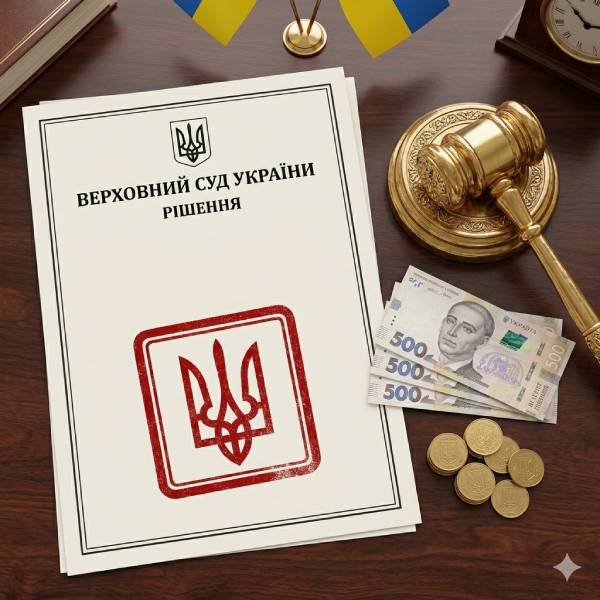
In 2026, the Supreme Court considered a case in which, after receiving documents confirming military service, the creditor agreed to recalculate and refund interest paid under loan agreements.
At the same time, the Supreme Court separately emphasized that the existence of a statutory benefit by itself does not prove that the creditor violated the borrower’s rights.
Therefore, a refund claim should demonstrate:
- that the person belonged to an eligible category;
- the period during which the benefit applied;
- which specific interest amounts were accrued;
- which part of those amounts was actually paid;
- whether the borrower contacted the creditor;
- what response or recalculation the creditor provided.
Does the Benefit Start Only on February 24, 2022?
No. That formulation is too simplified.
Paragraph 15 of Article 14 has existed in legislation since 2014, and the specific benefit period depends on the servicemember’s category.
For example, for a mobilized servicemember, the law links the benefit to the entire period of call-up.
For other servicemembers, the following may be relevant:
- the special period;
- actual participation in the relevant activities;
- the period of such participation;
- the type of military service.
Therefore, it is not appropriate to automatically calculate all interest only from February 24, 2022.
Mobilized Servicemembers
For servicemembers called up during mobilization, the law provides the benefit for the entire period of their call-up.
Therefore, when making the calculation, the lawyer determines:
- the date of call-up;
- the period of the relevant military service;
- the dates when interest was accrued;
- the dates of actual payments;
- the interest component of each payment.
Only after that can the potential overpayment be determined.
Contract Servicemembers
The old statement that a contract servicemember can rely only on a bank’s voluntary decision is not universally correct.
Current legislation also covers certain other servicemembers who, during the special period, directly participated or are participating in activities defined by law for the defense of Ukraine.
Therefore, for a contract servicemember, it is necessary to review:
- the type of military service;
- the unit;
- the periods of performance of the relevant duties;
- documents confirming this;
- the period during which loan interest was accrued.
Only then can a conclusion be reached regarding eligibility for the benefit.
Combatant Status Alone Is Not Always Sufficient
The current position of the Supreme Court must also be taken into account.
Combatant status by itself does not automatically exempt a borrower from loan interest.
It is necessary to establish whether the person falls specifically within the categories provided for in paragraph 15 of Article 14 of the Law of Ukraine “On Social and Legal Protection of Servicemembers and Members of Their Families.”
Therefore, a combatant certificate may be an important document, but it is not always the only or sufficient legal basis.
Which Loans Are Excluded
Current law provides for certain loans to which the general non-accrual benefit does not apply.
The exceptions include, in particular, certain loans provided by law for the purchase of:
- a residential house;
- an apartment;
- a future real estate property;
- an unfinished residential construction project;
- property rights to residential real estate;
- a vehicle.
The current version also contains a special exception for certain loans for energy equipment where interest may be compensated by the state or third parties.
Therefore, the purpose of the loan should be checked before contacting the creditor.
Does the Benefit Apply to MFO Loans?
This possibility may also be considered for non-bank lending.
The provision concerns obligations to:
- banks;
- enterprises;
- institutions;
- organizations of various forms of ownership;
- individuals.
Therefore, an MFO loan or microloan may also need to be reviewed to determine whether the benefit applies.
What Should Be Refunded: All Payments or Only Interest?
A servicemember cannot demand the return of the entire amount paid to the creditor.
Payments must be divided into:
- repayment of the loan principal;
- interest;
- commissions;
- fines;
- penalties;
- other expenses.
The credit benefit under paragraph 15 of Article 14 does not exempt the borrower from the obligation to repay the principal amount actually received.
Likewise, not every bank commission is automatically treated as interest for the use of credit.
In the 2026 Supreme Court case, the court, among other things, distinguished between loan interest and payment service fees: the creditor agreed to refund the interest, but not the fees paid to another payment service provider.
What Documents Are Needed for an Interest Refund?
For an initial review, it is advisable to have:
- the credit agreement;
- additional agreements;
- a full debt calculation;
- a statement or payment history;
- documents confirming call-up or military service;
- a certificate from the military unit;
- other documents confirming the category and period of service;
- correspondence with the creditor;
- previous applications for application of the benefit — if any were submitted.
How to Calculate the Amount to Be Refunded
A chronological calculation should be prepared:
- determine the date on which eligibility for the benefit began;
- obtain a detailed calculation from the creditor;
- identify interest accrued during the benefit period;
- determine which of those amounts were actually paid;
- separate the principal debt and other payments;
- calculate the amount of the overpayment.
Without such a calculation, a demand to “refund all interest” may be unfounded or inaccurate.
How to Apply to a Bank or MFO
A written application is submitted to the creditor.
It is advisable to:
- identify the credit agreement;
- state the servicemember’s category;
- specify the benefit period;
- refer to paragraph 15 of Article 14 of the Law;
- attach military service documents;
- request that unlawful accruals be stopped;
- request a recalculation;
- determine the amount of the overpayment;
- request a refund or crediting of that amount under the agreed mechanism.
Does the Bank Need to Be Notified About Military Service?
For the practical application of the benefit, the creditor should be provided with proper supporting documents.
A bank or MFO does not always have independent access to complete information about the borrower’s military status and service periods.
Therefore, it is advisable to notify the creditor in writing and provide the relevant documents.
This also records the date of the application in the event of a later dispute.
What to Do If the Creditor Agrees to Recalculate
The recalculation itself should be reviewed.
In particular:
- the period for which interest was cancelled;
- the amount recognized as an overpayment;
- whether all payments were correctly taken into account;
- how the funds will be refunded;
- whether any other debt remains.
If the funds are refunded to a bank account, the creditor may request payment details and documents identifying the recipient.
What to Do If the Bank or MFO Refuses
First, a written response should be obtained.
The lawyer checks:
- whether the servicemember’s category was correctly determined;
- whether the loan falls within a statutory exception;
- which period is disputed;
- whether sufficient evidence of service was provided;
- how the creditor calculated the debt;
- whether the disputed interest was actually paid.
After that, possible options include:
- a repeated legally reasoned application;
- a formal claim;
- an application to the NBU — if the creditor is a supervised financial institution;
- court protection.
When Is Court Action Necessary?
A court dispute may arise if the creditor:
- refuses to recognize eligibility for the benefit;
- does not conduct a recalculation;
- continues to recover interest;
- has itself filed a claim for debt recovery;
- disputes the amount of interest already paid.
At the same time, the current position of the Supreme Court requires analysis of whether a specific right was actually violated, rather than relying solely on the fact that the borrower is a servicemember.
Does the Loan Principal Still Have to Be Repaid?
Yes.
Paragraph 15 of Article 14 does not itself exempt a servicemember from repayment of the principal amount of the loan.
Therefore, even after recalculation, debt may remain in relation to:
- the loan principal;
- other payments not covered by the benefit;
- obligations arising outside the benefit period.
Stages of Legal Support
- Status review. We determine the servicemember’s category and the applicable benefit period.
- Loan analysis. We review the agreement and statutory exceptions.
- Payment analysis. We determine the interest amounts actually paid.
- Overpayment calculation. We calculate the amount for which there may be legal grounds for recalculation.
- Application to the creditor. We prepare the application and supporting documents.
- Review of the response. We check the recalculation and refund amount.
- Challenge. If a dispute arises, we use the appropriate regulatory or judicial mechanism.
Common Situations
| Situation |
What Do We Check? |
Possible Actions |
| A mobilized servicemember paid interest during service |
The date of call-up, payments, and the interest component. |
Recalculation and a demand for refund of the overpayment. |
| A contract servicemember |
The category and actual participation in activities defined by law. |
Determination of the possible benefit period. |
| Only a combatant certificate is available |
Whether the person falls within paragraph 15 of Article 14. |
Collection of additional military service documents. |
| The bank has already refunded part of the interest |
The accuracy of the period and recalculated amount. |
Review of any remaining overpayment. |
| An MFO refuses to recalculate |
The agreement, servicemember category, and payments. |
Formal claim, application to the NBU, or court protection. |
| Loan for housing or a vehicle |
The purpose of the loan and the statutory exception. |
Review of whether the benefit can apply. |
Conclusion
A refund of interest already paid by a servicemember is possible only after a legal review of the specific loan and period of service. The key issue is not the date of February 24, 2022 by itself, but the date on which the particular servicemember became entitled to the benefit, whether the interest was correctly accrued, and whether it was actually paid. If the creditor recognizes the overpayment, the funds may be refunded or credited; if a dispute arises, the matter may need to be resolved through other legal mechanisms.
Are you currently serving or have you served in the military and paid interest on a loan during a period when you may have been entitled to a credit benefit? Submit a request on the Prikhodko & Partners Law Firm website. A lawyer will review your status, credit agreement, and payments, calculate any potential overpayment, and prepare an application for recalculation and refund.
















 Telegram
 Viber
 WhatsApp


 Facebook
 Instagram