



Lawyer
Lawyer in the field of military law. Specializes in issues of mobilization, postponement and reservation. Provides services for appeals to the military medical commission, escorting to the military commissariat, dismissal from military service, obtaining the status of a participant in hostilities. Conducts court cases on military issues.
Case: Successfully removed a client from the TCC and SSC wanted list without going to court

Service: Removal from the TCC and SSC Wanted List
A person liable for military service contacted Prikhodko & Partners Law Firm after the Territorial Recruitment and Social Support Center (TCC and SSC) initiated a search for him due to an alleged violation of military registration regulations (failure to appear at the military enlistment office in response to a summons).
This status created significant risks for the client during document checks, including the possibility of administrative detention and being taken to the Territorial Recruitment and Social Support Center.
What Did We Discover During the Analysis of the Client’s Documents?
Danylo Honcharenko, a military law specialist at Prikhodko & Partners, analyzed the client’s documents, the circumstances that led to his wanted status, and the statutory time limits within which the TCC and SSC could impose administrative liability.
The analysis revealed a significant procedural violation: the legally established period for imposing an administrative penalty had expired since the alleged administrative offense was detected, but no decision imposing such a penalty had been issued within the prescribed timeframe.
Under Article 38 of the Code of Ukraine on Administrative Offenses, administrative penalties for violations of military registration rules and legislation on defense, mobilization preparation, and mobilization committed during a special period may be imposed within three months from the date the offense is detected, but no later than one year from the date it was committed.
In the client’s case, the three-month period had expired. This circumstance became one of the key arguments for challenging his continued wanted status.
What Actions Did the Lawyers at Prikhodko & Partners Take?
Following a legal analysis of the situation, the military law specialist prepared a legally substantiated complaint to the relevant TCC and SSC.
In the complaint, the specialist outlined the circumstances of the case, emphasized the expiration of the statutory time limits for imposing administrative liability on the client, and substantiated the absence of grounds for continuing measures associated with his wanted status.
At this stage, the matter was successfully resolved through an administrative procedure without the need to file a lawsuit.
Result for the Client
After reviewing the complaint, the TCC and SSC removed the client from the wanted list.
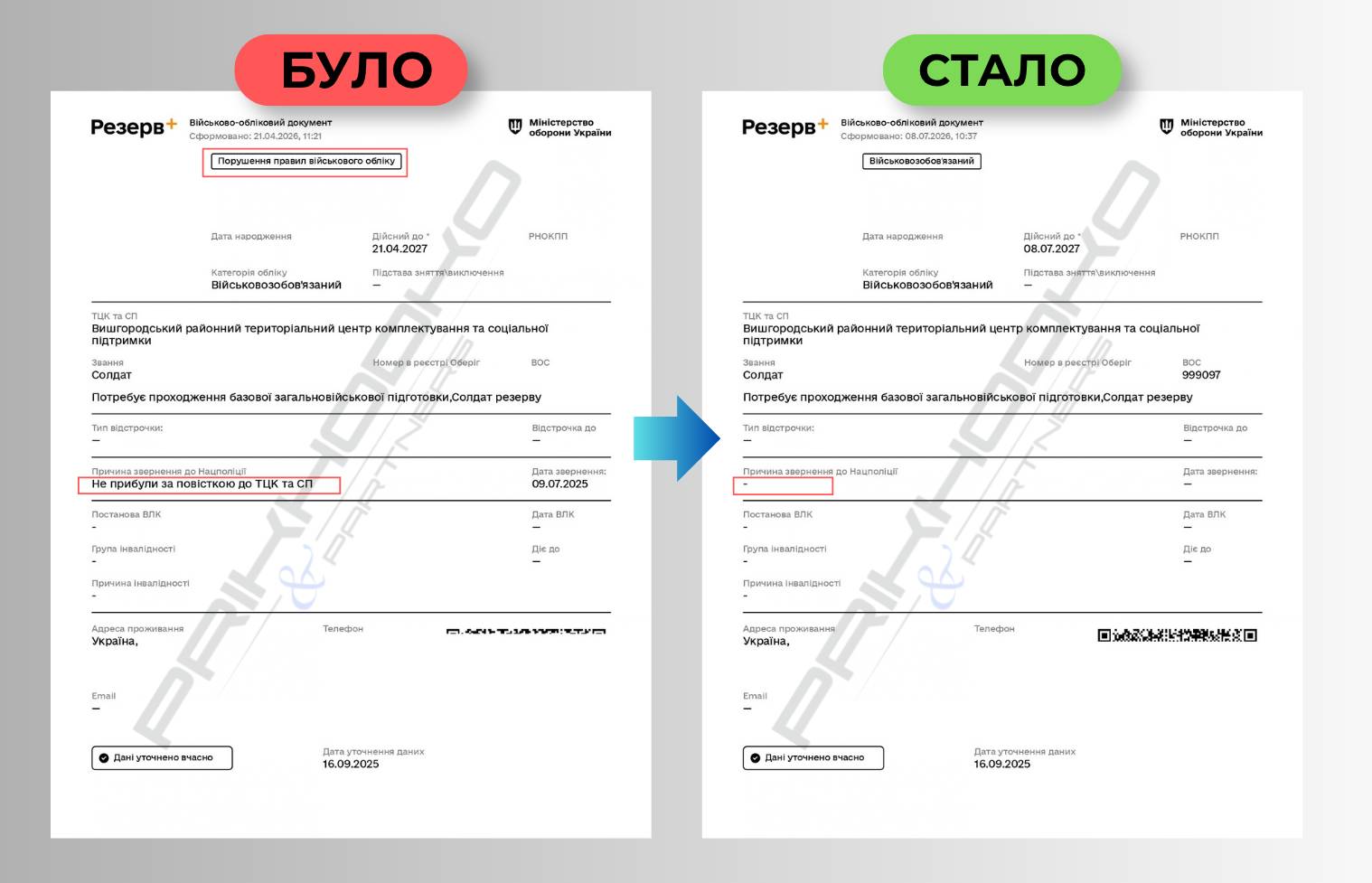
Thus, the issue was resolved through a legally substantiated complaint without lengthy court proceedings.
This case also demonstrates that being listed as wanted by the TCC and SSC does not necessarily mean that the authorities’ actions are legally justified. It is essential to verify the grounds for the wanted status, the date the alleged offense was detected, compliance with procedural requirements, and the statutory time limits for imposing administrative liability.
If you discover that you have been placed on the TCC and SSC wanted list, the first step should be a legal assessment of the grounds for this status. The military lawyers at Prikhodko & Partners provide comprehensive legal assistance in challenging TCC and SSC wanted status through both administrative and judicial procedures.






























 Telegram
 Viber
Viber
 WhatsApp

 Facebook
 Instagram