



Senior lawyer
Legal assistant in the practice of military disputes, dismissal from military service, reservation employees for the period of mobilization, appealing the conclusion of the military medical commission, legal support for clients in the military commissariat
Case: The wording in the MMC conclusion was changed to indicate that the injury was related to the defense of the Motherland

Client: military serviceman
Request from the Client: to change the wording in the MMC’s conclusion regarding the causal relationship of the injury.
Client situation:
A serviceman who was injured while performing a combat mission contacted us. After passing the military medical commission (MMC), the client received a conclusion stating the causal relationship of the injury: “injury received as a result of military service”.
At first glance, it seems like a simple bureaucratic formulation. But it was precisely this that was to cause the client to receive a lump-sum cash (insurance) payment in a much smaller amount than the one to which he was actually entitled.
What was the problem
In the legislation on social and legal protection of military personnel, there is a fundamental difference between two formulations of the causal relationship of injury:
- “related to military service” is a general, “neutral” category that applies to injuries and illnesses sustained during service in general;
- “related to the defense of the Motherland” is a wording that applies specifically to wounds, contusions, injuries, or mutilations sustained during direct participation in hostilities.
It is the second wording that is the basis for calculating a one-time cash benefit in an increased amount, provided for military personnel who were directly injured during hostilities.
The client actually received an injury in combat conditions, while defending the Motherland, but in the MMC’s conclusion this was “depersonalized” to a general wording about service. If the document had remained unchanged, the client would have lost the right to a significant portion of the payment due to him.

What did we do?
Senior lawyer of the military law practice Mykhailo Lobunko analyzed:
- the circumstances of the injury (place, time, nature of the combat mission);
- primary medical documentation and documents from the scene of the incident;
- correspondence of the wording in the MMC conclusion to the actual circumstances of the injury.
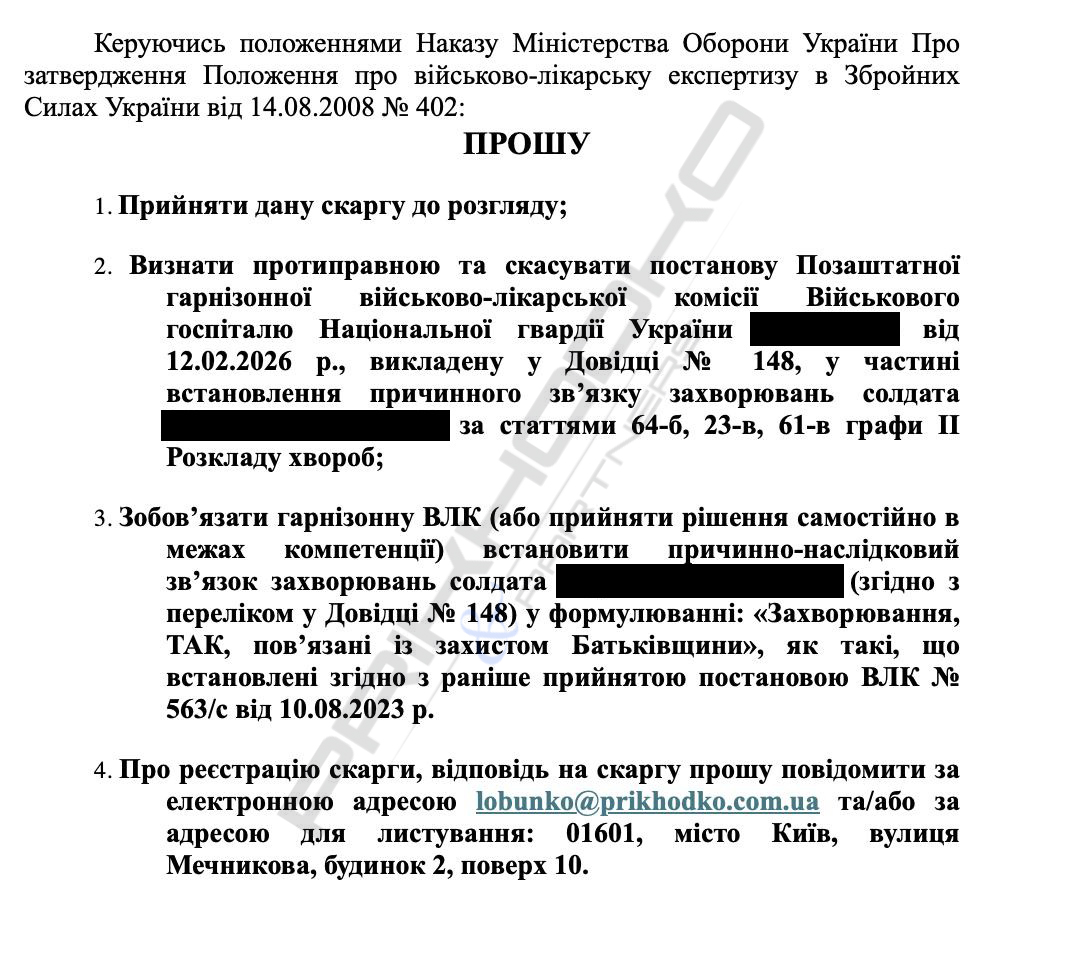
We prepared a reasoned appeal to the higher military medical commission with a request to review the formulation of the causal connection of the injury, adding to it evidence confirming the client’s direct participation in hostilities at the time of injury: combat orders/instructions, reports, testimonies, other documents recording the circumstances of the event.
Thanks to a clear evidence base and a legally competently formulated appeal, it was possible to obtain a review of the conclusion without the need to go to court – the issue was resolved directly at the MMC level.
Result
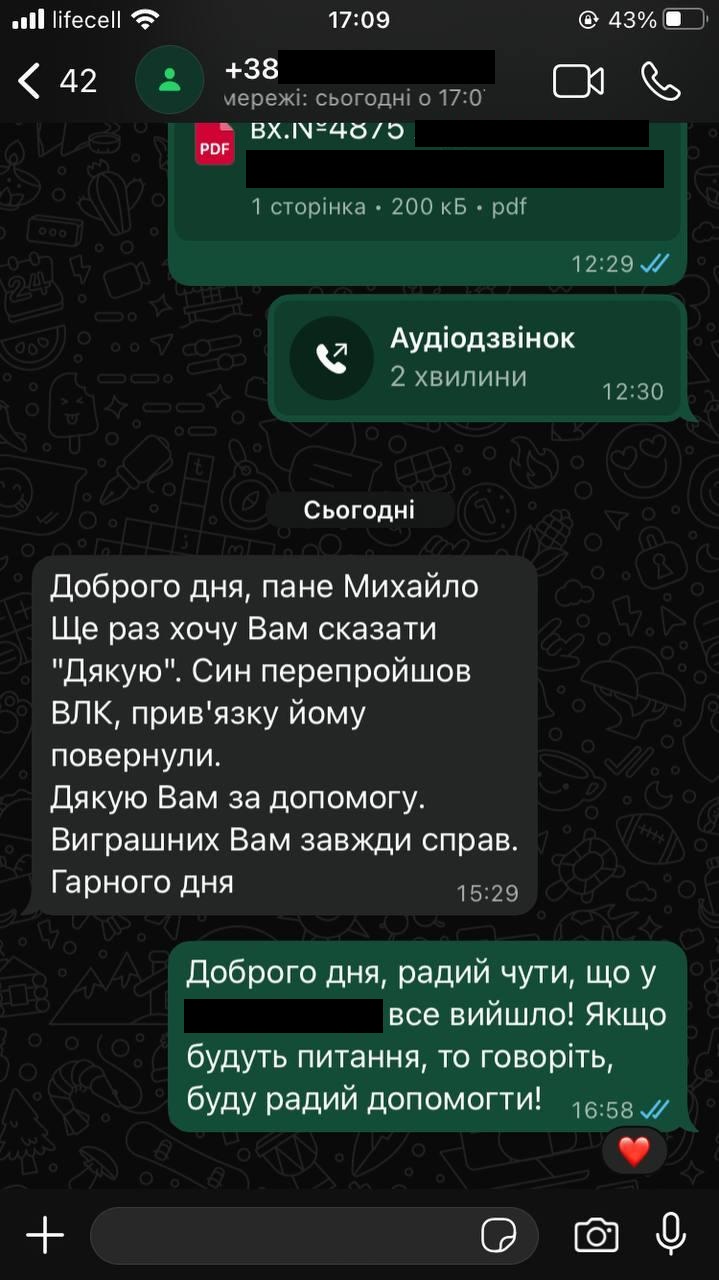
The military medical commission revised the conclusion and changed the wording of the causal connection of the injury to “related to the defense of the Motherland”.
Thanks to this, the client received the right to a lump-sum cash (insurance) payment in a much larger amount than he could have received under the original wording – the difference amounted to a significant amount that the client could have lost only due to inaccurate wording in the official document.
Why is this important?
This case is a clear example of how much a single wording in a MMC conclusion can affect a serviceman’s cash payments. Often, such inaccuracies arise due to a formal, template approach to document processing. Without careful legal analysis, the client could forever lose the right to the payment due to him.
If the conclusion MMC of your close relative’s or your own contains wording that, in your opinion, does not correspond to the real circumstances of the injury, this is a reason to seek legal advice. Often, the issue can be resolved without a court hearing, through a properly prepared appeal to the MMC.























 Telegram
 Viber
Viber
 WhatsApp

 Facebook
 Instagram