



Senior lawyer
Legal assistant in the practice of military disputes, dismissal from military service, reservation employees for the period of mobilization, appealing the conclusion of the military medical commission, legal support for clients in the military commissariat
Case: Assistance in organizing military registration documents

Client: conscript
Client situation:
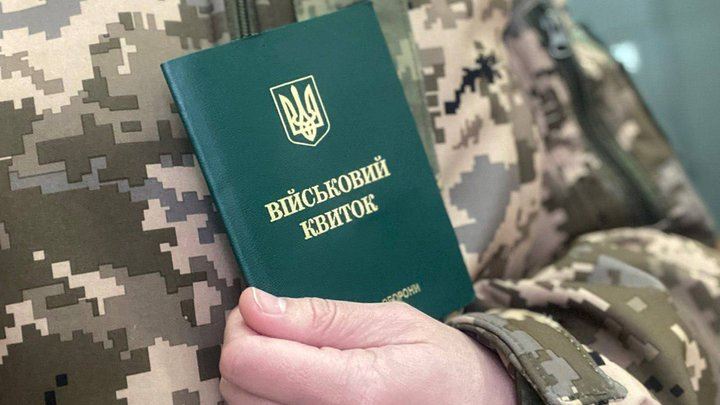
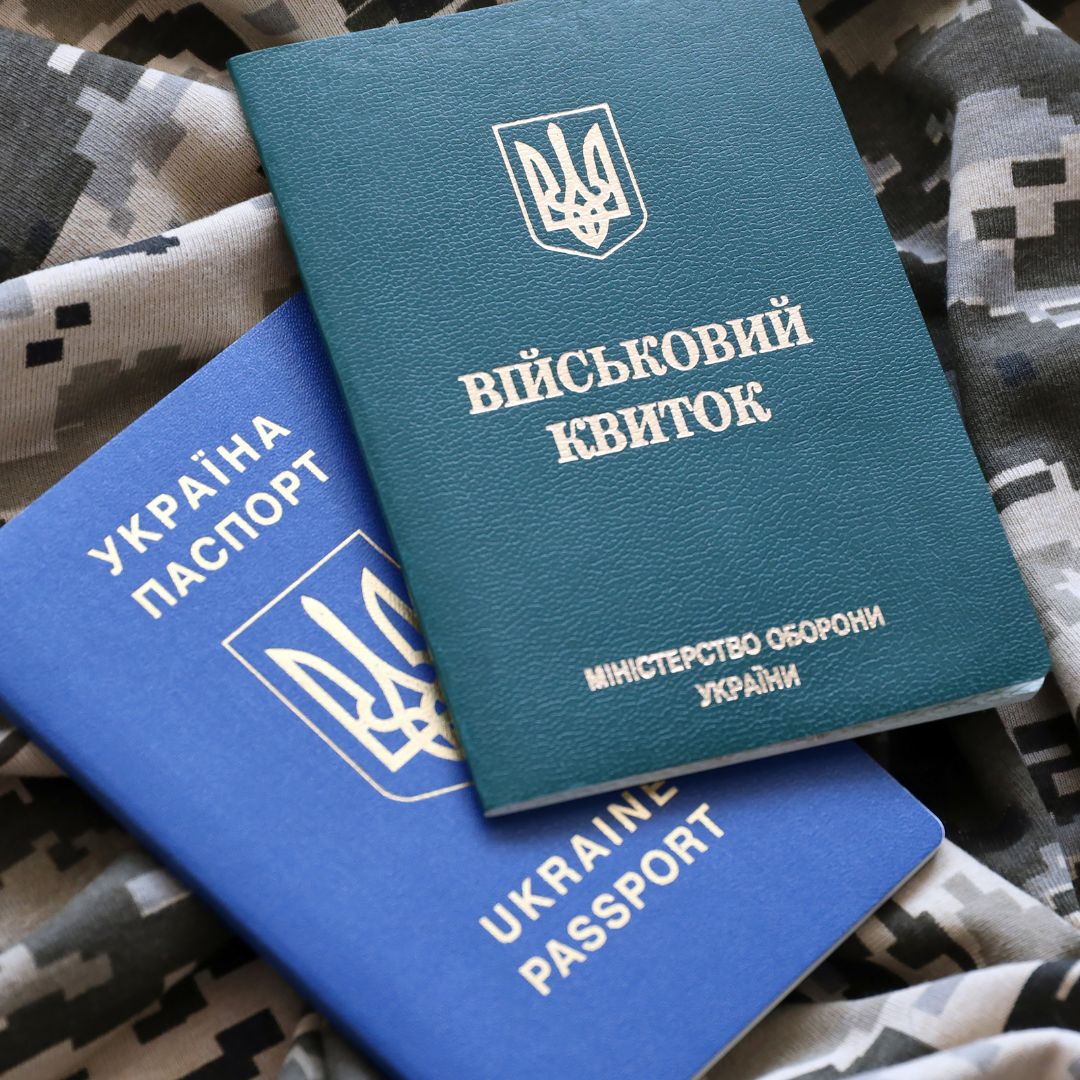
We were contacted by a Client who had been living at a different address than the one listed in his military registration document for a long time. Formally, he remained registered with the territorial recruitment and social support center (TCC and JV) at his old place of registration in the temporarily occupied territory, while in reality he had been living in another settlement for a long time.
The Client was aware that such a discrepancy between his actual place of residence and the data in the military registration was a direct threat: sooner or later, this could lead to him being recognized as violating the rules of military registration, and then being declared wanted. It was dangerous to delay, so he contacted us in advance, without waiting for the situation to become a problem.
What was the problem?
A detailed analysis of the client’s documents revealed several things that needed to be corrected comprehensively, rather than one by one:
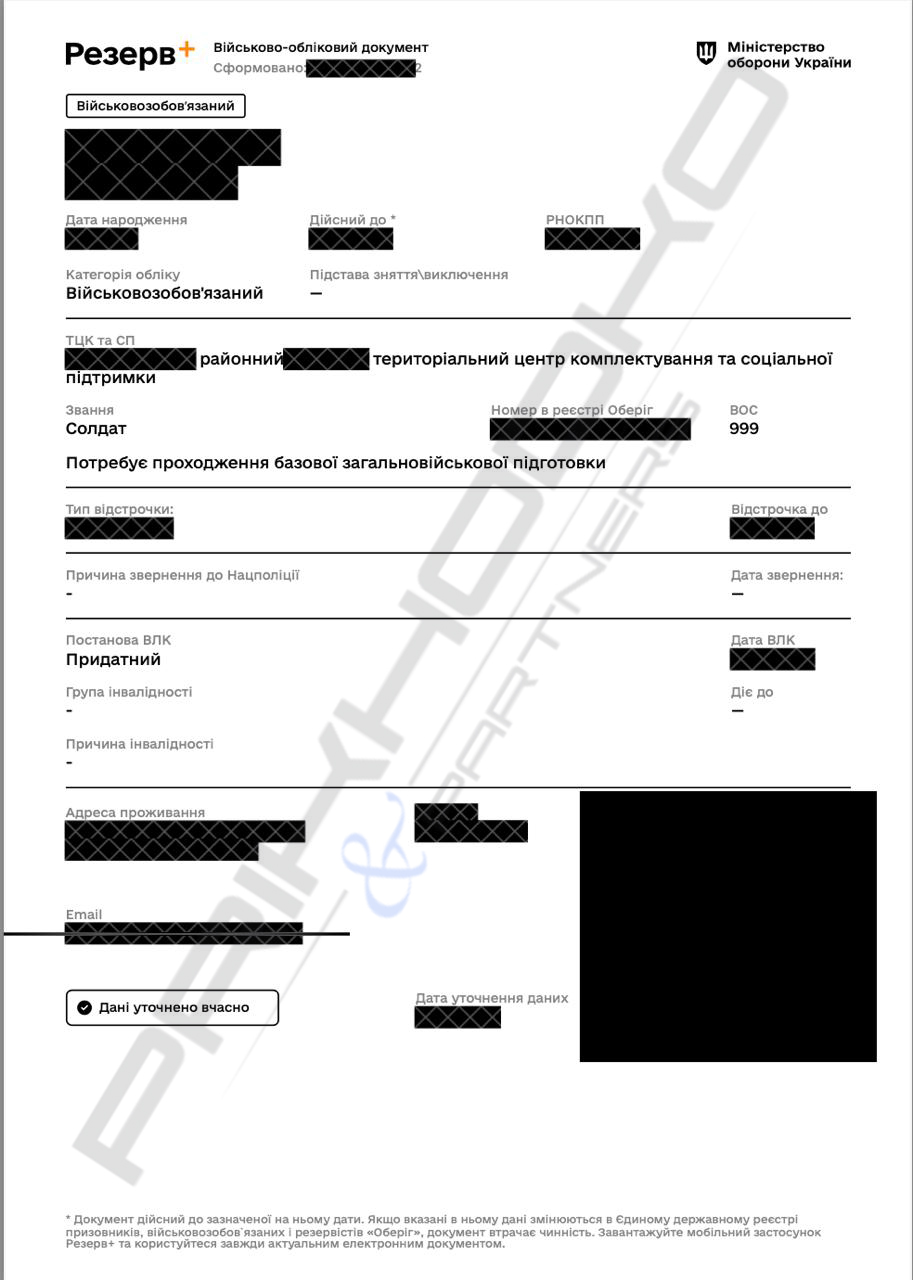
- the data on the place of residence in the military registration document did not correspond to the actual address;
- the client was not deregistered from the “old” TCC and JV and, accordingly, could not correctly register at the new place of residence;
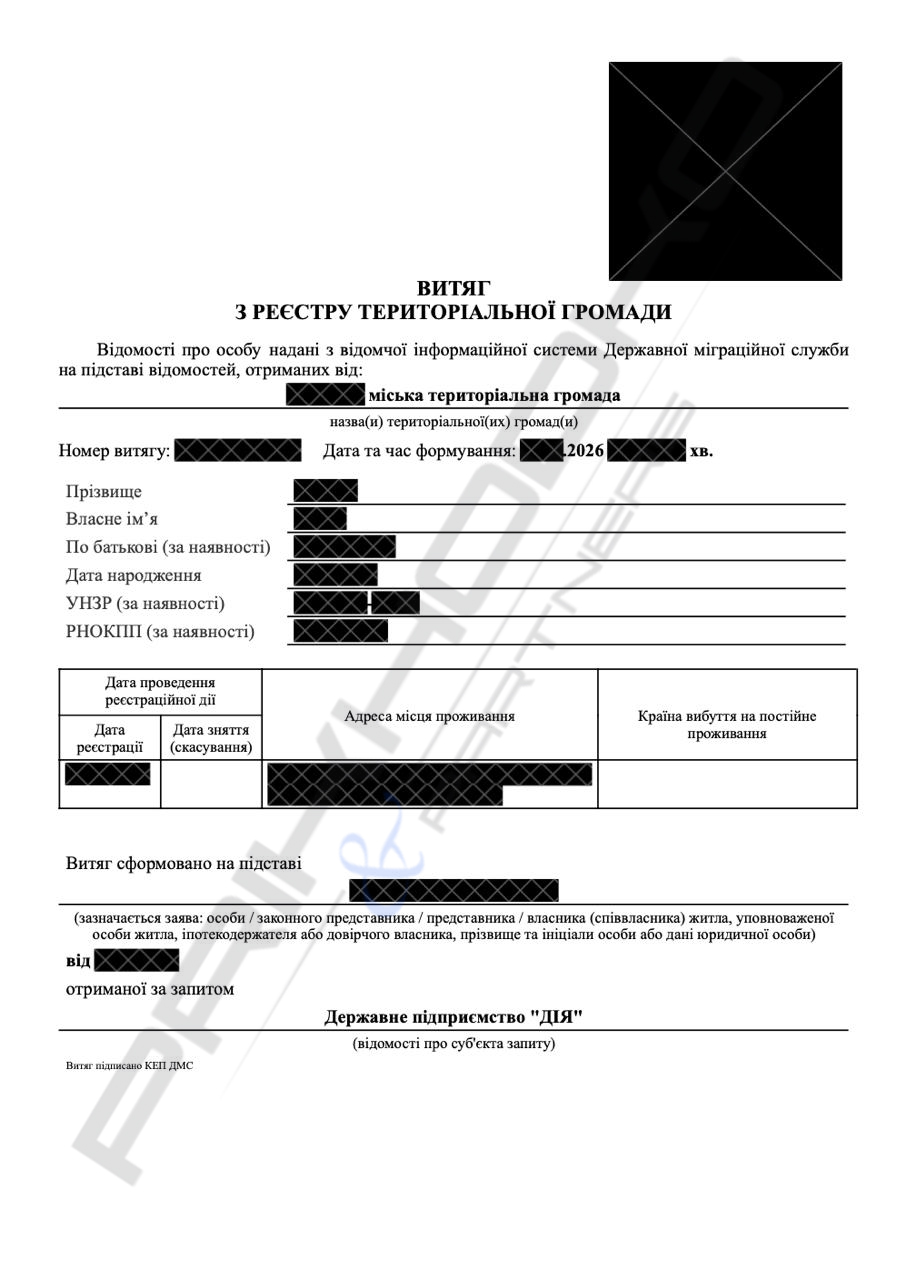
- the official registration of the place of residence was also not updated – formally the client was listed as registered where he no longer actually lived.
Without ordering in this exact sequence — first bringing military records into line, then correctly registering the place of residence — any attempt to update one document could create even more confusion in the registers and actually increase the risk of being searched, not reduce it.

What did we do?
The company’s lawyers have built a step-by-step strategy for working with client documents:
- We registered the client for military registration in the new TCC and JV, which corresponds to his current, already officially registered place of residence.
- We registered the client’s new place of residence through the TSNAP – with all the necessary documents and without errors, which usually lead to refusals or delays.
- We checked the correctness of entering the updated data into the relevant state registers to eliminate discrepancies between paper documents and electronic databases – it is such discrepancies that most often become the cause of an unfounded search.
Thanks to a clear sequence of actions, all stages — from the TCC to the TSNAP — were completed without unnecessary bureaucratic red tape and without the failures that the client feared most.
Result
Today the client:
- officially registered at the actual place of residence;
- removed from military registration in the previous TCC and JV;
- registered in the new TCC and JV;
- data in all registers are brought into line with each other.
The risk of being wanted for incorrect military registration has been completely eliminated.
Why is this important?
Many people learn about problems with military registration only when they receive a summons or are faced with a search warrant — although in reality they had no intention of violating the rules of military registration, and the reason is purely technical: the data in the registers is outdated. This case shows that such situations can and should be resolved in advance and comprehensively.
If your actual place of residence does not match what is indicated in your military registration document or in the register of residence, don’t wait until it becomes a problem. Seek advice and we will help you arrange the documents safely and without unnecessary risks.




































 Telegram
 Viber
Viber
 WhatsApp

 Facebook
 Instagram