



Lawyer
Family law specialist. Deals with issues of divorce, alimony, division of property and adoption.
Case: Establishing the fact of providing constant care for a person who needs outside help and issuing a deferral

Associate: Anna Salienko
Essence of the case: The law firm was contacted by a client whose mother, according to the conclusion of the Medical Advisory Commission (MAC), had persistent health disorders and needed constant outside care.
The client was the only person capable of providing such care, since other family members could not perform these duties — in particular, the client’s brother was in military service in the Armed Forces of Ukraine.
Main task
The lawyer was faced with the task of officially confirming the fact of the client’s permanent care for the mother, having received the appropriate act of establishing the fact of care in the Department of Social Protection of the Population (USZN).
It is this document that is the key legal evidence that confirms the presence of actual care and opens up the possibility of further registration of social guarantees or legal deferrals.
Step-by-step actions
- Preparation of documents
At the initial stage, all the necessary certificates and medical reports were collected. The main evidence was the conclusion of the MAC, which stated that the mother’s health condition required constant assistance. - Appeal to the USZN
An appeal was submitted to the relevant department of social protection of the population at the place of residence of the mother. The appeal contained a request to draw up and issue an Act establishing the fact of departure in accordance with the requirements of the Resolution of the Cabinet of Ministers of Ukraine No. 560. - Consideration and verification of circumstances
After receiving the appeal, representatives of the USZN assessed the actual circumstances — checked the living conditions, documents and reliability of data confirming care. - Obtaining a Certificate of Establishment of the Fact of Care Provision
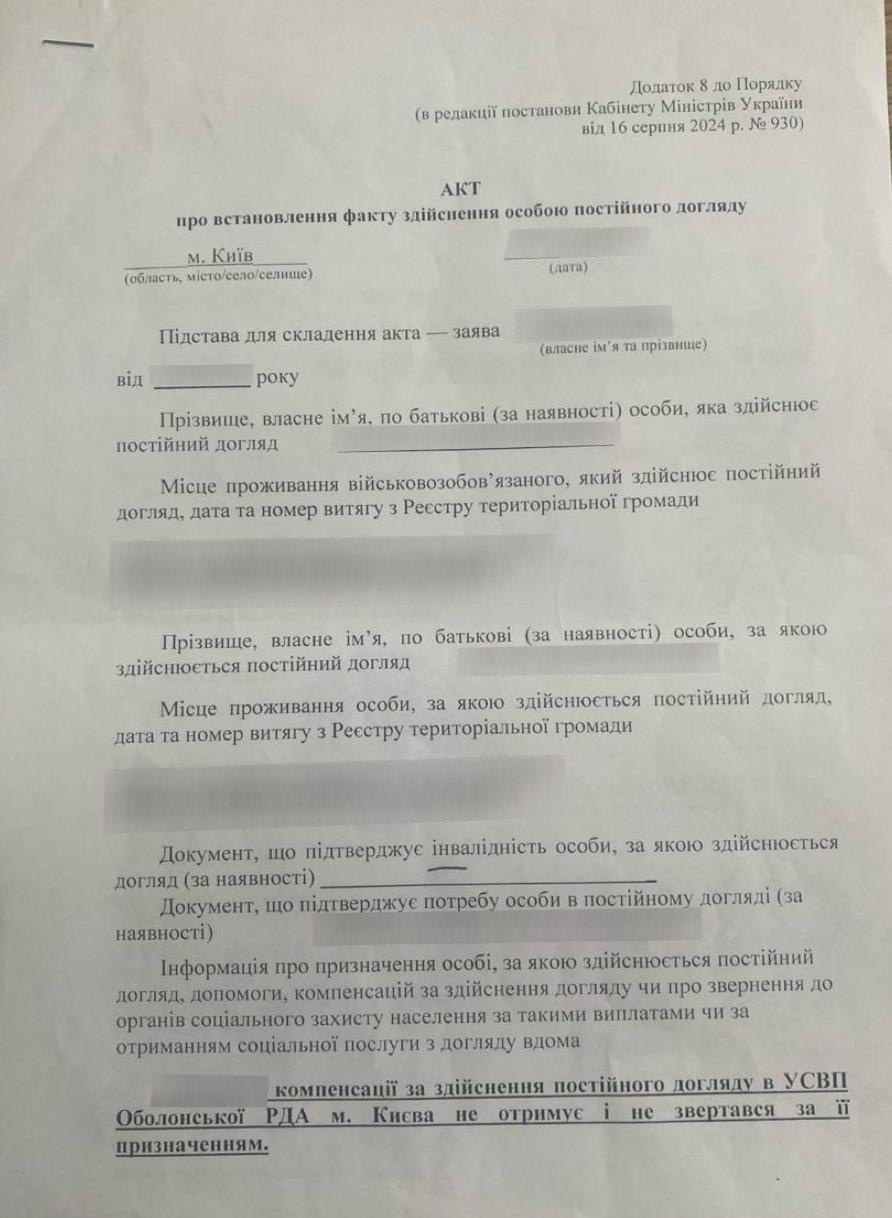
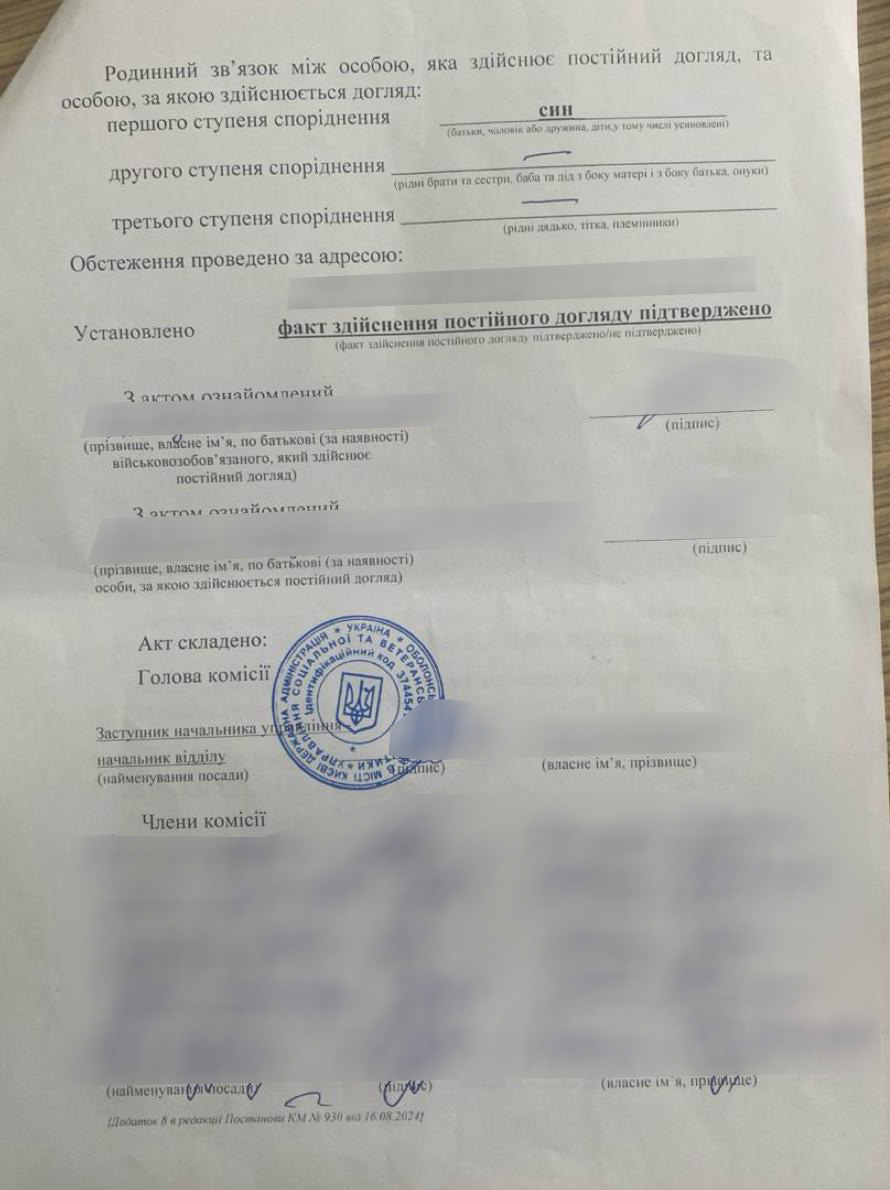
On this basis of these materials and the current conclusion of the MAC, the USZN drew up an Act of establishing the fact of caring for a person in need of constant assistance.
This document is legally binding and is used to confirm the status of the caregiver in various legal procedures – from social benefits to mobilization issues. - Using the Act for further actions
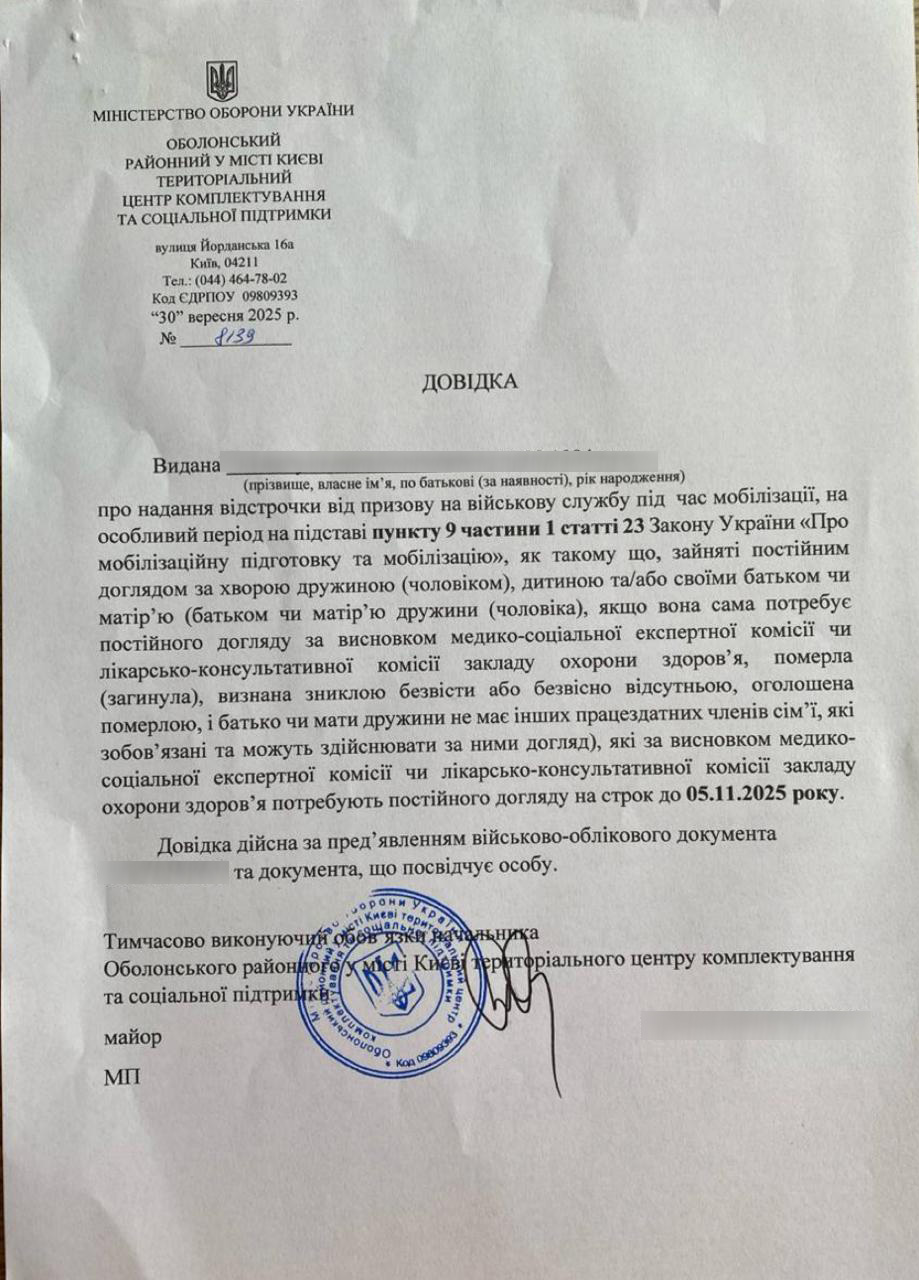
After receiving the Act, the lawyer helped the client submit the relevant documents to the territorial center for recruitment and social support (territorial centers).
The presence of this Act became the decisive evidence for the decision to postpone conscription to the new service during mobilization.
Meaning of the Act of Establishing the Fact of Care
The act issued by the USZN is official in nature and certifies that the person really takes care of a citizen who needs it.
Its legal weight is that it:
- confirms the fact of performing a socially significant function — care;
- grants the right to receive state aid or benefits;
- can be used in legal relations with military registration bodies, social protection bodies, the Pension Fund, etc.
Without this document, it is much more difficult to prove the fact of care in an administrative or judicial manner.
Key factors that ensured success
- Availability of a valid medical report of the MAC, confirming the need for constant third-party care.
- A well-drafted appeal to the USZN with reference to Resolution No. 560.
- Completeness of the collected package of documents and timely communication with representatives of the social protection body.
- Control over the passage of the procedure until the issuance of the Act.
- Obtaining the Act of Establishing the Fact of Care is a decisive step in confirming the real care of a person in need of assistance.
In this case, thanks to timely application, correct documentation and legal support, the client officially confirmed the fact of caring for the mother, which made it possible to implement further social and legal guarantees, in particular, the right to a deferment from mobilization.























 Telegram
 Viber
Viber
 WhatsApp

 Facebook
 Instagram