



Attorney
Specializes in protection of honor and dignity, of copyrights, inventions, patents, trademarks, support of tenders, protection of consumer rights, disputes with insurance companies, legal support in cases of administrative offenses.
Case: The case under Article 130 of the Code of Administrative Offenses was closed due to extreme necessity.

Our law firm was contacted by a client who was unreasonably found guilty by the court of first instance of violating Part 1 of Article 130 of the Code of Administrative Offenses – driving a vehicle while intoxicated.
The key point of the case was that the client got behind the wheel not for personal reasons, but in order to urgently purchase medicine for his girlfriend, who suddenly had a heart attack.
The circumstances indicated a state of extreme necessity – a legally defined ground that excludes administrative liability.
Despite these facts, the court of first instance imposed a fine on the client in the amount of UAH 17,000 and deprived him of the right to drive vehicles for one year.
We decided to immediately appeal the above decision in the court of appeal and petition the court to renew the deadline for filing an appeal, because the Client filed after the expiration of the appeal period.
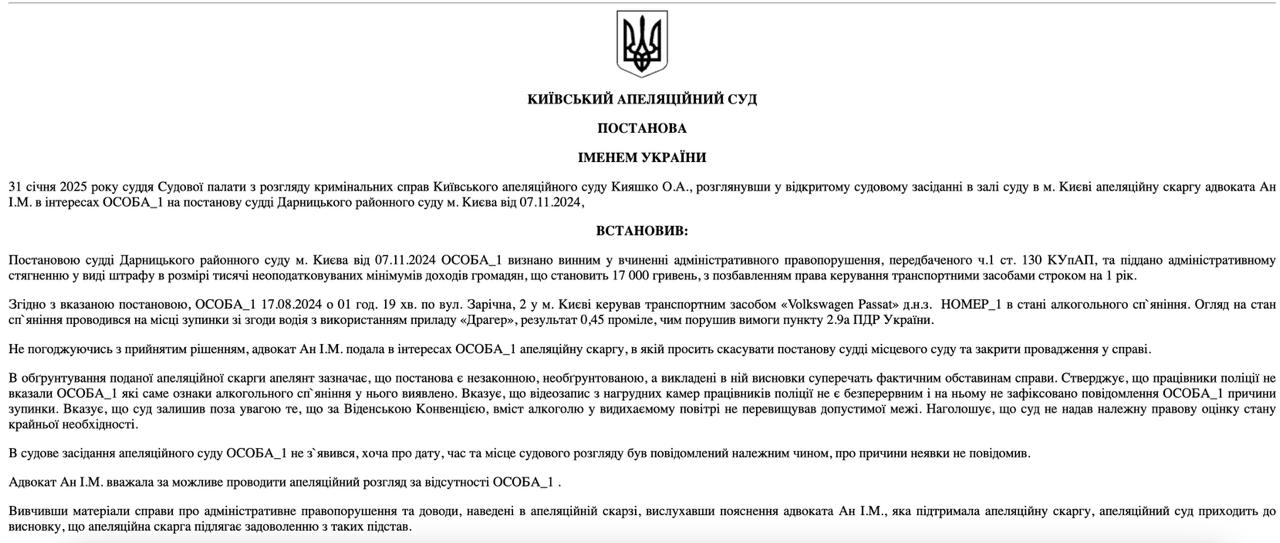
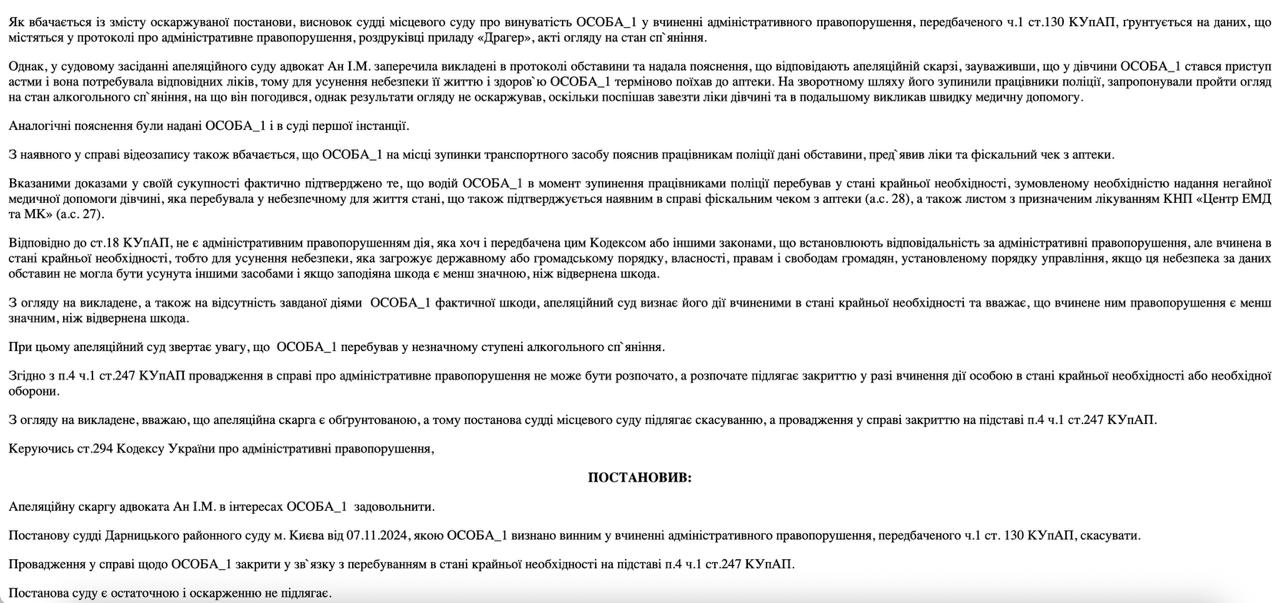
Our defense strategy included:
- A thorough analysis of the case materials — we examined in detail the circumstances of the incident, medical documents, and procedural violations. This allowed us to establish that the court’s decision was disproportionate and formal.
- Formation of a legal position — we substantiated the existence of extreme necessity, referring to the norms of legislation and relevant case law. Particular attention was paid to the principle of fairness.
- Professional representation in the court of appeal — we clearly and convincingly proved that the decision made did not take into account the humanitarian aspect of the situation and the real motive for the client’s actions.
Result: the court of appeal overturned the decision of the court of first instance and closed the case. The client retained the right to drive a car, which allowed him to avoid critical restrictions in everyday life and work.











 Telegram
 Viber
Viber
 WhatsApp


 Facebook
 Instagram