



Lawyer
Lawyer in the field of military law. Specializes in issues of mobilization, postponement and reservation. Provides services for appeals to the military medical commission, escorting to the military commissariat, dismissal from military service, obtaining the status of a participant in hostilities. Conducts court cases on military issues.

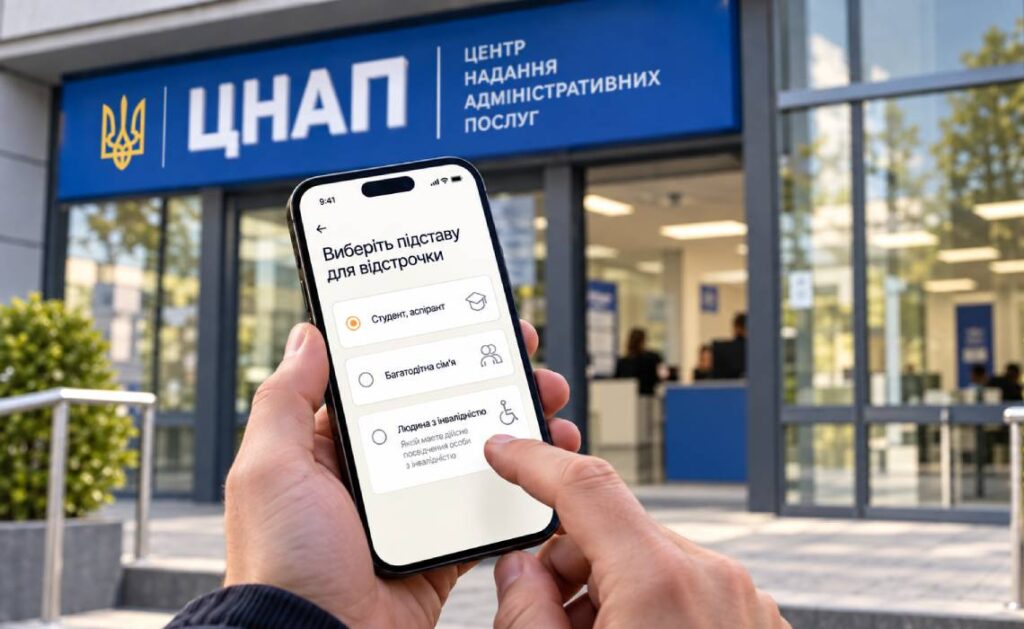
How to change the grounds for military mobilization deferment in 2026: reapplication through a CNAP
Table of Contents:
- Changing the Grounds for Military Mobilization Deferment in 2026: What Has Changed?
- How to Change the Grounds for Deferment Through a CNAP in 2026
- What Documents Are Required to Change the Grounds for Deferment?
- What Should You Do If Your Application to Change the Grounds Is Rejected?
- Legal Assistance with Deferment Applications and Changing the Grounds for Deferment
Recent changes to Ukrainian mobilization legislation allow individuals liable for military service to change the grounds on which their deferment was granted. For example, a person may initially receive a deferment due to their studies but later become eligible on other grounds provided for by law. Previously, such situations raised numerous practical questions: whether it was necessary to wait until the existing deferment expired, whether new documents could be submitted immediately, and what would happen to the previous decision.
Resolution № 560 of the Cabinet of Ministers of Ukraine provides for the possibility of reapplying for a deferment on different grounds while the previous deferment remains valid. Prikhodko & Partners Law Firm provides legal assistance on these matters, from initial consultations to obtaining a favorable decision.
Changing the Grounds for Military Mobilization Deferment in 2026: What Has Changed?
The grounds for deferment are established by Article 23 of the Law of Ukraine "On Mobilization Preparation and Mobilization", while the application procedure is detailed in Resolution № 560 of the Cabinet of Ministers of Ukraine.
Following the amendments introduced by Resolution № 978 of the Cabinet of Ministers of Ukraine, paragraph 56 of the Procedure expressly provides that if a person already has a valid deferment but becomes eligible on other grounds specified in Article 23 of the Law, they have the right to submit an application for a deferment based on the new circumstances.
From a legal perspective, this is neither an extension of the previous decision nor the granting of two deferments simultaneously. Instead, it involves replacing the legal grounds on which a person liable for military service is exempt from conscription during mobilization.
Comparative Analysis
| Criterion | Initial Application | Changing the Grounds for Deferment |
| When it applies | A person applies to confirm their eligibility for a deferment on specific grounds | A person already has a valid deferment but becomes eligible on different grounds |
| Existing valid decision | Not required for submitting an application | The existence of a valid deferment must be verified |
| What must be confirmed | Eligibility for a deferment | Eligibility for a deferment on different grounds |
| What happens to the previous decision | Not applicable | It remains valid while the new application is being considered |
| Positive decision | Information about the granted deferment is entered into the register | The previous grounds cease to apply once information about the new grounds is entered into the register |
| If the application is rejected | The deferment is not granted on the requested grounds | The existing deferment remains valid |
| Reservation from mobilization | Regulated by a separate procedure | A deferment cannot be replaced with a reservation through an Administrative Services Center (CNAP) |
It is also important to distinguish between changing the grounds for a deferment and extending an existing deferment. If the grounds remain unchanged, an application for an extension may be submitted through a CNAP when 30 calendar days or fewer remain before the current deferment expires.
This restriction does not apply when switching to different legal grounds. An application can be submitted at any time while the existing deferment remains valid.
How to Change the Grounds for Deferment Through a CNAP in 2026
Step 1. The applicant must personally visit an Administrative Services Center (CNAP) and inform the administrator that they wish to change the grounds for their deferment. Documents confirming eligibility under the new grounds must be attached to the application.
When preparing the application, the CNAP administrator verifies:
- whether the applicant is registered for military service;
- whether the applicant has a valid deferment;
- information about the existing deferment and its validity period.
Step 2. The documents are prepared and forwarded to the relevant Territorial Recruitment and Social Support Center (TCC and SSC), where they are reviewed by a special commission.
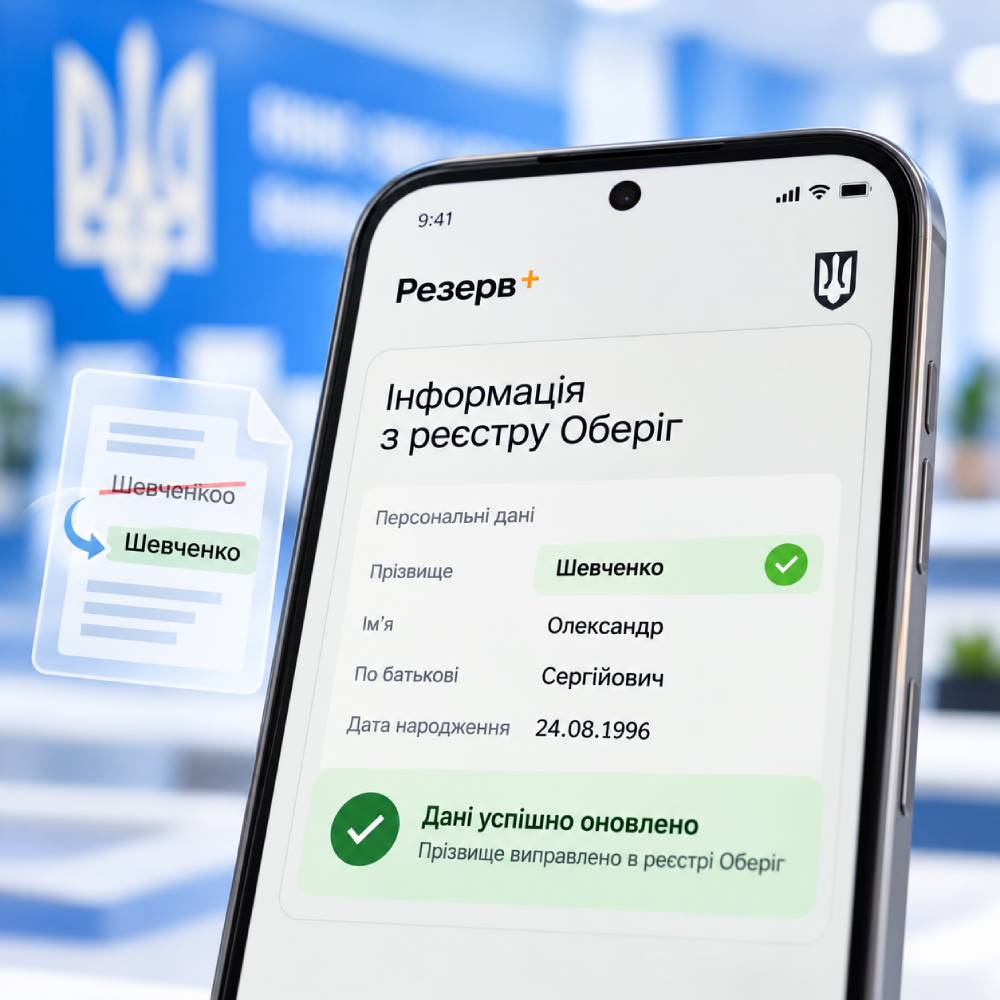
Step 3. A decision is made, and the applicant is informed of the outcome. If the deferment is approved, the updated information will automatically appear in Reserve+.
What Documents Are Required to Change the Grounds for Deferment?
The required documents depend on the new grounds under which the applicant wishes to obtain a deferment. The specific documents are listed in Annex 5 to Resolution №. 560 of the Cabinet of Ministers of Ukraine. For example:
- Education — the main document is a student status certificate generated through the Unified State Electronic Database on Education (EDEBO).
- A parent with a Group I or Group II disability — a birth certificate and a document confirming the disability status of the applicant's father or mother.
- A spouse's father or mother with a Group I or Group II disability — a marriage certificate, the spouse's birth certificate, and a document confirming the relevant disability status;
- Permanent care for a person who requires it — the required documents depend on the degree of family relationship. As a rule, documents confirming family relationships and medical documentation confirming the person's need for permanent care are required. In cases specified by law, a certificate establishing the fact that permanent care is being provided may also be necessary;
- other documents required by applicable legislation.
What Should You Do If Your Application to Change the Grounds Is Rejected?
The TCC commission reviews the submitted documents and determines whether the statutory requirements are met. If the information contained in state registers differs from the submitted documents, the TCC may refuse to grant the deferment.
For applications submitted through a CNAP, the TCC and SSC notifies the center of a negative decision, while the applicant receives a corresponding notification at the email address provided.
In such circumstances, we recommend contacting a military lawyer immediately to avoid unnecessary delays. Even a single error in a document, an incorrectly stated legal ground, or inconsistencies in a state register may result in rejection.
Where there are legal grounds for doing so, the decision may be challenged in accordance with the procedure established by law, including through a higher authority or the courts.
Legal Assistance with Deferment Applications and Changing the Grounds for Deferment
Changing the grounds for an existing deferment through a CNAP is a new procedure that is only beginning to be implemented in practice. As a result, applicants may encounter difficulties during the initial stages, including problems with document acceptance, verification of information in state registers, determining the required documentation, application processing times, and coordination between CNAPs and TCCs.
Under these circumstances, professional assistance from a military lawyer is becoming increasingly important. An experienced specialist can help resolve even complex legal issues arising during the procedure.
The military lawyers at Prikhodko & Partners provide comprehensive legal assistance to individuals liable for military service. Our services include:
- consultation with a military law specialist — analyzing the client's circumstances and determining whether there are legal grounds for a deferment;
- verification of eligibility and legal analysis of supporting documents;
- preparation of documents and applications — compiling the necessary documentation for submission;
- legal assistance in dealing with CNAPs and TCCs;
- in-person legal assistance at a CNAP when applying to change the grounds for deferment;
- challenging decisions refusing to grant a deferment.
If you already have a valid deferment but wish to change its legal grounds, you do not need to wait until your existing deferment expires.
Do you have questions about changing the grounds for your deferment? Submit a request through our website, and our lawyer will contact you.
Calculate the price of assistance:
1 question
Have other lawyers handled your case?
2 question
Are you in Kyiv or Kyiv region?
3 question
Do you need legal assistance urgently?





call back
during the day


Attorney
Lawyer, expert in tax law, protection of clients' interests in tax disputes, provision of professional advice on tax issues, appeal of unlawful decisions of tax authorities, optimization of tax burden.
Environmental Tax Return
Table of Contents:
- Who must file an environmental tax return?
- Which environmental tax return form applies in 2026?
- Deadline for filing an environmental tax return
- Where should an environmental tax return be filed?
- How to complete an environmental tax return?
- Environmental tax return for emissions into the atmosphere
- Environmental tax return for waste disposal
- What should you do if an environmental tax return contains an error?
- Liability for failure to file an environmental tax return
- Assistance of a tax lawyer with environmental tax matters
Environmental Tax Return is a tax report that must be submitted by business entities whose activities cause types of environmental impact specified by the Tax Code of Ukraine. The obligation to pay environmental tax may arise for enterprises, institutions, organizations, and individual entrepreneurs, in particular in cases involving emissions of pollutants from stationary sources, discharges into water bodies, waste disposal, as well as operations related to radioactive waste.
Errors in determining the taxable object, calculating environmental tax, or completing the annexes to the tax return may result in incorrect assessment of tax liabilities. Therefore, it is important for a business not only to submit its tax reports on time but also to correctly determine whether it is an environmental tax payer and which specific taxable objects are subject to this tax.
Who must file an environmental tax return?
The obligation to file an environmental tax return primarily depends on whether a relevant taxable object exists. According to the State Tax Service of Ukraine, environmental tax payers may include enterprises, institutions, organizations, and individual entrepreneurs whose activities involve types of environmental impact specified by law.
In particular, environmental tax is levied on emissions of pollutants into the atmosphere from stationary sources, direct discharges of pollutants into water bodies, waste disposal, as well as, in cases provided for by the Tax Code of Ukraine, the generation and temporary storage of radioactive waste.
Therefore, before preparing the tax return, it is necessary to determine not merely the type of business activity but the actual existence of taxable objects that, under the Tax Code, give rise to the obligation to pay environmental tax.
Which environmental tax return form applies in 2026?
The Environmental Tax Return form was approved by Order No. 715 of the Ministry of Finance of Ukraine dated 17 August 2015 and has subsequently been amended several times.
Further important changes were introduced in 2026. By Order No. 300 of the Ministry of Finance of Ukraine dated 8 June 2026, the tax return form was updated. The Order entered into force on 10 July 2026. However, due to the rules governing the application of new tax reporting forms, the State Tax Service clarified that reporting for the third quarter of 2026 must still be submitted using the previous form, while the new form will first apply to the environmental tax return for the fourth quarter of 2026.
This point is particularly important for accountants and businesses preparing tax reports at the end of 2026 and the beginning of 2027.
Deadline for filing an environmental tax return
The basic tax reporting period for environmental tax is a calendar quarter. The tax return must be submitted within 40 calendar days following the last calendar day of the relevant quarter. This is expressly provided for by Article 250 of the Tax Code of Ukraine.
Environmental tax must be paid within 10 calendar days following the last day of the deadline for filing the tax return.
Accordingly, businesses must monitor two separate deadlines: the deadline for filing the tax return and the deadline for actual payment of the tax liability declared therein.
Where should an environmental tax return be filed?
The place of filing depends on the type of taxable object.
For emissions of pollutants from stationary sources, direct discharges into water bodies, and waste disposal, the tax return must be filed taking into account the location of the relevant stationary source or waste disposal site. Separate reporting rules apply to operations involving the generation and storage of radioactive waste, depending on the taxpayer’s place of tax registration.
Businesses with several production facilities or pollution sources located within different territorial communities should be particularly careful when determining the correct place for filing tax reports. The State Tax Service provides separate clarifications regarding reporting in such cases.
How to complete an environmental tax return?
The tax return consists of a main section and the relevant annexes, which are used to calculate tax liabilities depending on the specific type of pollution or other taxable object.
Before completing the tax return, it is necessary to determine the actual business indicators for the reporting quarter, the type of pollutant or waste, the applicable tax rates, and other indicators required by the reporting form.
The amounts calculated in the relevant annexes are then transferred to the main section of the tax return. The State Tax Service publishes the current tax return form and related materials on its official website.
Environmental tax return for emissions into the atmosphere
Businesses that emit pollutants from stationary sources must first determine whether they have a taxable object in accordance with the provisions of Section VIII of the Tax Code of Ukraine.
The amount of tax liability depends on the actual volume of emissions and the applicable environmental tax rates for the relevant pollutants.
For environmental tax purposes, the existence of a stationary source of pollution and the nature of the emissions generated by it are of fundamental importance.

Environmental tax return for waste disposal
Another common ground for environmental tax liability is the disposal of waste in specially designated places or at designated facilities.
However, the mere fact that a business generates household or industrial waste does not always automatically create an obligation to pay environmental tax specifically for its disposal. It is necessary to examine the actual operations involving the waste, the conditions of its storage and transfer, as well as the status of the relevant site or facility.
In practice, this is often the stage at which mistakes are made in determining the taxpayer and the taxable object.
| Situation | What should be checked | What should be done |
|---|---|---|
| The business emits pollutants into the atmosphere | The existence of a stationary source, the type and actual volume of pollutants | Determine the taxable object, calculate the tax, and file the tax return with the relevant annex |
| Pollutants are discharged into water bodies | The actual volume of discharges and the type of pollutants | Calculate the tax liability in accordance with the applicable rates |
| The business handles waste | Whether the relevant operation qualifies as waste disposal for tax purposes | Determine whether a taxable object exists and whether there is an obligation to pay environmental tax |
| There are several stationary sources of pollution | The location of each facility and the relevant territorial community | Determine the correct place for filing the tax return and paying the tax |
| The pollution volume is stated incorrectly in the tax return | Primary data, applicable rates, and the calculations made | Recalculate the tax liability and, if necessary, correct the tax reporting |
| The tax return was not filed for several quarters | Whether a taxable object existed during each relevant reporting period | Determine the tax liabilities for each period and the proper procedure for filing the relevant reports |
| The State Tax Service assessed additional environmental tax liabilities | The tax audit report, grounds for the additional assessment, and primary documents | Verify the legality of the conclusions of the State Tax Service and challenge them where appropriate |
What should you do if an environmental tax return contains an error?
If a taxpayer independently discovers an error after filing the tax report, the Tax Code provides a mechanism for correcting it by submitting an appropriate amended tax report in accordance with the requirements of Article 50 of the Tax Code of Ukraine.
The State Tax Service notes that when taxpayers independently correct errors, they must use the form effective at the time the amended calculation is submitted. For the new version of the environmental tax return introduced by Order No. 300, errors relating to previous reporting periods may be corrected using the new form from 1 January 2027.
Before submitting an amendment, it is advisable to verify not only any arithmetic errors but also whether the taxable object, applicable tax rate, and relevant annex were determined correctly.
Liability for failure to file an environmental tax return
If a business entity is an environmental tax payer, it must comply with the established rules governing tax reporting and payment of agreed tax liabilities.
Failure to file or late filing of the tax return, understatement of tax liabilities, or late payment may result in financial consequences provided for by the Tax Code. The specific consequences depend on the type of violation, the period in which it occurred, and other circumstances.
Therefore, if an error or missed reporting obligation is identified, it is advisable to first conduct a tax analysis and determine the correct method for resolving the issue.
Assistance of a tax lawyer with environmental tax matters
Environmental tax matters are not limited to technically completing a tax return. First of all, it is necessary to correctly determine whether the company is a taxpayer, which objects are subject to taxation, where the tax return must be filed, and how tax liabilities should be calculated. A tax lawyer can analyse the company’s activities and primary documents, verify the correctness of environmental tax calculations, correct errors in tax reporting, prepare a legal position for the State Tax Service, and, in the event of a tax audit or dispute, protect the company’s interests and challenge unlawful additional tax assessments.
Submit a request for a consultation — we will analyse your situation, determine whether you are required to pay environmental tax, and help you correctly prepare or amend your tax reporting.
Calculate the price of assistance:
1 question
Have other lawyers handled your case?
2 question
Are you in Kyiv or Kyiv region?
3 question
Do you need legal assistance urgently?




call back
during the day

Founder
Lawyer, Doctor of Laws, recognized media expert on legal issues, legal adviser to famous politicians and businessmen.
Lawyer Andrii Prykhodko participated in a meeting of the State Tax Service working group on the preparation of an anti-corruption program
Founder of Prikhodko & Partners Law Firm, attorney Andrii Prykhodko, took part in another meeting of the working group of the State Tax Service of Ukraine, which is working on the preparation of the STS Anti-Corruption Program.
The main task of the working group is to identify corruption risks in the activities of the tax authorities and develop specific measures that will help minimize such risks in practice.
During the meeting, the participants discussed the operation of taxpayer service centers, the video surveillance system, information protection, internal control, and mechanisms for monitoring the implementation of anti-corruption measures.
Video surveillance in taxpayer service centers
One of the key issues discussed at the meeting was the organization of video surveillance in taxpayer service centers.
According to the information presented during the meeting, 593 cameras are currently installed in such centers, while only 108 of them have the technical capacity to store recordings for at least six months.
The members of the working group discussed the need for a comprehensive assessment of the existing video surveillance system. It is important to determine not only the technical specifications of the equipment, but also which processes are recorded by the cameras and whether they cover areas where increased corruption risks may arise.
For this purpose, it was proposed to analyze the specifications of all installed cameras, their recording capabilities, and data retention periods. Based on the results of this analysis, it will be possible to determine whether the equipment needs to be upgraded, formulate technical requirements, and assess possible sources of funding.
Territorial bodies of the STS are also expected to be involved in the implementation of the relevant measures.

Information protection and control over its transfer
A separate part of the discussion focused on information protection, in particular materials of examinations and analyses that are transferred to law enforcement agencies.
According to the data presented during the meeting, approximately 2,000 such examinations were conducted over a six-month period.
The participants emphasized the need to clearly regulate the procedure for transferring information and liability for its possible disclosure. In particular, they discussed who should be formally warned about liability — the authority receiving the relevant materials or a specific official.
The need to standardize the information that must be recorded when such materials are transferred was also considered in order to ensure that each relevant action is properly documented.
As one of the preventive measures, it was proposed to conduct annual training for employees of the central office and territorial bodies of the STS on the rules for handling information and the risks of its unlawful disclosure.
Internal control and assessment of results
The working group also considered the monitoring of already implemented anti-corruption measures, including an assessment of the timeliness, completeness, and effectiveness of their implementation.
Particular attention was paid to improving internal control procedures and standardizing reporting forms. Uniform approaches to documenting results will make it possible to compare the effectiveness of measures across different STS units, identify problems in a timely manner, and adjust implementation mechanisms where necessary.
Based on identified violations and risks, targeted explanatory and preventive measures are also proposed.
Andrii Prykhodko participation in the working group
Attorney Andrii Prykhodko participation in the working group is aimed at providing professional input into the proposed mechanisms, particularly with regard to ensuring the legality of procedures and protecting taxpayers’ rights.
The preparation of the STS Anti-Corruption Program involves not only identifying potential risks, but also creating practical mechanisms to minimize them. Video surveillance, information protection, employee training, and internal control should operate as elements of a unified system with clearly designated responsible persons, implementation deadlines, and the ability to assess actual results.
Prikhodko & Partners Law Firm continues to participate in professional discussions concerning the interaction of businesses and taxpayers with public authorities, the protection of their rights, and the improvement of relevant procedures.
Calculate the price of assistance:
1 question
Have other lawyers handled your case?
2 question
Are you in Kyiv or Kyiv region?
3 question
Do you need legal assistance urgently?
call back
during the day

Lawyer
Lawyer practicing military law and recalculation of military pensions. Specializes in issues of mobilization, namely providing consultations, obtaining postponement of mobilization, issues of passing the military medical commission. Assistance to military personnel, provision of consultations, writing of reports, support for dismissal from military service, appealing the conclusion of the military medical commission, etc.
Reinstatement at the university after expulsion: conditions for obtaining a deferment
Table of Contents:
- Key points
- Reinstatement in education now: what has changed under Order of the Ministry of Education and Science № 687
- Who retains the right to reinstatement to full-time or dual studies despite the restrictions
- Student deferment after reinstatement: when it applies
- EDEBO certificate “No, violates”: why the system blocks a deferment even after lawful reinstatement
- Challenging an EDEBO certificate
- Court practice in support of students
- EDEBO certificate: what each status means
- Common mistakes that may result in the loss of a deferment
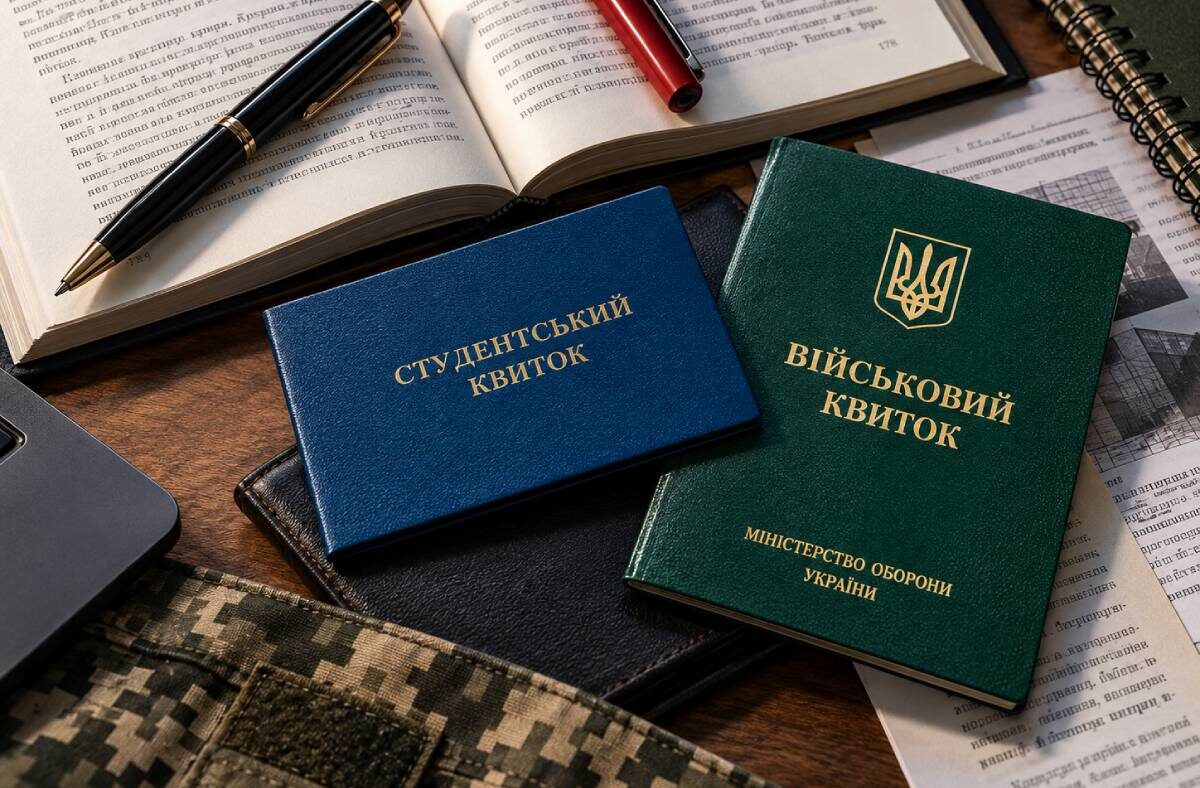
Reinstatement at a university after expulsion does not in itself guarantee a student a deferment from mobilization, and this is the main problem that clients bring to the lawyers of “Prikhodko & Partners”. Even when an educational institution has lawfully processed a student’s reinstatement, the Unified State Electronic Database on Education (EDEBO) may automatically place the status “No, violates” in the student’s certificate — and in such a case, the Territorial Recruitment and Social Support Center (TCC) may refuse to grant a deferment despite the actual continuity of studies.
Key points
- Since May 22, 2026, Order of the Ministry of Education and Science № 687 has been in force. For the duration of martial law, it temporarily restricts reinstatement and transfer to full-time and dual forms of education, except for specifically defined categories.
- Even in the case of lawful reinstatement, EDEBO may automatically place the status “No, violates” in the student’s certificate, which blocks the deferment regardless of the actual circumstances of study.
- The student’s right to a deferment is established by Article 23 of the Law of Ukraine “On Mobilization Preparation and Mobilization”; it is confirmed by a certificate in the form set out in Appendix 9 to Resolution of the Cabinet of Ministers of Ukraine № 560.
Reinstatement in education now: what has changed under Order of the Ministry of Education and Science № 687
On April 27, 2026, the Ministry of Education and Science issued a new Order № 687, which once again, temporarily for the period of martial law, restricted transfers from other forms of study to full-time or dual forms of education, as well as reinstatement to these forms, including admission to studies after the end of an academic break. The Order also expressly blocked the scheme of “being reinstated to part-time studies and then transferring to full-time studies”. Therefore, the statement that reinstatement after expulsion has now been completely suspended is not entirely accurate: it is Order № 687 that remains in force.
Who retains the right to reinstatement to full-time or dual studies despite the restrictions
- Persons who are not subject to mobilization or who have not reached the maximum age for conscription for compulsory or basic military service.
- Persons discharged from military service after February 24, 2022.
- Persons who already have independent grounds for a deferment under Article 23 of the Law of Ukraine “On Mobilization Preparation and Mobilization”.
- Pregnant women and persons on maternity leave due to pregnancy and childbirth.
- Certain categories of foreigners and stateless persons specified by the Order.
- Cadets of higher military educational institutions.
- Students whose educational program is available exclusively in full-time or dual form.
If a person does not fall within any of these categories, the educational institution is generally entitled to refuse the transfer or reinstatement specifically to a full-time or dual form of study — and in such a case, it is appropriate to challenge not the EDEBO certificate, but directly the decision of the admissions or certification commission.
Student deferment after reinstatement: when it applies
Article 23 of the Law of Ukraine “On Mobilization Preparation and Mobilization” grants a deferment to citizens who study in a full-time or dual form of education at a level higher than the one previously obtained, or who continue obtaining the same level without interrupting their educational trajectory. Compliance with these conditions is confirmed not by the reinstatement order itself, but by the student certificate in the form set out in Appendix 9 to Resolution of the Cabinet of Ministers of Ukraine № 560 — it is the data from this certificate that the TCC sees and verifies.
EDEBO certificate “No, violates”: why the system blocks a deferment even after lawful reinstatement
EDEBO generates the indication of a violation of the sequence of education automatically: the system compares all records regarding the person’s education, and if the database already contains a document confirming the completion of a bachelor’s degree or another level not lower than the current one, the certificate is assigned the status “No, violates” regardless of why the studies were interrupted and whether the person was lawfully reinstated. According to explanations of the Ministry of Education and Science, the algorithm used to generate the certificate does not take individual circumstances into account. Therefore, students who were reinstated after expulsion without completing the relevant level of education are among those most frequently affected by this formal error.
This is the key issue: a client may have a completely lawful reinstatement, a valid status as a full-time student, and actual continuity of education, and at the same time receive a refusal from the TCC solely because of a technical indication in the certificate. Therefore, the lawyer’s task is to correct the record that prevents the person from exercising an already existing right to a deferment.
Challenging an EDEBO certificate
- Verification of data in EDEBO and collection of evidence confirming continuity of studies — enrollment, reinstatement and expulsion orders, certificates, and the education agreement.
- A written request to the State Enterprise “Inforesurs”, which is the technical administrator of EDEBO, demanding correction of the erroneous record and issuance of a certificate with the status “Yes, does not violate”.
- A written request to the Ministry of Education and Science demanding correction of the erroneous record and issuance of a certificate with the status “Yes, does not violate”.
- Obtaining a written refusal from the Ministry of Education and Science and Inforesurs (or documenting their failure to act within the established time limit) — this constitutes grounds for applying to court.
- Preparation and filing of an administrative claim with the district administrative court against the Ministry of Education and Science and the State Enterprise “Inforesurs”, requesting that the defendants be ordered to amend the certificate.
- Legal representation in the court of first instance and, where necessary, in the court of appeal.
- Assistance with obtaining the deferment.
Court practice in support of students
In the vast majority of such cases, administrative courts recognize the formal approach used by EDEBO as unlawful if the claimant proves the actual continuity of studies. Our practice already includes a considerable number of similar cases, so we know exactly what steps should be taken to help you obtain the desired result as quickly as possible.
EDEBO certificate: what each status means
| Status in the EDEBO certificate | Effect on the deferment | What to do |
| “Yes, does not violate” | The deferment is processed in the standard manner through “Reserve+” | Monitor the accuracy of the data |
| “No, violates” | The TCC refuses to grant a deferment even in the case of reinstatement and continuation of studies | Submit written requests to the State Enterprise “Inforesurs” and the Ministry of Education and Science — followed by an administrative claim if necessary |
| Certificate unavailable / technical error | It is impossible to confirm the right to a deferment | Contact the dean’s office and the technical administrator of EDEBO to have the certificate generated |
Common mistakes that may result in the loss of a deferment
- Expecting the correct status in the EDEBO certificate to appear automatically immediately after reinstatement.
- Applying directly to court without first submitting a written request to the State Enterprise “Inforesurs” and an application to the Ministry of Education and Science — this may often make the claim premature.
Do you still have questions? We are ready to assist you during an initial consultation. To calculate the cost of our services, please complete the form below.
Calculate the price of assistance:
1 question
Have other lawyers handled your case?
2 question
Are you in Kyiv or Kyiv region?
3 question
Do you need legal assistance urgently?


call back
during the day

Head of grants and investment attraction department
Specialist in finding and receiving grants, developing business plans and attracting investments for businesses and public organizations
Credit and grant program for agribusiness in partnership with EFSE
Table of Contents:
- What is the credit and grant program in partnership with EFSE?
- Who can participate in the program and what are the requirements for agribusiness?
- Which loan products can be combined with grant funding for agribusiness?
- What is the maximum amount an agribusiness can receive?
- How will our grant manager help you?
The credit and grant program from JSC "Agroprosperis Bank" and EFSE acts as a specialized financing tool for Ukrainian micro, small, and medium-sized agricultural businesses.
Agricultural producers with appropriate experience and resources can participate. However, the decision to grant funds will be based on prior receipt of a bank loan under one of the bank's proposed programs.
Grant managers at Prikhodko & Partners will consult on the terms of the credit and grant program and provide full support in obtaining funding, including for those applying for the first time. Read more in the article below.

What is the credit and grant program in partnership with EFSE?
The program, initiated with the support of EFSE, aims to finance businesses during martial law in Ukraine. It combines standard bank lending with non-repayable financial assistance.
EFSE (European Fund for Southeast Europe) is an international investment fund founded by a German bank with support from the European Commission. Its activities involve attracting capital from various investors to ensure businesses have access to implementing their own projects and restoring damaged assets (if needed).
As a rule, the grant is provided in the ratio of 20% of the received loan amount for agribusiness.
Who can participate in the program and what are the requirements for agribusiness?
The table below breaks down the criteria that participants must meet in detail.
| Criterion | Description |
| Legal criterion | Micro-, small, and medium-sized agricultural producers;
Businesses negatively affected by the war that can confirm asset damage; Enterprises investing in energy efficiency and reconstruction projects; At least 51% of business shares must belong to citizens of Ukraine; The business is officially registered and operates in territory controlled by Ukraine (excluding high-risk threat areas). |
| Permissible limitations | The business has up to 2,000 hectares of cultivated land in its land bank;
Livestock head limits (by activity type): pig farming — 25,000 pigs; dairy — 800 cows; meat — 1,000 head; poultry (broiler birds) — 500,000 broilers, or non-broilers — 300,000 chickens, 35,000 turkeys, or 15,000 ducks; sheep and goat farming — 3,000 sheep and 800 dairy goats. |
| Financial criterion | Creditworthiness and good business reputation;
The business is not undergoing bankruptcy or restructuring. |
Which loan products can be combined with grant funding for agribusiness?
Entrepreneurs have the opportunity to choose the optimal loan product based on their financial capacity and plans.
As of today, JSC "Agroprosperis Bank" offers loan programs under the following terms:
- for farmers — $600,000, up to 7 years with an interest rate starting from 16%;
- "5-7-9%" program — UAH 150 million, up to 10 years with an interest rate starting from 1%;
- for agricultural business — $1,000,000, up to 5 years with an interest rate starting from 16%;
- working capital replenishment — UAH 90 million, up to 10 years with an interest rate starting from 7%;
- land acquisition loan — $600,000, up to 7 years with an interest rate starting from 0.01%;
- and others.
Important to know! If you produce agricultural products, the most profitable option for you is the "5-7-9%" loan, as in this case you pay a minimal interest rate thanks to state compensation.
To get more detailed information, we invite you to book a consultation with our grant manager.
What is the maximum amount an agribusiness can receive?
The maximum amount of assistance can reach 20,000 euros. The final amount of the grant for agribusiness is calculated as a percentage of the targeted loan amount. Thus, to receive 20,000 euros, you need to apply for a loan of 100,000 euros.
In addition, the credit and grant program provides a special bonus of 5% for businesses owned by vulnerable categories of citizens — IDPs, war veterans, female entrepreneurs, etc.

How will our grant manager help you?
The grant manager from the law firm "Prikhodko & Partners" handles all bureaucratic routine. Thanks to our specialist's experience, you will not lose the opportunity to receive a grant due to incorrectly drafted documents, such as a grant application or business plan.
Among key services, the following stand out:
- Consulting support;
- Documentary support;
- Interview preparation;
- Post-grant support, including submission of reports (involving an accountant).
Thus, this credit and grant program for agribusiness is a great support tool under martial law.
Combining preferential bank products with grant compensation will allow enterprises to significantly reduce their burden and implement critical projects (including restoring damaged equipment).
To get a consultation and learn the cost of support in obtaining a grant and/or loan for agribusiness, fill out the form below.
Calculate the price of assistance:
1 question
Have other lawyers handled your case?
2 question
Are you in Kyiv or Kyiv region?
3 question
Do you need legal assistance urgently?


call back
during the day

Attorney
Lawyer, Master of Laws. Expert in criminal and international law. Provides strategic client protection and minimizes criminal legal risks. Practice includes defense in criminal proceedings, business support, and representation of interests in courts.
Defense attorney in criminal proceedings involving public procurement (tenders)
Table of Contents:
Criminal proceedings in the field of public procurement require a comprehensive analysis of tender documentation, contracts, financial transactions, official powers, and other circumstances that may be relevant for criminal-law assessment.
A violation of the procurement procedure in itself does not automatically mean that a criminal offense has been committed. To determine the legal position, it is necessary to examine the specific actions of officials, the decision-making procedure, procurement documents, contract performance, movement of funds, and the evidence relied upon by the prosecution.
A lawyer from “Prikhodko & Partners” provides professional protection of the client’s rights and legitimate interests in the field of public procurement during the pre-trial investigation and court proceedings.

When is a lawyer needed in criminal proceedings related to a tender?
It is advisable to contact a specialist even before a notice of suspicion is served if a person is summoned for questioning, documents are requested, or investigative actions are being conducted.
Legal assistance may be required, in particular, in the following situations:
- the selection of the tender winner raises concerns on the part of the investigation;
- questions arise regarding the preparation of tender documentation;
- the conclusion or performance of a contract resulting from the procurement procedure is being investigated;
- payments for goods, works, or services are being reviewed;
- the calculation of the expected procurement value is being challenged;
- decisions of officials involved in the tender are being analyzed.
The defense lawyer analyzes the client’s procedural status, case materials, and circumstances and determines the appropriate format of legal defense.
Analysis of tender documentation and evidence
One of the key stages of defense is the examination of documents related to the procurement procedure.
The lawyer reviews tender documentation, participants’ bids, protocols and decisions of authorized persons, materials concerning the selection of the winner, procurement contracts, supplementary agreements, certificates of completed works, invoices, payment documents, correspondence, and other evidence.
The official duties of the persons who made the relevant decisions, their actual powers, and the procedure for approving such actions are examined separately. Where necessary, expert opinions, audit results, witness statements, and the prosecution’s evidence are also analyzed.
Defense during the pre-trial investigation
At this stage, the lawyer may participate in questioning, searches, and other procedural actions, analyze the notice of suspicion, file motions, applications, and complaints, as well as review the case materials in accordance with the procedure established by law.
Particular attention is paid to the evidence used to substantiate the involvement of a specific person in decision-making or actions carried out within the tender procedure.
If the case concerns an official, the lawyer additionally analyzes their job responsibilities, scope of authority, actual actions, and the connection between the decisions made and the consequences alleged against them.
Legal assessment of violations in the field of public procurement
Public procurement legislation establishes procurement rules, principles of transparency, competition, and non-discrimination, and also provides for liability for violations of its requirements.
At the same time, a violation of procurement procedures and criminal liability are not identical concepts. For a criminal-law assessment, it is necessary to establish the specific actions of the person, their powers, the form of guilt, the consequences, the causal link, and the elements of the relevant criminal offense.
Therefore, the specific legal qualification should be determined after analyzing the materials of the criminal proceedings rather than solely on the basis of identified violations during the tender procedure.
What criminal offenses may be related to tenders?
Depending on the factual circumstances, a criminal case in the field of public procurement may concern various offenses, including:
- misappropriation, embezzlement, or unlawful acquisition of property through abuse of official position;
- abuse of official position;
- official forgery;
- official negligence;
- receipt or offering of an unlawful benefit;
- actions of officials related to violations of the procurement procedure.
The specific Article of the Criminal Code of Ukraine is determined taking into account the factual circumstances, the person’s status, and the evidence in the particular case.
Defense in court
If the indictment has been referred to court, the lawyer continues to defend the client during the trial.
Depending on the circumstances, the lawyer participates in court hearings, files motions, examines written and other evidence, participates in the questioning of witnesses, analyzes expert opinions, and submits objections to the prosecution’s position.
The procedural position is developed individually on the basis of the case materials, tender documentation, and other evidence.
The role of a lawyer in criminal proceedings
The defense lawyer provides professional protection of the client’s rights and legitimate interests, analyzes the evidentiary basis, and monitors compliance with procedural safeguards.
In cases concerning public procurement, it is important to assess both the criminal-law and procurement aspects of the situation at the same time: procedural documents, decisions of the contracting authority, contractual terms, actual performance of obligations, and financial transactions.
Stages of cooperation with a lawyer
The process begins with an initial consultation and analysis of the available information. The client provides procedural documents, tender documentation, and other materials.
The defense lawyer then determines the client’s procedural status, analyzes the materials, and agrees on the required scope of legal assistance.
After that, an agreement is concluded, the necessary legal actions and their cost are determined. The lawyer provides the agreed legal support during the pre-trial investigation and, where necessary, during court proceedings.

Cost of legal services
The cost depends on the complexity of the criminal proceedings, the number of episodes, the volume of tender and procedural documentation, the stage of the proceedings, and the number of procedural actions and court hearings.
| Type of legal assistance | Price from, UAH |
| Initial consultation | 4300 |
| Analysis of case materials | 10000 |
| Preparation of a procedural document | 5000 |
| Participation in a procedural action | 10000 |
| Defense in court | 20000 |
The cost of legal support in criminal proceedings in the field of public procurement is determined individually after analyzing the circumstances, the client’s procedural status, the volume of materials, and the required procedural actions.
Criminal proceedings in the field of public procurement may involve a significant volume of tender, contractual, financial, and procedural documentation. To develop a legal position, it is necessary to examine not only the possible violation of the procurement procedure itself, but also the powers of officials, the decision-making procedure, contract performance, movement of funds, and other relevant circumstances. Timely involvement of a lawyer makes it possible to assess the case materials, identify legally significant circumstances, ensure the exercise of the client’s procedural rights, and develop an individual defense position.
Need a lawyer in criminal proceedings related to a tender or public procurement? Contact “Prikhodko & Partners” and calculate the cost of legal support for your specific situation.
Calculate the price of assistance:
1 question
Have other lawyers handled your case?
2 question
Are you in Kyiv or Kyiv region?
3 question
Do you need legal assistance urgently?


call back
during the day

Attorney
A practicing attorney in the field of criminal and administrative law. I provide full support to clients at the stage of preliminary investigation and trial in criminal proceedings.
Defense attorney for Article 322 of the Criminal Code of Ukraine: Illegal organization or maintenance of places for the consumption of intoxicating substances
Table of Contents:
Criminal proceedings under Article 322 of the Criminal Code of Ukraine require a detailed analysis of the factual circumstances, evidence, and procedural documents. This provision concerns the organization or maintenance of premises for the unlawful use, production, or manufacture of narcotic drugs, psychotropic substances, or their analogues.
For a proper legal assessment, it is important to establish what specific actions are alleged against the person, what constitutes the organization or maintenance of the relevant premises, what evidence the prosecution relies on, and whether such evidence proves all the circumstances necessary for the relevant criminal-law qualification.
A lawyer from “Prikhodko & Partners” provides protection of the client’s rights and legitimate interests under this Article during the pre-trial investigation and court proceedings, analyzes the case materials, and develops an individual legal position.

When is a lawyer needed?
It is advisable to seek legal assistance as soon as you receive a summons for questioning or information about an inspection or criminal proceedings. Legal assistance is necessary if a search, questioning, or inspection is being conducted, if a person has been detained, served with a notice of suspicion, if property or substances have been seized, or if the indictment has already been referred to court.
At an early stage, a specialist can assess the person’s procedural status, available documents, and circumstances, as well as determine the next steps. As a rule, the earlier a defense lawyer is involved, the greater the opportunity to influence the course of the investigation.
Analysis of circumstances and evidence
To develop a defense strategy, the circumstances related to the premises or other location which, according to the investigation, was used for the unlawful use, production, or manufacture of narcotic drugs, psychotropic substances, or their analogues are analyzed. Documents relating to the premises, the circumstances of their use, witness statements, search and inspection results, seized items and substances, expert reports, correspondence, and other evidence are examined.
It is particularly important to establish the specific actions of the person and their actual connection with the circumstances alleged against them. The mere fact of being present at the premises or being acquainted with other persons involved in the events does not replace the requirement of proof — under the general principles of criminal procedure, guilt must be proven and cannot be presumed.
Defense during the pre-trial investigation
The defense lawyer protects the client’s rights and legitimate interests at all stages of the case, monitors compliance with procedural safeguards, and directly participates in investigative actions. The lawyer’s role is not limited to formal representation but also includes continuous monitoring of the legality of the prosecution’s actions.
At this stage, the lawyer may participate in questioning, searches, and other procedural actions, analyze the notice of suspicion, file motions, applications, and complaints, as well as review the case materials in accordance with the procedure established by law. The main areas of the lawyer’s work include:
- verifying the legality of searches, inspections, and seizure of substances;
- analyzing whether the suspicion is substantiated and whether the charges correspond to the established circumstances;
- assessing expert reports concerning seized narcotic drugs and psychotropic substances;
- providing a separate legal qualification for each episode if the proceedings concern several criminal offenses;
- advising the client on their rights and the consequences of particular decisions;
- preparing motions, applications, and complaints at all stages of the proceedings.
The legality of investigative actions and the manner in which evidence was obtained are also reviewed separately. Search records, seizure records, expert reports, and other documents are analyzed. Where necessary, the lawyer prepares procedural documents and takes other defense measures provided for by law.
Defense in court
If the indictment has been referred to court, the defense lawyer continues to represent the client during the trial. Depending on the circumstances, the lawyer participates in hearings, files motions, examines evidence, takes part in the questioning of witnesses, analyzes expert reports, submits objections to the prosecution’s position, and presents the client’s legal position.
The defense strategy is determined individually after analyzing the criminal case materials and the evidentiary basis.
The role of a lawyer in a case under Article 322 of the Criminal Code of Ukraine
The lawyer provides professional protection of the client’s rights and legitimate interests, monitors compliance with procedural safeguards, and participates in investigative actions. Particular attention is paid to the analysis of evidence obtained during searches, inspections, and other investigative actions, as well as to the verification of expert reports concerning seized substances.
The lawyer’s key tasks at this stage include:
- monitoring compliance with the client’s procedural safeguards;
- analyzing evidence obtained during searches, inspections, and other investigative actions;
- reviewing expert reports concerning seized substances;
- providing a separate legal qualification for each episode if the case concerns several offenses.
In addition, the specialist advises the client on their rights, explains the possible consequences of particular decisions, and helps avoid mistakes that may negatively affect the further course of the case — in particular when providing explanations or participating in investigative actions without prior preparation.
Cost of legal services under Article 322 of the Criminal Code of Ukraine
The cost depends on the complexity of the criminal case, the number of episodes, the volume of materials, the stage of the proceedings, and the number of procedural actions and court hearings.
| Type of legal assistance | Price from, UAH |
| Initial consultation | 4300 |
| Case materials analysis | 10000 |
| Preparation of a procedural document | 5000 |
| Participation in a procedural action | 10000 |
| Defense in court | 20000 |
The cost of legal defense under Article 322 of the Criminal Code of Ukraine is determined individually after assessing the circumstances of the criminal proceedings, the client’s procedural status, the volume of case materials, and the necessary legal actions.
Criminal proceedings under Article 322 of the Criminal Code of Ukraine require a comprehensive analysis of the evidence, factual circumstances, and procedural documents. To develop a legal position, it is important to establish what specific actions are alleged against the person, what evidence supports those allegations, and whether the legal qualification corresponds to the actual circumstances.
Timely involvement of a lawyer makes it possible to ensure professional protection of procedural rights, analyze the evidentiary basis, and determine the appropriate further legal actions.
If you need assistance, contact us for a consultation and calculate the cost of legal support based on your specific situation.
Calculate the price of assistance:
1 question
Have other lawyers handled your case?
2 question
Are you in Kyiv or Kyiv region?
3 question
Do you need legal assistance urgently?
call back
during the day

Head of tax law practice
A lawyer with extensive experience in legal defense. Key areas of practice include business defense and representing clients in criminal proceedings involving economic and tax-related offenses. I also provide expert assistance in resolving tax disputes, conducting corporate tax audits, securing removal from the list of high-risk taxpayers, and handling other tax-related matters.
What are the consequences of business fragmentation?
Table of Contents:
- Legal protection of business against allegations of business splitting
- What is business splitting?
- What signs of business splitting does the State Tax Service check?
- Is it prohibited to operate through several individual entrepreneurs?
- What are the consequences of business splitting?
- Can the turnover of all individual entrepreneurs be combined?
- Loss of the right to use the simplified taxation system
- Additional tax assessments, penalties and late-payment interest
- Is criminal liability possible?
- How does the State Tax Service detect business splitting?
- Business audit for signs of splitting
- What should you do if the State Tax Service has already identified signs of business splitting?
- Appealing the results of a tax inspection
Legal protection of business against allegations of business splitting
Business splitting became one of the key areas of increased tax control in 2026. The State Tax Service analyses the activities of retail chains, catering establishments, service businesses and other companies that use several individual entrepreneurs or legal entities within their structure. According to the State Tax Service, since the beginning of 2026 alone, more than 500 brands and trademarks with signs of possible artificial business splitting have been identified, while the preliminary estimated potential losses to the state budget amounted to at least UAH 1.7 billion.
At the same time, the mere existence of several individual entrepreneurs, related parties or entities operating under one brand still requires an analysis of the actual business model and each entity’s compliance with tax legislation.
Lawyers of Prikhodko & Partners audit business structures, identify tax risks, provide legal support during State Tax Service inspections and protect clients in disputes concerning additional tax assessments, penalties and the classification of a business model as artificial splitting.
What is business splitting?
The State Tax Service describes business splitting as the artificial division of what is effectively a single business activity among several business entities, most often individual entrepreneurs, for the purpose of using the simplified taxation system, reducing the tax burden, avoiding VAT or concealing actual income volumes.
For example, risks may arise when one shop, restaurant, online store or chain is effectively managed as a single business, while sales are artificially distributed among several individual entrepreneurs. At the same time, it is important to distinguish genuine separate business activities conducted by several individual entrepreneurs from the formal division of one business solely for tax minimisation purposes.
What signs of business splitting does the State Tax Service check?
The tax authority analyses not only entrepreneurs’ registration documents but also the actual organisation of business processes. In 2026, the State Tax Service explicitly reported using data from cash registers/software cash registers and other tax information to identify entities operating simultaneously within the same business unit, at the same address or under a common trademark or brand.
In practice, the following may attract the attention of the tax authorities:
- several individual entrepreneurs operating in the same shop, restaurant, salon or office;
- one brand, website, social media pages and advertising materials;
- shared employees or effectively centralised personnel management;
- use of the same premises, warehouse, equipment or checkout area;
- the same suppliers and centralised purchasing of goods;
- a single accounting department or administration;
- distribution of payments from one business among the accounts of different individual entrepreneurs;
- systematic approaching of the turnover limits by individual entrepreneurs;
- transfer of clients between individual entrepreneurs without genuine economic justification;
- lack of actual organisational and economic independence of the individual entrepreneurs involved.
None of these indicators should automatically determine the outcome of a dispute on its own. A proper legal assessment requires examining the totality of the factual circumstances of a particular business and the documents of each entity.
Is it prohibited to operate through several individual entrepreneurs?
The presence of several entrepreneurs within one commercial project does not in itself constitute a violation.
The Tax Code establishes separate criteria for each group of single tax payers, including permitted types of activity, the number of employees and maximum income. For example, the income limits for groups 2 and 3 are set at 834 and 1,167 minimum monthly wages respectively, as established on 1 January of the relevant year.
Therefore, the key question is whether each individual entrepreneur conducts their own genuine business activity or whether several formally independent entrepreneurs are effectively used to service one business.
What are the consequences of business splitting?
The consequences depend on the specific violations established by the controlling authority. There is no single universal penalty called a “business splitting fine”. The risk is that, following an inspection, the State Tax Service may establish specific violations of tax legislation and determine the relevant tax consequences. Depending on the circumstances, this may result in additional assessment of taxes and fees, financial penalties and late-payment interest, as well as disputes concerning the right of certain entities to use the simplified taxation system. Therefore, the amount of potential claims may be significantly higher than an ordinary fine for a single violation.
Can the turnover of all individual entrepreneurs be combined?
This is one of the main concerns for businesses.
The tax authority may examine whether the formal distribution of payments conceals the actual activity of a single entity. However, legal consequences must arise from specifically established violations and properly proven factual circumstances, rather than solely from the fact that entrepreneurs operate under one brand or are connected with each other. Therefore, in a dispute it is important to establish who actually entered into contracts, purchased and sold goods, received funds, hired employees, used premises and equipment, bore business risks and made management decisions.

Loss of the right to use the simplified taxation system
One of the significant risks relates to compliance with the conditions for remaining on the single tax system. The Tax Code establishes specific criteria for taxpayers using the simplified taxation system, therefore exceeding the income limit, carrying out transactions prohibited for the relevant group or committing other violations may have separate tax consequences. A lawyer should determine which particular transactions are being questioned by the tax authority and to which specific individual entrepreneur they relate.
Additional tax assessments, penalties and late-payment interest
If, following an inspection, the State Tax Service establishes an understatement of tax liabilities, tax assessment notices may be issued regarding the relevant amounts of taxes and financial penalties. The amount of liability depends on the type of violation, the relevant provision of the Tax Code, intent, repeated violations and other circumstances. Therefore, it would be incorrect to promise a client in advance a specific “fine for business splitting”.
Legal protection should focus on reviewing each episode, calculation, item of evidence and legal qualification relied upon by the State Tax Service.
Is criminal liability possible?
The mere use of several individual entrepreneurs does not automatically entail criminal liability. However, if law enforcement authorities identify signs of intentional tax evasion and the conditions established by criminal legislation are present, the matter may move from a tax dispute into criminal proceedings.
The initiation of such proceedings does not in itself mean that a person’s guilt has been proven. Therefore, where potentially significant additional tax assessments are involved, it is advisable to assess the business’s tax model in advance.
How does the State Tax Service detect business splitting?
In 2026, this area of control became particularly prominent. The State Tax Service reports the systematic analysis of tax information, including data from cash registers/software cash registers, business units, addresses, brands and other information. As of August 2026, the State Tax Service reported 23 large retail chains in which, according to its data, more than one thousand individual entrepreneurs were involved in the relevant schemes. Therefore, for chain businesses using dozens of individual entrepreneurs, it is advisable to assess the risks before receiving a request or notice of an inspection.
| Situation | What is the risk? | Possible consequences |
|---|---|---|
| Several individual entrepreneurs operate in the same premises | The State Tax Service may check whether they are genuinely independent | Inspection, requests, analysis of transactions |
| One brand, website or advertising for several individual entrepreneurs | May be regarded as one of the indicators of centralised activity | In-depth analysis of the business structure |
| Shared employees | Questions may arise regarding the actual employer and organisation of work | Tax and labour risks depending on the circumstances |
| One warehouse, equipment or checkout area | May indicate common business processes | Assessment of whether individual entrepreneurs are genuinely independent |
| Payments from one business are received by different individual entrepreneurs | The State Tax Service may examine the economic justification for such distribution | Risk of additional tax assessments if specific violations are established |
| Individual entrepreneurs’ turnover systematically approaches the limit | May attract attention to the method of income distribution | Review of compliance with the simplified taxation system |
| Centralised management of several individual entrepreneurs | May be used as an argument that there is no genuine independence | Tax dispute concerning the actual business model |
| Individual entrepreneurs have no resources of their own for conducting business | Questions may arise as to who actually conducts the business activity | Review of primary documents, personnel and assets |
| Understatement of tax liabilities has been established | This is already a specific tax violation rather than merely an “indicator of splitting” | Additional tax assessments, financial penalties and late-payment interest in accordance with the established violation |
| There are signs of intentional tax evasion | If the legal grounds exist, the matter may go beyond a tax dispute | Criminal proceedings may be initiated; their initiation does not in itself prove guilt |
Business audit for signs of splitting
Lawyers of Prikhodko & Partners can conduct a preliminary legal and tax audit of the current business structure. We analyse relationships between individual entrepreneurs and legal entities, contracts, cash flows, use of premises and equipment, personnel, cash registers/software cash registers, procurement, sale of goods, management structure, use of trademarks and other circumstances that may be relied upon by the controlling authority. As a result, the client receives a tax risk map and recommendations for the lawful restructuring of business processes if the current structure creates increased risks.
What should you do if the State Tax Service has already identified signs of business splitting?
You should not urgently re-execute documents or create explanations that do not correspond to the actual business activity. First, it is necessary to determine what information the State Tax Service already has and which specific circumstances it considers evidence of artificial business splitting.
A lawyer analyses the request or inspection order, the structure of the business activity, documents of individual entrepreneurs, payment transactions and the potential amount of tax claims. A defence strategy is then developed.
Appealing the results of a tax inspection
If the inspection has already been completed, the inspection report and the evidence relied upon by the State Tax Service should be analysed separately. Depending on the stage of the case, lawyers may prepare objections to the inspection report, documents and explanations confirming the actual independence of the business entities, an administrative appeal against tax assessment notices or a claim before an administrative court.
The key objective is not simply to challenge the wording “business splitting”, but to refute the specific factual and legal conclusions on the basis of which the State Tax Service made additional tax assessments.
Lawyer for business splitting matters
The service may include an audit of the business structure, assessment of the risk of the model being classified as artificial splitting, analysis of individual entrepreneurs and companies, support in responding to State Tax Service requests and inspections, preparation of objections, as well as administrative and judicial appeals against tax assessment notices.
An audit is particularly relevant if your business uses several or dozens of individual entrepreneurs, has a single brand and website, shared retail locations, centralised personnel or management, while the turnover of individual entrepreneurs approaches the limits of the simplified taxation system.
Contact the lawyers of Prikhodko & Partners. We will analyse your current business structure, identify risky elements and propose a legal model for protection or lawful restructuring. If an inspection has already started, we will join the communication with the State Tax Service and prepare a position for appealing its results.
For the initial analysis, it is sufficient to provide the business structure, a list of individual entrepreneurs/LLCs, types of activity, approximate turnover, information about personnel and retail locations, as well as documents received from the State Tax Service. Leave your phone number and our lawyer will contact you shortly.
Calculate the price of assistance:
1 question
Have other lawyers handled your case?
2 question
Are you in Kyiv or Kyiv region?
3 question
Do you need legal assistance urgently?
call back
during the day
Lawyer
Lawyer in the field of military law. Specializes in issues of mobilization, postponement and reservation. Provides services for appeals to the military medical commission, escorting to the military commissariat, dismissal from military service, obtaining the status of a participant in hostilities. Conducts court cases on military issues.
Deferral from mobilization for master’s students
Table of Contents:
- Legal basis for obtaining a deferment from mobilization for university students
- Grounds for student deferment in 2026
- How to obtain a deferment while studying for a master's degree?
- “No, violates” in the EDEBO certificate when enrolling in a master's programme
- Appealing a refusal to grant a deferment on the basis of studies
- Legal support
In 2026, the issue of deferment for master's students remains more relevant than ever. The lawyers of «Prikhodko & Partners» help verify the grounds for deferment, resolve errors in the Unified State Electronic Database on Education (EDEBO), and protect a student's right in the event of an unjustified refusal.
Legal basis for obtaining a deferment from mobilization for university students
The right to a deferment is provided for by Article 23 of the Law of Ukraine «On Mobilization Preparation and Mobilization». This ground may be used by students of vocational, professional pre-higher and higher education institutions who study full-time or under a dual form of education and are obtaining an education level higher than the one they previously obtained.
The sequence of education levels is determined by Article 10 of the Law of Ukraine «On Education», as compliance with this sequence is a mandatory condition. For example, studying for a master's degree after obtaining a bachelor's degree complies with the principle of sequential attainment of a higher education level.
The procedure for obtaining a deferment is regulated by Resolution of the Cabinet of Ministers of Ukraine № 560. Information about studies and education level is verified using EDEBO data, so information about the form of study and education must be correctly entered into the register.

Grounds for student deferment in 2026
| Criterion | What should be taken into account |
| Form of study | Full-time / dual form of study. Part-time or distance learning does not provide such a right. |
| Education level | The current education level must be higher than the one previously obtained. |
| Repeated education | If a person already has the relevant education level and is studying again at the same or a lower level, this is not a ground for deferment. |
| EDEBO data | Information about studies, education level and compliance with the sequence of education levels must be entered correctly. |
| Current student status | Whether the person has valid student status at the time the documents are submitted. |
How to obtain a deferment while studying for a master's degree?
In 2026, master's students can obtain a deferment in two ways.
Option 1. Obtaining a deferment through Reserve+
- Check whether up-to-date information about enrollment in a master's programme, the form of study and education level has been entered into EDEBO.
- Log in to the Reserve+ application.
- Go to the «Services» → «Deferment Request» section.
- Select the ground related to obtaining education.
- Check your personal data and submit the request.
- Wait for the information to be automatically verified against state registers. If the ground is confirmed, the deferment will appear in the electronic military registration document.
Option 2. Obtaining a deferment through an Administrative Services Centre (CNAP)
If it was not possible to obtain the deferment online, the student may personally apply to a CNAP. The administrator accepts the application and the required supporting documents and forwards them for consideration by the relevant commission at the Territorial Recruitment and Social Support Centre (TCC).
Before submitting the documents, it is advisable to check the information in EDEBO. If the database contains an error, it is first advisable to contact the educational institution to have it corrected.
If the deferment for master's studies has already been granted, in the cases provided by law its extension takes place automatically based on data from state registers.
“No, violates” in the EDEBO certificate when enrolling in a master's programme
When preparing documents, a student may encounter a situation where the EDEBO certificate contains the notation «No, violates» next to the information on compliance with the sequence of education levels. This notation means that the automated system has determined that the current studies do not comply with the sequence of education levels established by law.
Important! In practice, such a conclusion in EDEBO is not always correct. In particular, the problem often arises when a person previously enrolled in a master's programme but was expelled, did not complete the studies and did not obtain a master's diploma, and later enrolled again in a master's programme.
At the same time, court practice is based on a fundamentally different approach: an education level is considered obtained only when the studies have been completed and the person has received the relevant education document.
Thus, in case № 280/9417/24, the Supreme Court stated that previous incomplete master's studies are not equivalent to obtaining a master's degree. If a person was expelled without receiving a diploma, subsequent studies at the same level do not in themselves violate the required sequence.
The Supreme Court applied a similar approach in case № 200/5372/24 concerning repeated bachelor's studies.
The “No, violates” notation may appear due to:
- previous studies in a master's programme followed by expulsion without obtaining a diploma;
- incorrect information in EDEBO regarding previous studies;
- an error in the records;
- the existence of a previously obtained master's diploma / another education document of the relevant or a higher level.
However, you should be aware that if a person already has a master's diploma and enrolls again at the same level, the situation is fundamentally different: a new master's programme will not constitute grounds for deferment.
Appealing a refusal to grant a deferment on the basis of studies
Such a decision may be appealed in two ways.
- Administrative appeal.
A student has the right to file a complaint against the refusal and attach documents confirming the right to a deferment: information about studies, documents confirming previously obtained education, an EDEBO certificate and other materials depending on the reason for the refusal. The complaint is submitted to a higher authority.
- Appealing the refusal in court.
If the administrative appeal does not produce a result, the student may file a claim with an administrative court. Depending on the circumstances of the case, the claim may seek to have the refusal declared unlawful and cancelled, oblige the authority to reconsider the deferment application, or adopt a decision taking into account the right to deferment established by the court.
Therefore, after receiving a refusal, it is important first to determine the specific reason for it. If the student actually meets the statutory requirements and the refusal is related to an error in the register, an incorrect interpretation of the sequence of education levels, or failure to take documents into account, such a decision may be appealed.
Legal support
If you experience problems obtaining a deferment from mobilization on the basis of studies, it is advisable to contact a lawyer as early as possible. In the absence of a valid deferment, the risk of rapid mobilization for a person liable for military service increases. The lawyers of «Prikhodko & Partners» provide not only consultations, but also comprehensive legal support for obtaining a student deferment during master's studies — from checking the grounds to ensuring that the deferment is displayed in Reserve+.
As part of our legal support, we provide:
- document analysis and legal consultation;
- preparation and submission of attorney requests;
- communication with the educational institution, the Ministry of Education and Science, the TCC and other state authorities;
- legal support in correcting errors in documents and registers;
- appealing refusals through administrative procedures and in court;
Do you have any questions? Leave a request on our website, and our military law attorney will contact you as soon as possible.
Calculate the price of assistance:
1 question
Have other lawyers handled your case?
2 question
Are you in Kyiv or Kyiv region?
3 question
Do you need legal assistance urgently?

call back
during the day
Head of grants and investment attraction department
Specialist in finding and receiving grants, developing business plans and attracting investments for businesses and public organizations
“Varto. Step Forward” Grant Program
Table of Contents:
The Ukrainian Veterans Foundation is implementing the "VARTO: A Step Forward" program, which provides grant support for starting or scaling a veteran business.
Specialists of Law Firm "Prikhodko & Partners" will provide detailed consultations on the conditions of participation in the program and will help prepare and submit a grant application.

What are the main conditions of the competition?
The minimum grant amount is UAH 500,000, the maximum is UAH 1,500,000, and the project duration is from 6 to 12 months.
The grant conditions provide for funding equipment, materials, services, or work performance directly related to the implementation of the project.
You can learn in detail about permitted and prohibited categories of expenses from our specialist.
The Foundation will give preference to businesses that plan to create new jobs within the project.
Who can apply for the program?
As part of the program, the Ukrainian Veterans Foundation supports veteran business, in particular:
- War veterans registered as sole proprietors (FOP);
- Veterans conducting independent professional activity;
- Private legal entities if: 1) 100% of corporate rights belong to a war veteran; 2) or all members of the legal entity are war veterans.
Foreigners and stateless persons who legally resided in Ukraine and participated in defending its sovereignty and territorial integrity may also participate in the program, provided they meet the program requirements.
What documents are required to submit a grant application?
- Project application (in the form established by the Foundation, describing your business idea, main objectives and project implementation stages, advantages and risks, target clients, and sales markets).
- Cost estimate (filled in the Foundation's CRM system, listing where and how much grant assistance you plan to spend).
Important! Disbursement of grant funds will take place in stages, which must be taken into account when preparing the estimate and project application. Project stages must correspond to reporting periods — a quarter (3 months), so the duration of the project should be 6, 9, or 12 months.
- Statutory, financial, and supporting documents (extract from the Unified State Register of War Veterans, certificate from EDRPOU, certificate on the formation of charter capital, copy of Combatant Status Certificate, resumes of all project team members, certificate of no tax arrears, copy of balance sheet and financial results statement for the last reporting period, description with access code to the current edition of the Charter in EDRPOU).
- Additional documents according to the established form (project duration, guarantee letter on co-financing, guarantee letter regarding no facts of illegal receipt and/or misuse of budget funds, guarantee letter stating that at the time of participation in the selection the applicant does not receive other types of state financial support).

Participation in the grant program requires not only compliance with formal criteria, but also a clear justification of the business idea, a realistic implementation plan, and proper budgeting.
A well-prepared application allows demonstrating the potential of the business and properly justifying the need.
Specialists at Law Firm "Prikhodko & Partners" will help assess the compliance of the business with the program conditions, prepare the necessary documents, structure the project, and form a competitive grant application in accordance with the Foundation's requirements.
Calculate the price of assistance:
1 question
Have other lawyers handled your case?
2 question
Are you in Kyiv or Kyiv region?
3 question
Do you need legal assistance urgently?
call back
during the day

Attorney
Lawyer specializing in real estate, construction and commercial law. Has practical experience in real estate valuation, compensation for losses and restoration of businesses damaged as a result of the armed aggression of the Russian Federation. Specializes in supporting complex privatization disputes, protecting property rights and representing clients' interests in court proceedings.
Liability regarding RROs: what entrepreneurs need to know to avoid fines
Table of Contents:
- Key points
- Advantages of working with Prikhodko & Partners Law Firm
- What is liability in the field of RRO?
- Who is required to use RRO/PRRO?
- What penalties are provided for?
- Why should you contact a tax lawyer?
- Stages of cooperation with a lawyer
- Cost of lawyer's services in RRO-related cases
- Conclusion
Key points
- Since August 1, 2025, full penalties apply: 100% of the value of goods (services) for the first violation and 150% for each subsequent violation.
- An actual inspection by the State Tax Service is conducted without prior notice.
- Data from the RRO Data Accounting System constitutes tax information that may serve as grounds for an actual inspection.
- Failure to provide documents during an inspection itself entails liability.
- Timely objections to the inspection report and an appeal against a tax notice-decision significantly increase the chances of reducing or cancelling penalties.
- Our practice confirms that most successful defence strategies are based on procedural violations by the State Tax Service and proper documentary evidence of transactions.
Working with settlement transactions has long ceased to be merely a technical matter. Today, liability in the field of RRO has become one of the most serious areas of risk for businesses. Incorrect use of registrars of settlement operations or software RROs, failure to issue fiscal receipts/issuance of fiscal receipts with incorrect details, or failure to maintain proper inventory records most often result in significant financial penalties following actual inspections by the State Tax Service. This is why entrepreneurs need to understand the applicable rules and have a clear action plan.
Advantages of working with Prikhodko & Partners Law Firm
- We analyse not only the penalty but the entire inspection. We examine the grounds for the actual inspection, the order, referral documents, actions of State Tax Service officials during the inspection and the contents of the inspection report.
- We examine every individual violation. Most often, the State Tax Service establishes violations of paragraphs 1, 2, 11 or 12 of Article 3 of Law No. 265. We thoroughly analyse each identified violation of these provisions, its factual circumstances and the correctness of its legal qualification.
- We work with evidence. We analyse test settlement transactions, fiscal receipts, documents confirming the origin of goods, RRO/PRRO data, employee explanations and other inspection materials.
- We assess the amount of the penalty. We verify whether the State Tax Service correctly determined the value of transactions or goods and whether the penalty was imposed repeatedly or without sufficient grounds.
- We develop a defence strategy. Depending on the circumstances, this may include objections to the inspection report, an administrative appeal or court proceedings.
- We protect business interests confidentially. Information concerning turnover, inventory balances, counterparties and inspection results is handled in compliance with attorney-client confidentiality.

What is liability in the field of RRO?
According to the Law of Ukraine "On the Use of Registrars of Settlement Operations in the Sphere of Trade, Catering and Services" (Law No. 265/95-VR), liability in the field of RRO arises in the event of violations of the procedure for conducting settlement transactions.
In simple terms: if an entrepreneur conducts settlements without using an RRO/PRRO, issues a receipt for an incomplete amount or does not issue a fiscal document at all, issues a receipt with incorrect details, sells goods that have not been properly recorded, and/or fails to provide documents confirming their accounting and origin, this constitutes grounds for financial penalties. The basis for calculating the penalty is the value of goods or services sold in violation of the applicable requirements.
This amount becomes the basis for calculating a penalty of 100% or 150%.
Who is required to use RRO/PRRO?
Almost all business entities carrying out settlement transactions in the fields of trade, catering and services are required to use registrars of settlement operations or software RROs.
Exempt from mandatory use of RRO/PRRO (main cases):
- individual entrepreneurs (FOPs) who are in Group 1 of the single tax system;
- entrepreneurs who receive payments exclusively by transfer to an IBAN account (without accepting cash and without using payment terminals at the place of settlement);
- certain cases of remote provision of services where settlement takes place without physical contact with the customer;
- business entities operating in rural areas (provided that they maintain a settlement transaction record book and a settlement book);
- certain other special cases expressly provided for by Law No. 265/95-VR.
All other categories (FOPs in Groups 2 and 3, legal entities, sellers of excisable goods, technically complex household goods, medicines, etc.) are required to use an RRO or PRRO.
Who may face penalties in 2026:
- all persons required to use RRO/PRRO who have committed a violation;
- FOPs in Groups 2–3 and legal entities — in the full amount of 100% / 150%;
- those selling excisable goods, technically complex household goods, medicines, etc. — without any exemptions.
Since August 1, 2025, reduced penalties (25% / 50%) no longer apply. Therefore, in 2026, liability in the field of RRO applies to the maximum number of entrepreneurs.
Which transactions are subject to control?
The scope of RRO/PRRO covers all settlement transactions in cash and/or non-cash form involving the sale of goods and provision of services in the fields of trade, catering and services.
At the same time, it should be understood that not all violations are assessed equally. For each transaction, the existence of a violation is determined separately in accordance with the provisions of Law No. 265 and the Tax Code of Ukraine. The presence of a fiscal receipt, completeness of the amount, availability of a QR code, inventory accounting and other circumstances affecting the amount of liability are taken into account.
Is it always necessary to use an RRO?
Yes, in most cases. If a business entity conducts settlement transactions, it is required to use an RRO or PRRO operating in fiscal mode and issue the customer a settlement document in the prescribed form.
Even if funds are transferred to a bank account or the transaction appears "insignificant", this does not exempt the business from the obligation. Tax legislation takes into account the fact of conducting a settlement transaction rather than the method of subsequent movement of funds.
What are the procedural specifics of actual inspections regarding the use of RRO?
An actual inspection in the field of RRO is conducted without prior notice to the business entity, directly at the place where business activities are carried out. Before the inspection begins, the controlling authority may conduct a test settlement transaction, which externally resembles an ordinary business transaction, and therefore an employee of the business entity may not realise that they are acting within the framework of a control measure.
The results of such a transaction may be used as evidence of a violation. Therefore, when conducting a legal analysis, the lawfulness of ordering the inspection, compliance with the procedure for conducting it and the admissibility of evidence obtained by the controlling authority are of fundamental importance.
What penalties are provided for?
As a general rule, liability in the field of RRO provides for financial penalties in the amount of:
- 100% of the value of goods (works, services) sold in violation of the requirements - for the first violation;
- 150% - for each subsequent violation.
At the same time, particular attention should be paid to violations of paragraph 12 of Article 3 of Law No. 265, as their financial consequences may be significantly more substantial. For the sale of goods that have not been recorded in accordance with the established procedure and/or failure to provide documents confirming their accounting and origin, the financial penalty is determined in the amount of the value of such goods at their selling prices. Where inventory balances are significant, the amount of such a penalty may reach tens or even hundreds of thousands of hryvnias.
What should you do if the inspection has already been conducted?
In practice, this is one of the most common categories of requests. A significant number of entrepreneurs only become aware of violations after receiving an actual inspection report.
Nevertheless, in most cases the situation can be resolved through legal means. First of all, it is necessary to conduct a comprehensive analysis of all inspection materials, identify procedural violations, prepare objections to the inspection report, and assess and minimise potential tax risks.
It is important to understand that timely professional legal assistance significantly expands the possibilities for effective defence. The earlier the analysis is conducted, the more legal mechanisms will be available to the entrepreneur.
Why should you contact a tax lawyer?
Practice shows that the most serious mistakes occur precisely when businesses attempt to defend themselves without professional assistance.
A tax lawyer will help:
- analyse all inspection materials;
- properly assess the amount of possible penalties;
- take into account documented circumstances;
- verify the legality of the procedure;
- prepare objections and complaints;
- provide legal support during a State Tax Service inspection;
- represent your interests during administrative and judicial appeals.
Stages of cooperation with a lawyer
- Initial request and consultation. We determine the circumstances of the inspection and preliminarily assess the scope of risks.
- Analysis of materials. We examine the order, referral documents, actual inspection report, fiscal receipts, documents relating to the goods and other evidence.
- Legal assessment. We determine whether the inspection was conducted lawfully and whether each alleged violation is supported by evidence.
- Development of a strategy. We determine whether it is appropriate to submit objections, file an administrative complaint or bring a claim before the court.
- Appeal and legal support. We prepare the necessary documents and represent the client's interests before the controlling authority and, where necessary, in court.
Cost of lawyer's services in RRO-related cases
The cost of legal support depends on the specific circumstances: the complexity of the inspection, the number of identified violations, the volume of materials, the amount of potential penalties, the need to analyse inventory accounting and the selected defence strategy.
The initial consultation, preparation of objections, administrative appeal, court appeal and full legal representation in court may be charged separately.

Conclusion
Liability in the field of RRO creates significant risks for businesses, but at the same time provides opportunities for legal defence if the correct steps are taken. Proper use of RRO/PRRO, timely documentation of transactions and an appropriate response to an inspection help avoid significant financial losses, penalties and lengthy disputes with the tax authorities.
If you have conducted settlement transactions, undergone an actual inspection or are unsure whether you are using RRO correctly, it is advisable to conduct a preliminary tax analysis. This will make it possible to identify potential risks in a timely manner and ensure full compliance with legal requirements.
| Step | What needs to be done | Result |
| 1. Analyse the materials | Collect the order, inspection report and all appendices | Full understanding of the State Tax Service's position |
| 2. Assess legality | Verify the grounds and compliance with the procedure | Identification of procedural violations |
| 3. Prepare objections | Prepare substantiated objections to the inspection report | Reduction or cancellation of penalties |
| 4. Appeal the decision | File a complaint or apply to court | Protection of business interests |
| 5. Minimise risks | Conduct a comprehensive analysis | Reduced likelihood of repeated inspections |
Do you still have questions? We look forward to seeing you at an initial consultation! To calculate the cost of services, please fill out the form below.
Calculate the price of assistance:
1 question
Have other lawyers handled your case?
2 question
Are you in Kyiv or Kyiv region?
3 question
Do you need legal assistance urgently?
call back
during the day
Head of grants and investment attraction department
Specialist in finding and receiving grants, developing business plans and attracting investments for businesses and public organizations
Grant for Manufacturers of Dual-Use UAVs
Table of Contents:
- Who is eligible for the dual-use UAV manufacturing grant?
- Which dual-use UAV developments will be prioritized during evaluation?
- What can a dual-use UAV manufacturer spend the grant on?
- What documents are required to apply for the grant?
- How much funding can a dual-use UAV manufacturer receive?
- Why should you consult a grant manager?
- Conclusions
Since the start of the full-scale invasion, support for tech companies building unmanned aerial vehicles has grown significantly. However, it is important to understand: funding is available not exclusively for military developments, but for those that can be adapted for non-military purposes during peacetime.
The grant for dual-use UAV manufacturers aims not only to reduce the financial burden on companies producing UAVs, but also to adapt military developments to address urgent societal needs (for example, in the agricultural sector).
The team at "Prikhodko & Partners", drawing on extensive experience, can assist businesses in securing such grant funding.

Who is eligible for the dual-use UAV manufacturing grant?
Applications for the grant can be submitted by enterprises that satisfy a number of strict requirements.
Such enterprises must meet the following criteria:
- belong to small and medium-sized business entities;
- have an annual turnover of up to €50 million;
- are registered in EU member states and participating countries of the "Single Market" program;
- develop drones, their components, subsystems, or related infrastructure;
- have at least one proprietary product with a TRL 6 readiness level.
For your information! Please note that companies that are undergoing bankruptcy, liquidation, or are involved in legal proceedings regarding fraud on the date of submission are not eligible to apply. For more detailed information, please contact a grant manager.
Which dual-use UAV developments will be prioritized during evaluation?
Evaluation of dual-use UAV manufacturing projects will be conducted on a 100-point scale, with 50% awarded for the innovation level of the development, its quality, and its positive impact on target users.
To receive the maximum score, the development must:
- offer novel technical solutions;
- demonstrate a sufficient readiness level and prospects for advancing it (within the next six months);
- align with the applicant company's long-term commercial strategy;
- have a positive impact in another non-military application area (for example, contributing to decarbonization, digital process automation, etc.).
What can a dual-use UAV manufacturer spend the grant on?
If awarded, the applicant can spend the funds on the following areas:
- remuneration for team members (including developers);
- purchase of UAV components and parts;
- testing and result validation;
- payment for specialist services (e.g., certification and patenting services);
- covering international promotion expenses (including travel costs).
Important to know! To participate and qualify for the maximum funding amount, dual-use UAV manufacturers must also be able to co-finance 20% of the total project cost (the grant will cover the remaining 80%). Meanwhile, the minimum total budget for the entire project must not be less than €43,750.
What documents are required to apply for the grant?
To participate and undergo evaluation under the grant program for dual-use UAV manufacturers, applicants must provide:
- documents confirming the official status of the business entity (registry excerpt, financial report for the last year);
- documents regarding the development confirming its readiness level and dual-use potential (test report, official letters of interest, declaration of conformity for dual-use items);
- documents confirming co-financing capacity (bank statement, certificate of availability of funds);
- documents for evaluation (completed grant application form, business plan detailing all planned project expenses).
How much funding can a dual-use UAV manufacturer receive?
Under this UAV manufacturers grant, a company meeting the criteria above can receive up to €35,000 per submitted project.
Furthermore, this amount must represent up to 80% of the total project value.
Regarding expenditure percentage breakdown, applicants may allocate:
- up to 100% of the amount - on equipment and components;
- up to 15% of the amount - on international business travel;
- up to 10% of the amount - on third-party contractor services.
Why should you consult a grant manager?
Engaging a grant manager will significantly increase your chances of success when submitting a grant application. By offering consultations and assisting with document preparation, a specialist ensures full compliance with competition criteria, adapts your grant application and business plan to the grantor's goals, and guarantees overall document quality.
If necessary, we can also involve a lawyer or accounting specialist for post-grant support — patenting the development, submitting grant usage reports, etc.

Conclusions
Thus, dual-use UAV manufacturers seeking to scale their technologies can submit an application and receive up to €35,000.
Decisive factors in decision-making will be the technological maturity of the development at TRL 6 or higher, its strategic value beyond the military field, as well as proof of the company's ability to co-finance the development.
Get a consultation from a grant manager and find out the cost of support for securing a grant for dual-use UAV manufacturers by filling out the form below.
Calculate the price of assistance:
1 question
Have other lawyers handled your case?
2 question
Are you in Kyiv or Kyiv region?
3 question
Do you need legal assistance urgently?
call back
during the day
 Telegram
 Viber
 WhatsApp


 Facebook
 Instagram