



Senior lawyer
Lawyer in the field of military law. Specializes in issues of mobilization, postponement and reservation. Provides services for appeals to the military medical commission, escorting to the military commissariat, dismissal from military service, obtaining the status of a participant in hostilities. Conducts court cases on military issues.

Revocation of “critical” status due to violations of military registration rules at the enterprise

 Reviewed
Lobunko Michael
Table of Contents:
- Can an Enterprise Lose Its Critically Important Status for Violating Military Registration Rules?
- Which Military Registration Violations May Trigger an Enterprise Inspection?
- How Is a Military Registration Inspection Conducted at an Enterprise?
- What Happens to Employee Reservations if an Enterprise Loses Its Critically Important Status?
- Can the Revocation of Critically Important Enterprise Status Be Challenged?
- How Can an Enterprise Avoid Losing Its Critically Important Status Due to Military Registration Violations?
- Legal Assistance with Critically Important Enterprise Status
Violations of military registration rules can have serious consequences for businesses. In addition to administrative fines, employers risk facing restrictions on employee reservations from mobilization and a review of their critically important enterprise status.
New rules introduced by Resolution № 1328 of the Cabinet of Ministers of Ukraine dated 23 October 2026 have been in effect since 27 October 2026. One of the key changes is stricter oversight of compliance with the legislation governing the organization and maintenance of military registration records. If you need legal assistance, contact the lawyers at Prikhodko & Partners, who have the experience necessary to handle issues of any complexity.
Can an Enterprise Lose Its Critically Important Status for Violating Military Registration Rules?
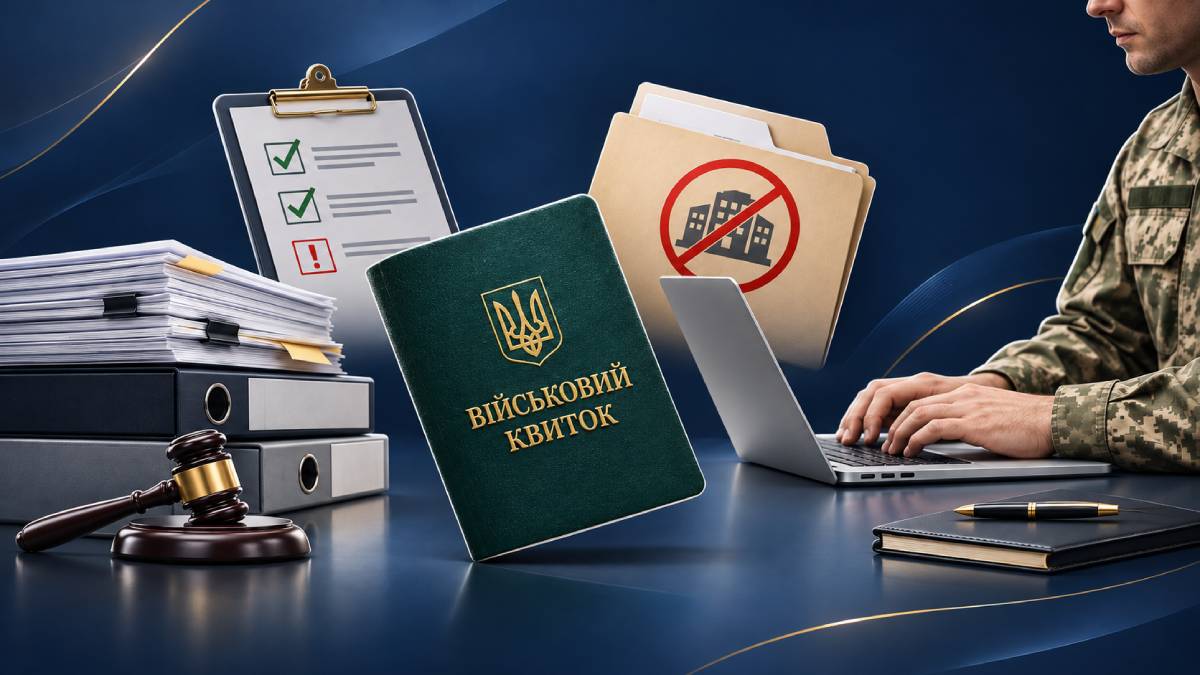
Under Cabinet of Ministers Resolution № 76, this status is granted if an enterprise meets the established criteria and may be reviewed by the authorized government body. Resolution № 1328 established the Coordination Centre for the Organization of Reservations for Persons Liable for Military Service. Among other powers, the Centre may submit recommendations and proposals to revoke decisions.
Systematic violations of military registration rules by a company director are expressly identified as one of the possible grounds for the Coordination Centre to refuse to consider proposals to increase employee reservation quotas or to cancel such reservations altogether.
In particular, the following factors are taken into account:
- two or more documented violations of legislation on the organization of military registration within the previous 12 months;
- the director being held administratively liable for the relevant violations.
Which Military Registration Violations May Trigger an Enterprise Inspection?
Employers' principal obligations are set out in the Procedure for the Organization and Maintenance of Military Registration Records of Conscripts, Persons Liable for Military Service, and Reservists, approved by Cabinet of Ministers Resolution № 1487 dated 30 December 2022. During an inspection by the Territorial Recruitment and Social Support Centres (TCCs and SSCs), particular attention is paid to the proper preparation of military registration documents, the accuracy of employee information, and the employer's compliance with its statutory obligations.
Common violations include:
- Failure to properly organize military registration. The company has not appointed a responsible officer, issued the necessary orders, or maintained the mandatory registration documents.
- Violations in maintaining individual military registration lists. Information on employees liable for military service is not updated, contains errors, or does not correspond to their military registration documents.
- Failure to notify the TCCs and SSCs of personnel changes. The employer does not submit notifications of hiring, transfers, or dismissals within the prescribed deadlines.
- Failure to properly reconcile military registration data. The business does not reconcile its individual military registration lists with the relevant documents and information held by the TCCs and SSCs.
- Violations of employee notification procedures. The employer fails to carry out legally required measures to notify persons liable for military service in accordance with instructions issued by the TCCs and SSCs.
- Failure to comply with reservation requirements. The employer submits inaccurate information, incorrectly calculates the number of employees liable for military service, or exceeds the permitted reservation quota.
| Identified Violation | Possible Consequences |
| An individual violation of military registration rules | Administrative liability |
| Two or more confirmed violations within one year | Potential refusal to consider a proposal to increase the employee reservation quota |
| The director being held administratively liable for a military registration violation | |
| Failure to continue meeting the eligibility criteria | Revocation of status |
| Exceeding the reservation quota | |
| Removal of an industry-specific or regional criterion under which the status was granted | |
| The Coordination Centre issuing recommendations to revoke critically important status | Grounds for the authorized body to consider revoking the status |
Therefore, not every military registration violation independently justifies the loss of critically important enterprise status. However, multiple violations, non-compliance with reservation requirements, and adverse inspection findings can create significant risks for an enterprise.
How Is a Military Registration Inspection Conducted at an Enterprise?
Inspections of the organization and maintenance of military registration records are conducted in accordance with Cabinet of Ministers Resolution No. 1487. Depending on the statutory conditions, inspections may be scheduled or unscheduled.
Inspection frequency:
- annually, with the possibility of unscheduled inspections, for enterprises employing reserved persons liable for military service or employees who have received mobilization orders;
- once every four years for other enterprises, under paragraph 80 of Procedure № 1487.
An enterprise must be notified of a scheduled inspection in advance, no later than 10 days before it begins. An unscheduled inspection may take place without such prior notice.
During the inspection, authorized officials examine the organization of military registration, relevant personnel and registration documents, and compliance with other statutory requirements. The inspection findings are recorded in an official report. If shortcomings are identified, the enterprise must take measures to remedy them and comply with the prescribed requirements for notifying the relevant authorities.
Employers have the right to verify the authority of inspectors, provide documents and explanations, and challenge unlawful decisions or actions.
What Happens to Employee Reservations if an Enterprise Loses Its Critically Important Status?
Under subparagraph 3 of paragraph 31 of the Reservation Procedure approved by Cabinet of Ministers Resolution № 76, the loss of critically important enterprise status is grounds for cancelling an employee's deferment from conscription. This results in:
- cancellation of employee reservations;
- an inability to obtain new reservations without a valid legal basis;
- the need to undergo the critically important enterprise designation procedure again;
- staffing risks arising from the potential mobilization of employees.
Can the Revocation of Critically Important Enterprise Status Be Challenged?
If an enterprise believes that its critically important status was revoked without proper legal grounds or in breach of the established procedure, it may use the legal remedies available under Ukrainian law.
First, the enterprise should obtain and examine the government body's decision to determine:
- which legal provision served as the basis for revocation;
- which factual circumstances were established by the authorized body;
- which documents substantiate the alleged violations;
- whether the enterprise's explanations and documents were taken into account;
- whether the prescribed decision-making procedure was followed.
Depending on the circumstances, the enterprise may submit a reasoned request or complaint to the competent authority or bring a claim before an administrative court.
How Can an Enterprise Avoid Losing Its Critically Important Status Due to Military Registration Violations?
To minimize the risks of fines, restrictions on employee reservations, and a review of critically important status, businesses should regularly assess how military registration is organized. In particular, it is advisable to:
- Conduct an internal military registration audit. Check that all mandatory documents, orders, and lists are in place and that actual personnel records match military registration data.
- Verify that the responsible officer fulfils their duties. Ensure that the appointment has been properly documented and that compliance with Procedure No. 1487 is organized effectively.
- Ensure that information is updated promptly. Monitor updates to military registration documents and the submission of required notifications to the TCCs and SSCs.
- Check compliance with reservation quotas. Take into account the actual number of employees liable for military service and the restrictions applicable to the relevant category.
- Monitor the validity of the status. Check ongoing compliance with applicable industry-specific, regional, and national criteria.
- Remedy violations promptly. Do not ignore inspection reports, compliance orders, or other documents issued by government authorities.
Companies planning to increase their employee reservation quotas should pay particular attention to compliance, since systematic violations of military registration rules by a director may prevent consideration of such requests.

Legal Assistance with Critically Important Enterprise Status
Losing this status adversely affects business continuity and the ability to retain key employees. Prikhodko & Partners provides legal assistance with military registration, employee reservations from mobilization, and obtaining and maintaining critically important enterprise status.
Our lawyers can help you:
- conduct a legal audit of military registration procedures at your enterprise;
- verify compliance with legal requirements;
- prepare your enterprise for an inspection by the TCCs and SSCs;
- review inspection reports and identified violations;
- prepare explanations, objections, complaints, and submissions to government authorities;
- challenge unlawful decisions;
- provide legal support for obtaining or confirming critically important status again;
- advise on the lawful reservation of employees liable for military service.
If your enterprise is at risk of losing its critically important status, or if a decision to revoke it has already been issued, a timely legal assessment can help identify lawful remedies and reduce risks to business operations.
Have questions about your business's status? Submit a request on our website, and our military law specialist will call you back.
Calculate the cost of services
Answer a few questions
Can an enterprise’s status as "critical" be revoked following an inspection by the TCK?
An inspection by a Territorial Recruitment and Social Support Center (TCC and SP) that uncovers violations of military registration requirements does not automatically result in the revocation of “critical” status. Stripping an entity of this status requires valid legal grounds and a decision by an authorized state body.
How many military registration violations can affect the reservation status?
Under the new rules, two or more documented violations by a manager within the last 12 months, and/or the manager being held administratively liable, may serve as grounds for the Coordination Center to refuse to consider a proposal to increase the volume of reserved employees.
Do employees lose their reserved status after the "critical" designation is revoked?
The revocation of an enterprise’s status as “critically important” constitutes a legal ground for the cancellation of deferrals granted on the basis of that status.
Is it possible to restore the status of a critically important enterprise?
Yes, an enterprise may apply to regain “critical” status, provided it meets the current criteria and follows the established procedure. At the same time, for certain grounds of revocation, the legislation imposes additional restrictions—specifically, a six-month waiting period in the case defined by Paragraph 6-1 of the Criteria and Procedure under Resolution № 76.
Does a fine for a violation of military registration requirements affect an enterprise's status?
The mere imposition of a fine does not automatically result in the loss of “critical” status. However, holding a manager administratively liable for violations related to military registration may be a relevant factor when considering an increase in the number of reserved employees.




 Telegram
 Viber
 WhatsApp


 Facebook
 Instagram