



Lawyer
Lawyer practicing pension law. Specializes in the field of recalculation of pensions of military personnel, persons affected by the accident at the Chernobyl nuclear power plant, confirmation of seniority and crediting of preferential seniority.
Case: Challenged the Pension Fund’s decision on the exclusion of employment periods from the insurance record Вам подобається цей стиль спілкування?

Client: a person who was denied an old-age pension by the Pension Fund due to the exclusion of a period of employment from the insurance record
Region: Dnipropetrovsk region
Case summary (problem): The Pension Fund did not include almost 8 years of employment in the client’s insurance record because her surname had been corrected in her employment record book and, according to the Pension Fund, the correction had not been properly executed. As a result, the Pension Fund concluded that the client did not have the required insurance record and refused to grant her an old-age pension.
Desired result: cancellation of the Pension Fund’s refusal to grant the pension, inclusion of the employment period from 02.08.1989 to 31.12.1997 in the insurance record, and reconsideration of the application for an old-age pension.
Responsible lawyer: Liubomyr Kozhukhov
Client’s situation
A client contacted the Prikhodko & Partners Law Firm after the Pension Fund of Ukraine refused to grant her an old-age pension because a significant period of her employment had not been included in her insurance record.
The client applied to the Pension Fund for an old-age pension in accordance with the Law of Ukraine “On Compulsory State Pension Insurance”. Together with the application, she submitted the required documents, including her employment record book confirming her employment history.
However, the Pension Fund did not take into account the client’s employment periods from 02.08.1989 to 31.12.1997. This concerned her employment at the Soyuzgazproekt Institute, which was confirmed by entries in employment record book BT-II No. 1599734 dated 31.08.1989.
The reason for the refusal was a correction of the holder’s surname identified in the employment record book. The Pension Fund considered that this correction had not been properly certified and did not comply with the requirements of the Instruction on the Procedure for Maintaining Employees’ Employment Record Books.
As a result, the Pension Fund calculated the client’s insurance record as 29 years, 03 months and 18 days and concluded that she did not have the required insurance record for an old-age pension.
Thus, a formal error in the employment record book, which had not been made by the employee herself, effectively resulted in almost eight years of her employment being excluded and in the refusal to grant her a pension.
Legal support by Prikhodko & Partners
During the consultation, we analysed the client’s documents, entries in her employment record book, the Pension Fund’s decision, Ukrainian pension legislation and current Supreme Court case law concerning the inclusion of employment periods in the insurance record where the employment record book contains inaccuracies or deficiencies.
The legal position in the case was based on the principle that an employee cannot be held responsible for deficiencies in the execution of an employment record book where the relevant entries were made by the employer or its authorised employees.
Pursuant to Article 62 of the Law of Ukraine “On Pension Provision”, the employment record book is the main document confirming a person’s employment record.
The law also provides for the possibility of confirming employment periods using other documents where the employment record book is missing, where entries in it are incorrect or inaccurate, or where it contains other deficiencies.
At the same time, the mere existence of a technical error or an improperly executed correction in an employment record book does not automatically mean that the employment relationship did not exist or that the corresponding employment record was not acquired.
In this case, the entries in the employment record book confirmed that the client had worked at the Soyuzgazproekt Institute during the disputed period. The enterprise itself was responsible for the proper maintenance of the employment record book, and therefore deficiencies in its completion could not automatically deprive the client of the right to have the period actually worked included in her insurance record.
We also took into account the legal positions of the Supreme Court, including the conclusions set out in the judgments dated 24.05.2018 in case № 490/12392/16-a and 29.03.2019 in case № 548/2056/16-a, according to which certain deficiencies in the completion of an employment record book cannot constitute an unconditional ground for excluding the relevant period of employment when calculating the insurance record.
Another important conclusion was set out by the Supreme Court in its judgment dated 28.01.2025 in case No. 300/8132/23, which emphasised the obligation of the pension authority to properly verify the accuracy of employment records rather than formally refuse to take them into account.
A legal services agreement was concluded between the Prikhodko & Partners Law Firm and the client.
Court representation in the case concerning exclusion of employment record
We prepared and filed an administrative claim with the Dnipropetrovsk District Administrative Court.
In the claim, we requested that the Pension Fund’s decision refusing to include the disputed employment period in the insurance record and refusing to grant an old-age pension be declared unlawful and cancelled. We also requested that the pension authority be obliged to include the relevant periods of employment in the insurance record and reconsider the client’s application for an old-age pension.
The court considered the case under simplified proceedings without notifying the parties. During the proceedings, the court examined the client’s employment record book, the Pension Fund’s decision, the applicable legislation and the legal conclusions of the Supreme Court.
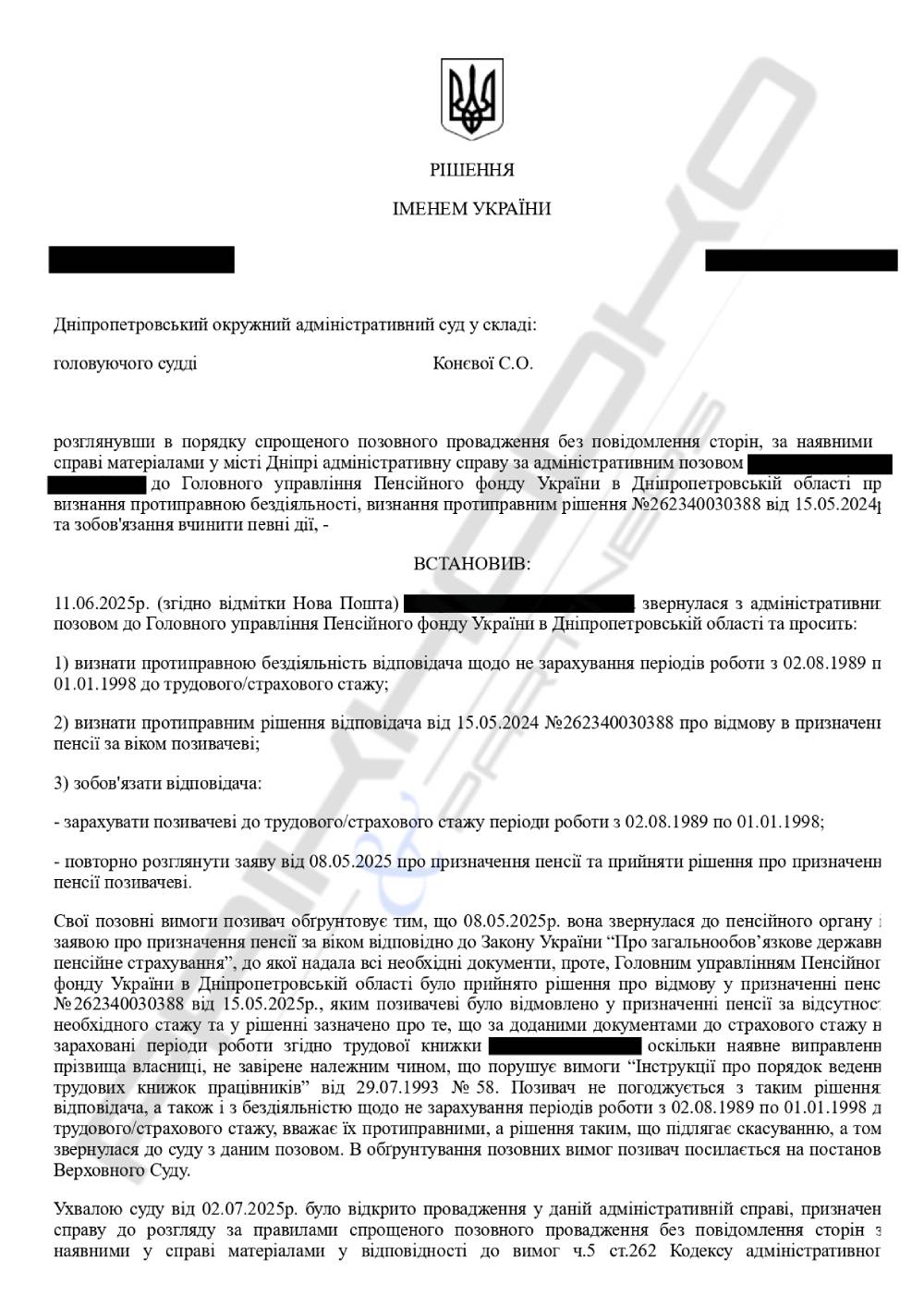
The court established that the client’s employment periods from 02.08.1989 to 31.12.1997 had been excluded from the insurance record solely because of the correction to her surname in the employment record book. At the same time, the court drew attention to an important circumstance: the deficiencies in the employment record book arose when it was completed by the responsible employees of the enterprise and were not caused by the employee herself.
The court noted that an employee is not responsible for maintaining an employment record book, since the relevant entries are made by authorised employees of the enterprise. Therefore, deficiencies in the execution of the employment record book alone cannot serve as grounds for concluding that the employment record does not exist.
In addition, the court took into account that the Pension Fund had not properly verified the accuracy of the entries concerning the client’s employment and had not provided evidence disproving the fact that she worked during the disputed period.
The court also applied Article 77 of the Code of Administrative Procedure of Ukraine, according to which the public authority bears the burden of proving the lawfulness of its decision, action or inaction.
The Pension Fund did not provide such evidence to the court. As a result, the court concluded that the Pension Fund’s decision refusing to include the disputed period in the insurance record and refusing to grant an old-age pension had been adopted without sufficient grounds and not in the manner prescribed by the Constitution and laws of Ukraine.
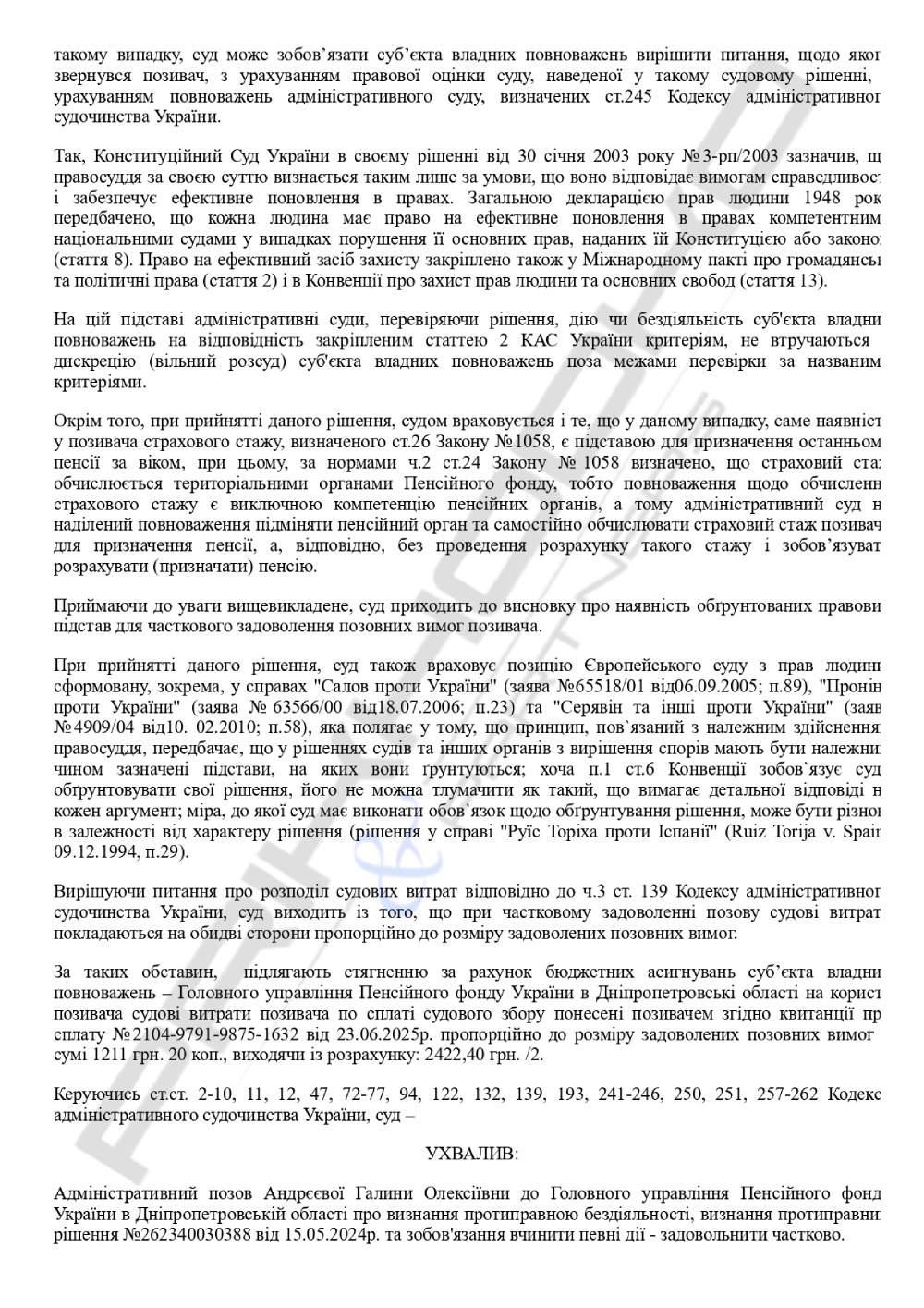
By a decision of the Dnipropetrovsk District Administrative Court, the claim was partially upheld.
The court:
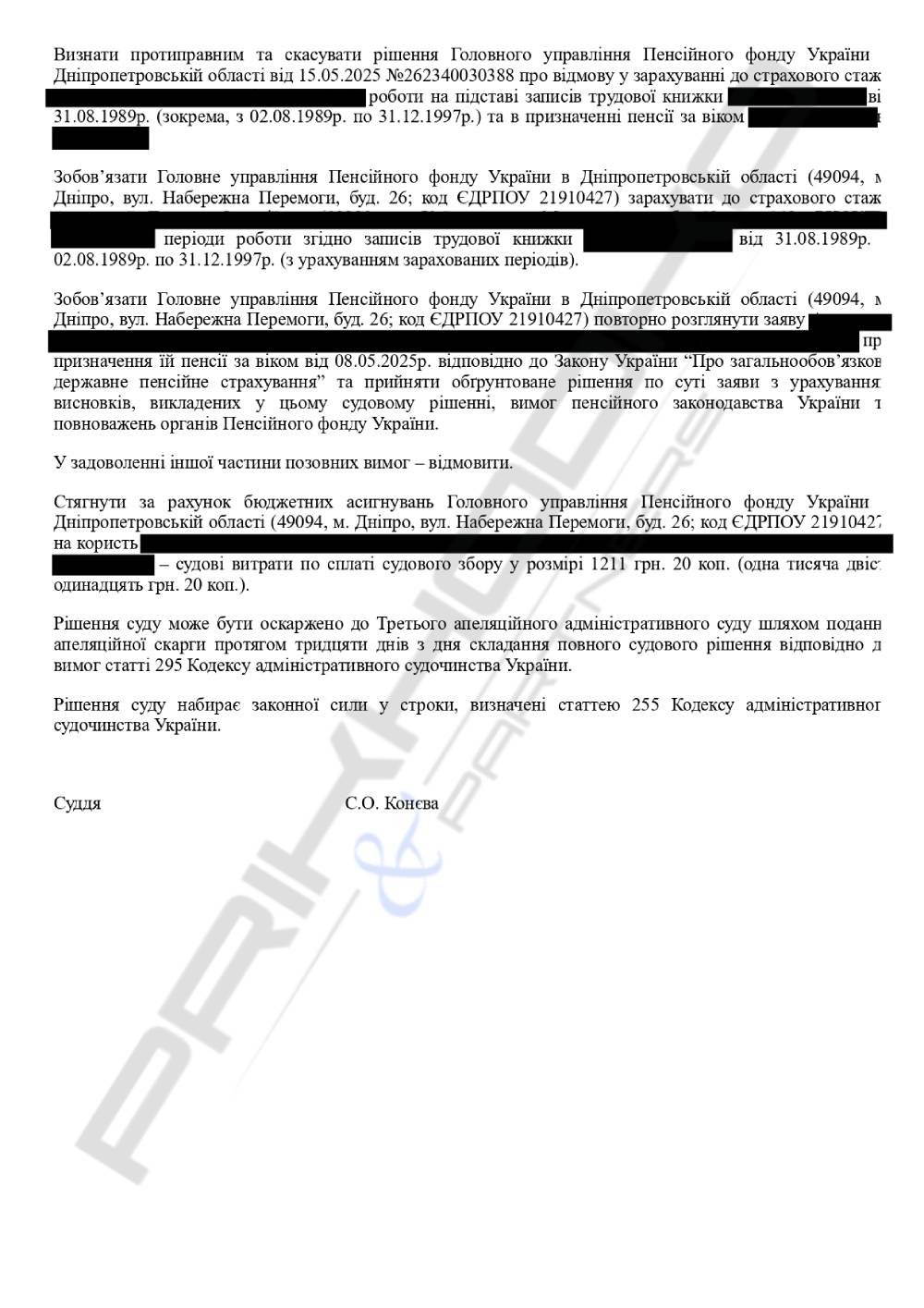
- declared unlawful and cancelled the decision of the Main Department of the Pension Fund of Ukraine in the Dnipropetrovsk region refusing to include the client’s employment periods in her insurance record and refusing to grant her an old-age pension;
- obliged the Pension Fund to include in the insurance record the periods of employment from 02.08.1989 to 31.12.1997 on the basis of the entries in the employment record book;
- obliged the Pension Fund to reconsider the client’s application for an old-age pension, taking into account the court’s conclusions and the requirements of pension legislation.
At the same time, the court did not oblige the Pension Fund to grant the pension directly, since it is the pension authority that has the power to make the final calculation of the insurance record and verify compliance with all conditions required for granting an old-age pension.
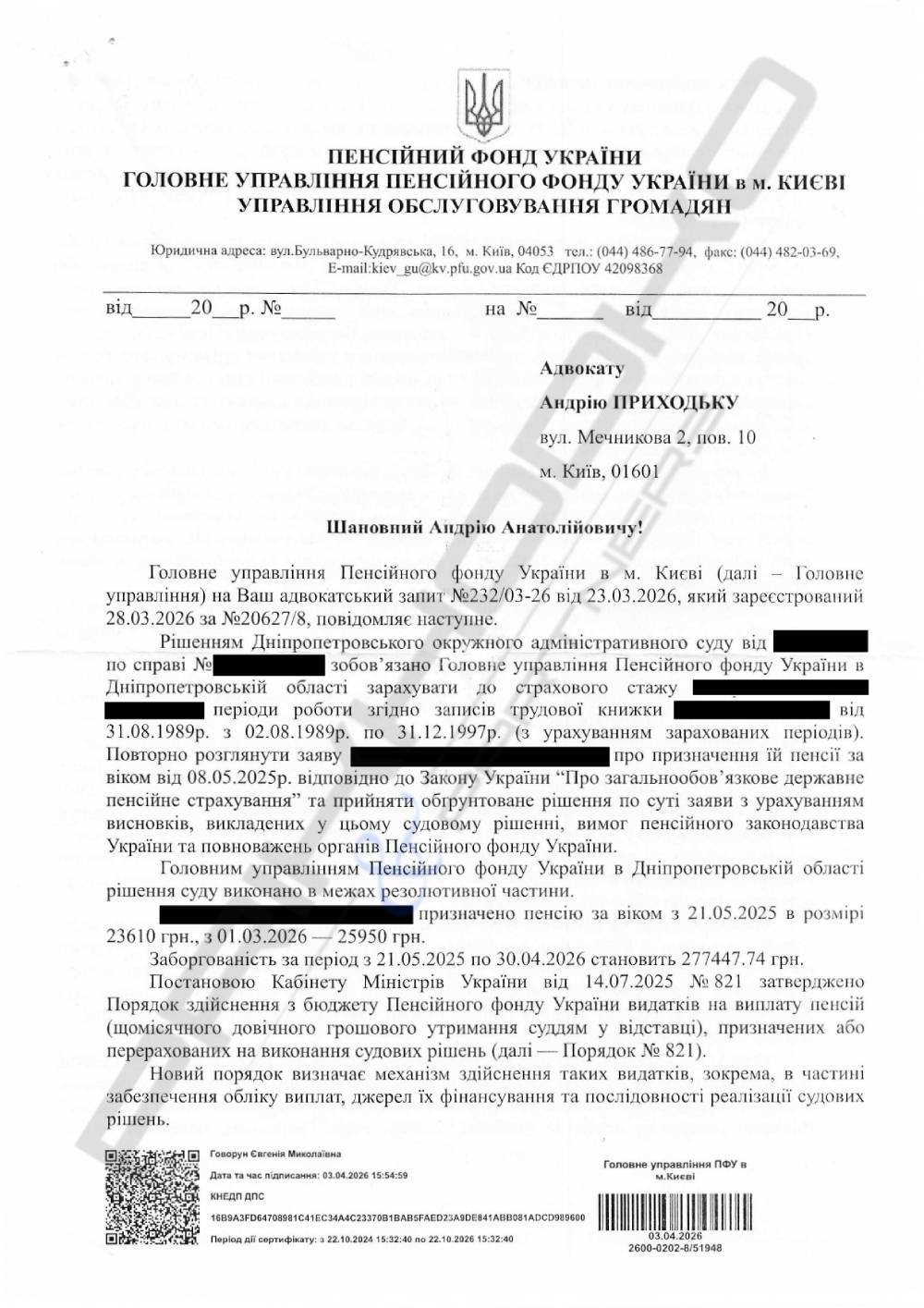
Thus, the court decision removed the main obstacle preventing the client from exercising her right to pension provision — the unlawful exclusion of almost eight years of employment from her insurance record due to a formal deficiency in the employment record book.
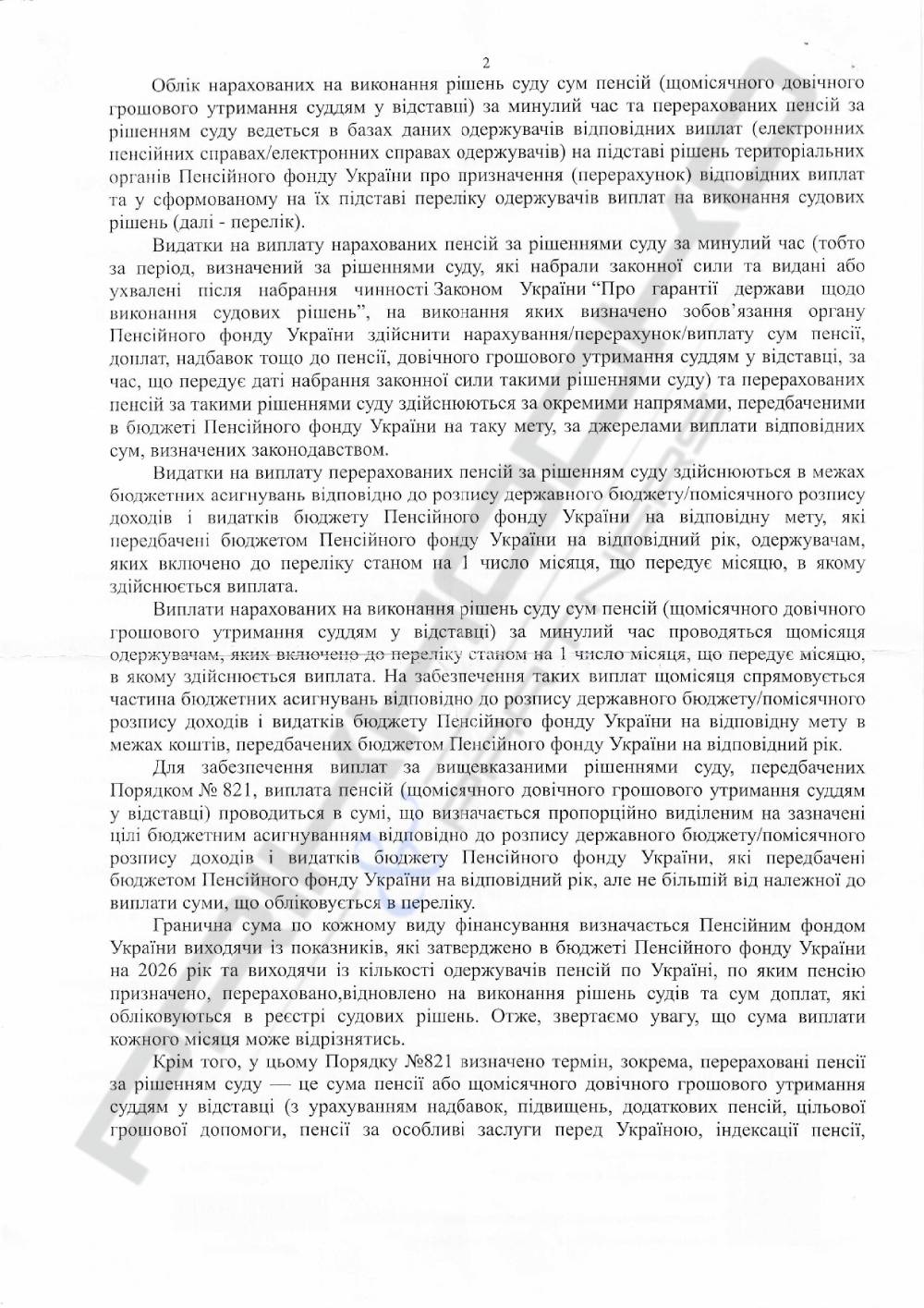
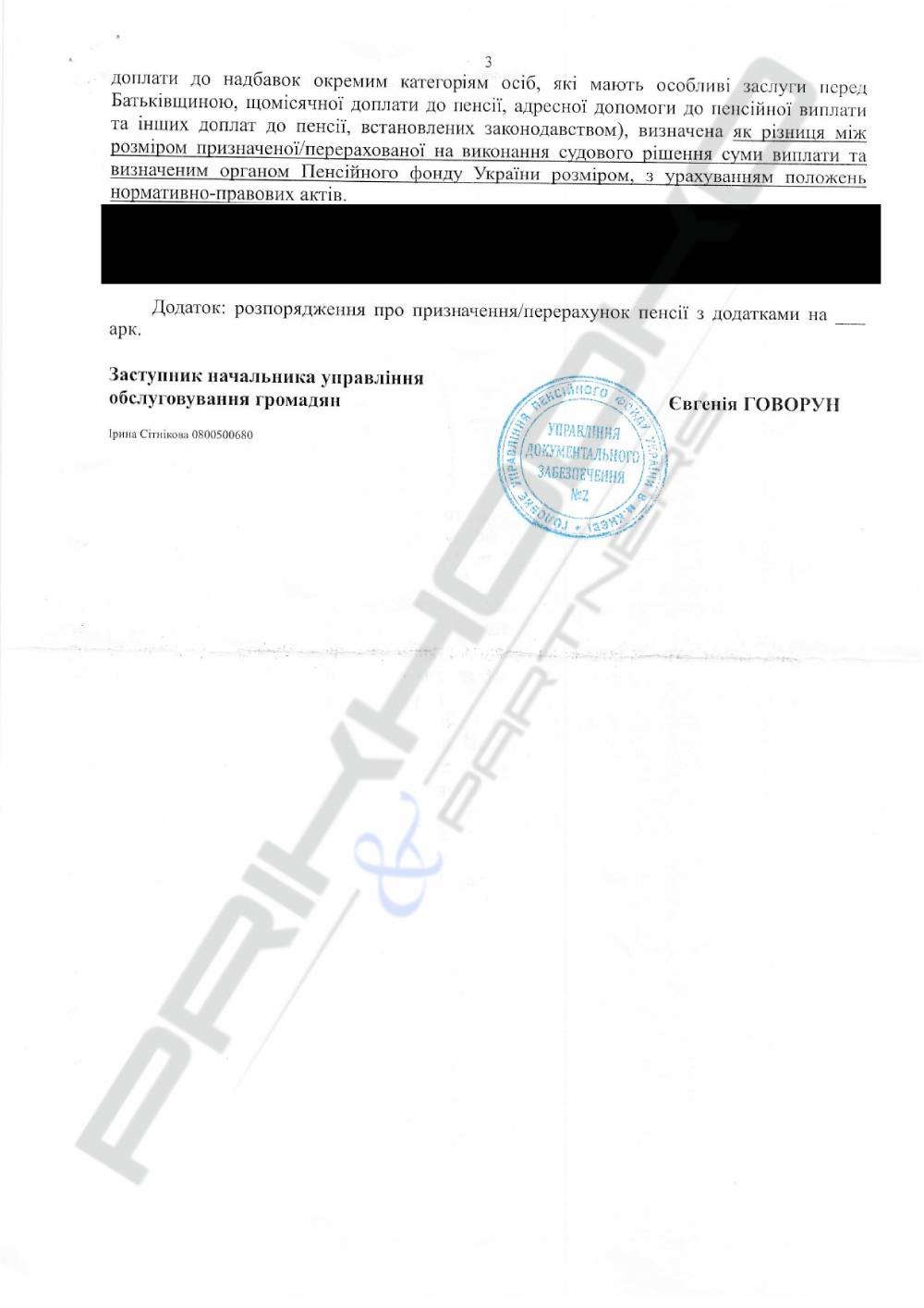
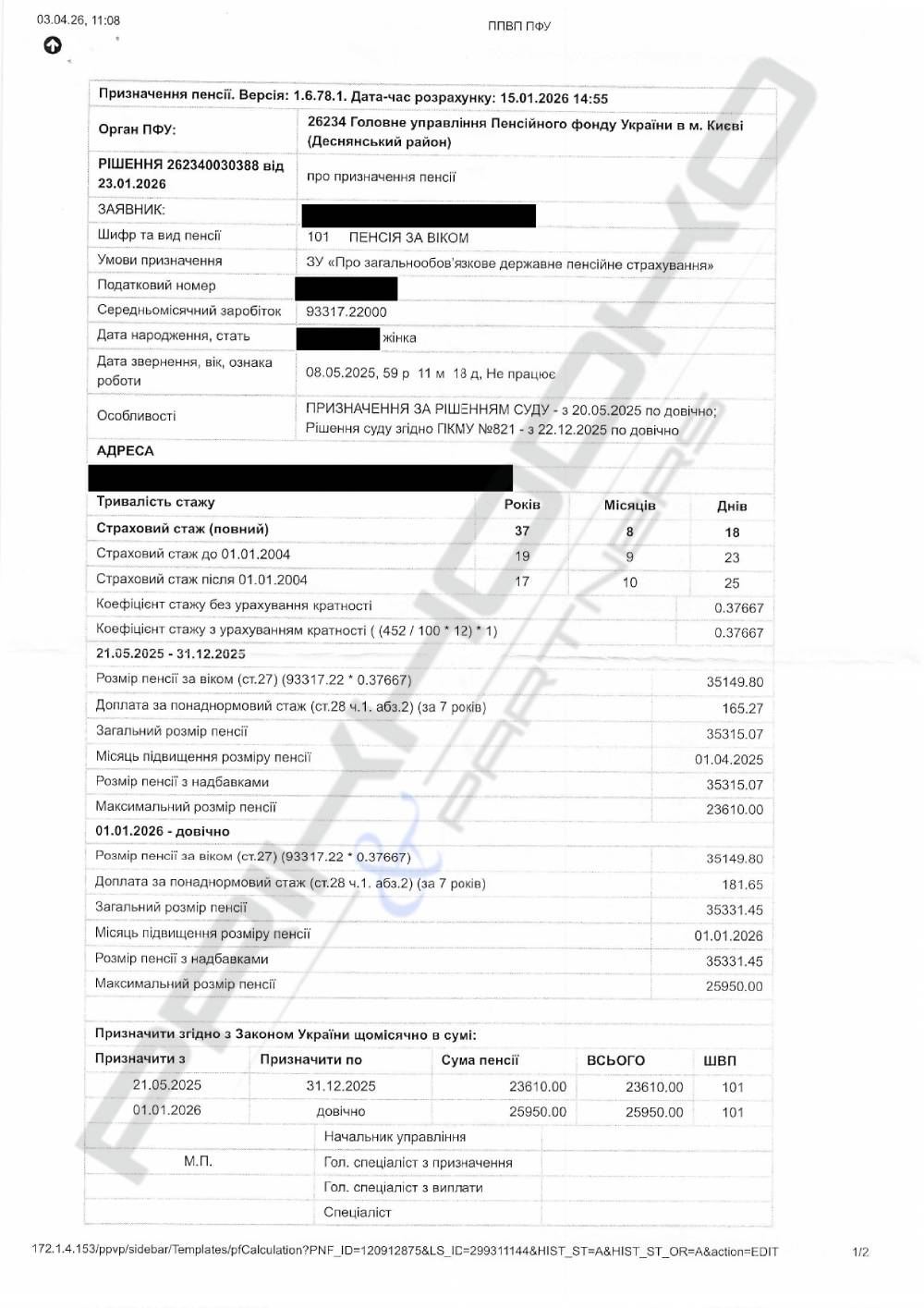
Photo confirmation of the result
Conclusion
This case is illustrative of situations where the Pension Fund refuses to grant a pension due to errors, corrections, inaccuracies or other deficiencies in an employment record book.
The existence of an error in an employment record book does not in itself mean that the person did not work or did not acquire the corresponding insurance record. It is particularly important that an employee should not suffer negative consequences as a result of mistakes made by the employer when completing the document.
Where doubts arise regarding the accuracy of the records, the Pension Fund must properly verify the relevant circumstances and, where necessary, use the documents provided for by law to confirm the employment record instead of limiting itself to a formal reference to deficiencies in the employment record book.
This case also confirms that a refusal by the Pension Fund to grant an old-age pension due to an improperly corrected surname or other deficiencies in an employment record book can be challenged before an administrative court.
If the Pension Fund has excluded periods of employment from the insurance record because of errors in an employment record book, it is important to analyse not only the refusal itself, but also all entries in the employment record book, employment-related documents and the legal grounds relied upon by the pension authority.
The lawyers of Prikhodko & Partners provide legal analysis of pension cases, challenge unlawful decisions of the Pension Fund and represent clients in disputes concerning the granting of pensions, inclusion of periods in the insurance record and confirmation of employment periods.
In this case, the court confirmed that a formal deficiency in an employment record book cannot automatically deprive a person of the right to have their actual employment record recognised and to exercise their right to a pension.
















 Telegram
 Viber
Viber
 WhatsApp

 Facebook
 Instagram