Who should consider opening a business in Slovakia?
Slovakia can be a practical jurisdiction for entrepreneurs planning to work with clients and partners in the European Union, develop international trade, launch a local business or relocate part of their operations to Central Europe.
Foreign entrepreneurs most commonly choose a limited liability company s.r.o. or register individual business activity as a živnosť. The optimal format depends on the business model, projected turnover, number of founders, liability, tax burden and the need for scaling.
IT and professional services
For IT companies, developers, SaaS projects, digital agencies, consulting businesses and other teams working with European B2B clients.
Trade and e-commerce
For imports, exports, marketplace sales, work with suppliers, logistics partners and customers in EU countries.
Local business
For service companies, manufacturing, logistics, hiring employees and entrepreneurs who require a full operational presence in Slovakia.
s.r.o. or živnosť: which format should you choose?
The business form should be selected before document preparation begins. The format affects the entrepreneur’s liability, taxes, accounting, interaction with banks, the ability to attract partners and future scaling.
| Criterion |
s.r.o. |
živnosť |
| Format |
Separate legal entity |
Individual business activity |
| Liability |
Separated from the founder’s personal assets within the limits provided by law |
The entrepreneur is personally liable for obligations |
| Suitable for |
Teams, B2B, trade, IT, scaling and attracting partners |
Freelancers, specialists and small-scale independent activity |
| Share capital |
Minimum €5,000 |
Not required |
| Accounting and reporting |
Full corporate accounting |
Depends on the selected regime and nature of the activity |
What foreign entrepreneurs usually choose
For international trade, IT, e-commerce, B2B services, hiring employees and scaling, an s.r.o. is most commonly considered. A živnosť may be appropriate for independent professional activity with a simpler structure and a small volume of operations.
What is included in business setup support?
Business registration in Slovakia involves more than simply entering a company or entrepreneur in the relevant register. For a full launch, it is necessary to determine in advance the ownership structure, business activities, registered office, tax format, need for VAT, a corporate account, licences and accounting.
Comprehensive support may include:
- business model analysis and selection between s.r.o., živnosť or another format;
- company name check and determination of business activities;
- preparation of incorporation documents, applications, resolutions, translations and powers of attorney;
- arrangement of a registered office in Slovakia;
- obtaining the required trade authorisations depending on the type of activity;
- registration of an s.r.o. or živnosť and obtaining the main identification details;
- preparation for opening an account and completing KYC/AML compliance;
- VAT registration where required;
- accounting and tax support after launch;
- corporate services, contracts, structural changes and legal support for operations.
How is an s.r.o. registered in Slovakia?
The specific procedure depends on the founders, director, business activities, ownership structure and the method of submitting documents. It is advisable to begin with an analysis of future operations, as this information will affect not only registration but also taxes and account opening.
01
Business model analysis and structure selection
We determine the founders, director, shares, business activities, expected payments, countries of operation, and the need for VAT, licences, an account and accounting.
02
Document preparation
We prepare incorporation documents, resolutions appointing the director, applications, documents concerning the registered office, business activities and ownership structure.
03
Registered office and trade authorisations
We arrange confirmation of the address in Slovakia and determine which free, craft or regulated business activities need to be registered.
04
Business registration
We submit documents to the relevant authorities and support the company’s entry into the register. After registration, the company receives the information required for tax, accounting and banking procedures.
05
Account, taxes and operational launch
We help prepare the KYC/AML package, consider a bank or EMI account, determine the need for VAT and arrange accounting support.
Which documents are required to get started?
The final list of documents depends on who will act as founder and director, which business activities are planned and whether special permits are required. Foreign documents may require an official translation and proper certification.
- passports or IDs of the founders, director and ultimate beneficial owners;
- residential addresses and contact details of participants in the structure;
- company name and several alternative options;
- distribution of shares among the founders;
- description of the business model, goods or services;
- countries of operation, types of clients and future counterparties;
- expected turnover and payments for preparation of the banking case;
- information on post-launch needs: account, VAT, accounting, contracts, hiring employees or immigration support.
Share capital and registered office of an s.r.o.
The minimum share capital of a Slovak s.r.o. is €5,000. The amount of each shareholder’s contribution and the procedure for forming the capital must be properly reflected in the incorporation documents.
The company must also have a registered office in Slovakia. Its use requires a proper legal basis and the consent of the property owner. The address is used for official correspondence, interaction with public authorities and determining the company’s territorial jurisdiction.
Corporate account and banking compliance
Registration of an s.r.o. does not guarantee the automatic opening of a corporate account. A bank or payment institution separately analyses the founders, ultimate beneficial owners, type of activity, source of funds, geography of operations, future counterparties and projected turnover.
This is why it is better to determine the account format before registration is completed. Depending on the business model, a Slovak or another European bank, as well as an EMI payment institution, may be considered.
How we assist with opening an account
- analyse the business model and future payments;
- help select a bank or EMI for the specific case;
- prepare a description of the company’s activities and structure;
- prepare a package of documents concerning the founders, UBO and source of funds;
- support completion of questionnaires and responses to compliance requests;
- help organise communication with the financial institution.



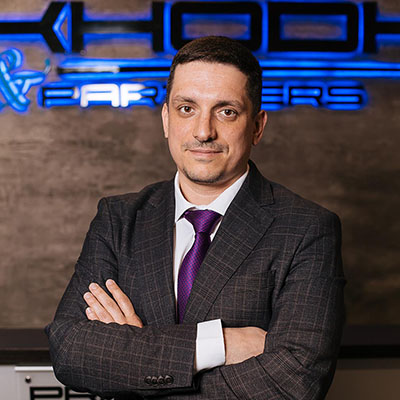 Taras Miroshnychenko
Contact
Taras Miroshnychenko
Contact








 Telegram
 Viber
Viber
 WhatsApp

 Facebook
 Instagram