



Attorney
Specializes in protection of honor and dignity, of copyrights, inventions, patents, trademarks, support of tenders, protection of consumer rights, disputes with insurance companies, legal support in cases of administrative offenses.

Who Is the Proper Defendant: the Author, Website Owner, Editorial Office, Company or Employee?
Table of Contents:
- Why the author and disseminator may be different persons
- Who should be examined depending on where the publication appeared?
- How to identify the author and website owner
- When is a company responsible for an employee’s statements?
- What should be done with an anonymous account?
- What should be checked before filing a claim?
You have evidence that the information is false, but the claim has been filed against a person or company that is not legally responsible for the specific dissemination. Such a mistake may prevent effective legal protection even where the substance of the case is strong. The proper defendant is determined by who made the statement, who disseminated the information, in what capacity they acted and what action is being sought from them.
Why the author and disseminator may be different persons
A person gave an interview, an editorial office published the material, and another website republished it. These are several separate actions that need to be assessed individually. For each defendant, the specific episode, evidence of dissemination and legal basis for the claim should be identified. The mere fact that a person is mentioned in an article does not make them the author of the allegation.
A request to retract a statement and a request to remove material may be directed at different parties. The person who gave the interview does not always control the website, while a technical administrator does not necessarily exercise editorial control. Therefore, the list of defendants should not simply consist of everyone whose contact details can be found.
Who should be examined depending on where the publication appeared?
| Source | Possible participants | What to establish |
|---|---|---|
| Personal post | Author and other disseminators | Ownership of the account and authorship |
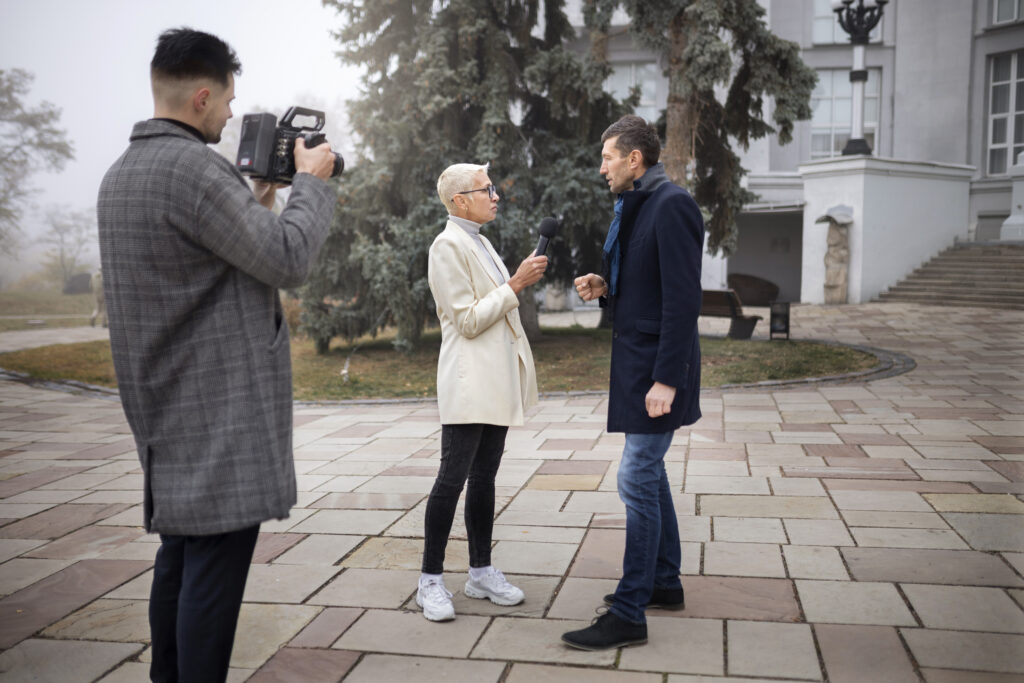
| Media interview | Author of the statement and the appropriate media entity | Who made the statement and who published it |
| Website publication | Author and owner of the resource | Control and legal status of the participants |
| Statement made by a company | The company or employee depending on the circumstances | Whether they acted within the scope of their official duties |
The table indicates the direction of the assessment rather than automatically determining the parties. On one resource, liability may concern the author of editorial material; on another, it may relate to a user comment. For media outlets, special rules on exemption from liability should also be checked.
How to identify the author and website owner
- Preserve the publication details, author’s byline, contact information and description of the resource.
- Check the legal entity that publishes the media outlet or controls the publication.
- Compare the website information with available registration data and documents.
- Record the author, resource, date and specific publication separately.
A contact email address or domain information may be useful, but does not always prove ownership or editorial control. The domain registrar, hosting provider and website owner perform different functions. They should not be treated as the same party without verification.
When Prikhodko & Partners worked on pre-trial demands concerning publications, we determined who should receive demands to stop dissemination and publish a retraction. The same verification is required before filing a claim: a specific person must be linked to a specific publication, rather than merely locating an address to which a letter can be sent.
When is a company responsible for an employee’s statements?
Under Article 277 of the Civil Code of Ukraine, where information is disseminated by an official or employee in the performance of their duties, the legal entity for which they work is regarded as the disseminator. For claims for damages, the conditions of Article 1172 of the Civil Code of Ukraine, among others, should additionally be examined.
For example, a press office published a statement on the company’s official page. A different situation arises where an employee makes a personal post outside the scope of their official duties. The existence of an employment relationship alone is not sufficient to make the employer automatically responsible for every comment made by an employee.
- Clarify the person’s position, authority and the nature of their duties.
- Check whether the statement was official and on whose behalf it was disseminated.
- Preserve the company page, documents and other evidence connecting the statement with official duties.
- Separate claims for retraction and compensation for damage and identify the grounds for each.
The proper defendant is not always the person who physically clicked “publish”. The content of the instruction, their functions and their legal role are important. At the same time, a corporate logo on a personal page does not replace evidence that the person was acting on behalf of the company.
What should be done with an anonymous account?
Where the disseminator cannot be reliably identified, Article 277 of the Civil Code of Ukraine provides a separate procedure for establishing that the information is false. In Case No. 504/4099/16-c, the Supreme Court confirmed that this procedure is also available to a legal entity. Such proceedings are not a means of recovering compensation from an unidentified account.
Before applying to the court, it is necessary to show why the person could not be identified and to examine other possible disseminators. If the appropriate owner of the resource is known, the situation may require a claim against that owner rather than separate proceedings. The judicial procedure is determined by the factual circumstances.
What should be checked before filing a claim?
- The defendant’s correct name or legal name, address and available identification details.
- Evidence linking each defendant to the relevant episode of dissemination.
- The specific action that the defendant is capable of taking to remedy the violation.
- Jurisdiction, territorial competence and applicable time limits based on the parties and the claims.
In civil proceedings, Article 51 of the Civil Procedure Code of Ukraine allows, subject to its conditions, the addition of a co-defendant or replacement of an improper defendant. Time limits and grounds are important, so this assessment should not be postponed until the end of the proceedings. The court’s own initiative should not be the primary plan for correcting the claim.
In reputation disputes, Prikhodko & Partners has analysed the content of posts, their context and dissemination. These circumstances are also required to identify the proper parties. Choosing the correct defendant does not guarantee success, but it allows the dispute to be assessed against the person who has the relevant legal role.
Do you need to determine who should receive a pre-trial demand or claim concerning a false publication? Submit a request to discuss the materials, potential defendants and the scope of legal assistance.
Calculate the cost of services
Answer a few questions
Can a claim be filed only against the person who gave the interview?
The parties depend on the specific episodes and claims. The role of the person who made the statement and the entity that disseminated the material must be assessed.
Is the administrator of a Facebook page automatically the proper defendant?
No. Their involvement in the publication, legal role and the grounds for the relevant claim must be established.
Is an employer responsible for every post made by an employee?
No. The connection with the performance of official duties and other necessary conditions must be examined. A personal post and an official statement may have different proper addressees.





 Telegram
 Viber
 WhatsApp


 Facebook
 Instagram