


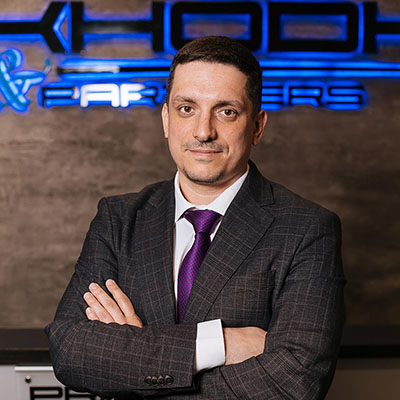
Head of International Corporate Law and Fintech Practice
Expert in fintech, crypto, and international corporate law with over 20 years of experience. Specializes in crypto licensing (VASP/CASP), iGaming business support, and international structuring, asset protection, and OSINT analytics for risk assessment and due diligence.

Support with Admission to the Austrian Regulatory Sandbox
Table of Contents:
- What is the Austrian Regulatory Sandbox and what is it for?
- Which projects may be admitted to the Austrian Sandbox?
- Which areas are covered by the legal assessment of a fintech or crypto product?
- Which documents are required to prepare a Sandbox application?
- How to prepare the business for testing under FMA supervision
- How we support admission to the Austrian Regulatory Sandbox
- What does the client receive as part of the support?
You are developing a fintech or crypto product for the EU, but its model combines several regulated services. Before launch, it is necessary to determine which authorisations are required, how to organise work with clients and what needs to be agreed with the regulator. Prikhodko & Partners provides support with the Austrian Regulatory Sandbox: we assess the project’s suitability, prepare the application and support communication with the Austrian regulator.
What is the Austrian Regulatory Sandbox and what is it for?
It is a programme of the Austrian Financial Market Authority (FMA) for innovative financial business models. Participation allows regulatory issues to be addressed and an agreed model to be tested under supervision. Under the FMA rules on the Sandbox, activities requiring a licence may only be tested after the necessary authorisation has been obtained. The decision to admit a project does not itself permit the provision of such services to clients.
The service is useful where the team is ready for testing and has unresolved regulatory questions. For example, an application combines crypto exchange with payments, while the partners have different interpretations of who accepts the client’s instruction. Before submitting the application, the participants’ authority should be described and the issues to be clarified during testing should be identified.
Which projects may be admitted to the Austrian Sandbox?
At the outset, we review the admission criteria under § 23a FMABG and how they apply to the product. In particular, we assess:
- The innovative nature of the technological model, its socio-economic value and whether the relevant issues fall within the FMA’s competence.
- Readiness for testing, the absence of fundamental obstacles and the expected impact on clients and financial stability.
- Specific unresolved regulatory questions and how participation could help bring the product closer to market launch.
A desire to obtain authorisation more quickly is not sufficient on its own. For a technical service provider, we separately assess the possibility of participating together with a regulated institution rather than assuming that any IT project meets the criteria.

Which areas are covered by the legal assessment of a fintech or crypto product?
- Crypto services: analysis of MiCA, the required CASP status and the functions of the service.
- Payments and embedded finance: assessment of PSD2 and the Austrian ZaDiG 2018, allocation of roles and authorisation requirements.
- Investment services: review of order execution, recommendations and other product functions.
- Tokenisation: analysis of the token holder’s rights and the distinction between a crypto-asset and a financial instrument.
For payment models, we also assess PSD3/PSR changes with regard to the timing of their application. If the product uses AI, we examine what the algorithm does for the client, who controls the decisions and which data protection and AI-use rules need to be taken into account.
| Example model | Practical question | What we assess |
|---|---|---|
| Crypto service with a payment partner | Who exchanges the assets and executes the payment | Roles, agreements and required authorisations |
| Tokenised rights to income | What the investor legally receives | Token classification and the applicable services regime |
| AI selects assets for a client | Whether this constitutes a personal recommendation | Algorithm functions and liability |
For example, a team may describe a product as tokenisation, while users are offered rights that may have the characteristics of a financial instrument. In the FMA guidance for CASP applicants, such instruments are distinguished from the scope of MiCA. We therefore first analyse the rights attached to the token and the agreements, and then select the appropriate regulatory route for the application.
Which documents are required to prepare a Sandbox application?
The following are usually required to prepare the application:
- A description of the product, business plan, target clients, countries of operation and sources of revenue.
- The company and ownership structure, management functions and partners’ roles.
- A flowchart of operations, movement of funds or crypto-assets and technical authority.
- Materials on product readiness, risks, client protection and the proposed testing scenario.
We prepare the legal position, justification for admission and questions for the FMA. We align the application with the technical materials: if the agreement states that a transaction is carried out by a partner while the system allows your team to independently control the assets, that inconsistency should be resolved before submission.
How to prepare the business for testing under FMA supervision
In its description of the Sandbox stages, the FMA provides for agreement on parameters, milestones and the testing schedule. We help define which operations are planned, how the results will be measured and under what circumstances the test will be stopped. Where necessary, we support obtaining an authorisation or changing an existing status for the agreed activities.
For example, a new order execution mechanism may need to be tested. In that case, we describe the scope of the test, participating users, error controls and complaint-handling procedures. The compliance plan should show who performs client checks, responds to incidents and reports on results. Capital, staffing and IT security requirements are assessed under the applicable regime.
How we support admission to the Austrian Regulatory Sandbox
The international corporate law and fintech team at Prikhodko & Partners organises the legal work according to agreed stages:
- Preliminary assessment. We analyse the product, participation criteria, the team’s readiness and whether the procedure is appropriate.
- Preparation. We prepare the legal position, application, justification of innovation and a plan for addressing gaps.
- Interaction with the FMA. We support submission, preparation for meetings, additional explanations and agreement of the testing parameters.
- Testing and subsequent status. We assist with compliance, responses to the regulator and transition to the next stage of activity.
What does the client receive as part of the support?
- A legal opinion on the model and a list of issues that need to be resolved before testing.
- An agreed application package and preparation of the team for discussing the product with the regulator.
- A compliance plan identifying responsible persons, documents and further authorisation steps.
Participation should not be presented to clients as FMA approval of the product. Likewise, entry into other EU markets should be planned on the basis of the status obtained and the relevant procedures, rather than merely on the fact of admission to the Sandbox.
Send us the product description, transaction flow and available documents. Prikhodko & Partners will assess the model’s suitability for the Sandbox and propose the scope of support, sequence of actions and preparation budget.
Calculate the cost of services
Answer a few questions
Does legal support guarantee admission to the Austrian Regulatory Sandbox?
The FMA decides on admission according to the established criteria. Legal preparation helps substantiate the application properly but does not guarantee a positive decision.
Can licensed services be tested immediately after admission to the Austrian Sandbox?
For activities requiring authorisation, the relevant status must first be obtained and the testing conditions must be fulfilled.
How long can participation in the Austrian Regulatory Sandbox last?
According to the FMA guidance, the overall participation period is limited to two years. The duration of individual stages depends on the project and the course of the procedure.






 Telegram
 Viber
 WhatsApp


 Facebook
 Instagram